

Injection Molding Safety Protocols: Protecting People, Equipment, and Productivity
Safety is a fundamental aspect of every injection molding operation. With high temperatures, heavy molds, moving machinery, and pressurized systems involved in the manufacturing process, implementing effective safety protocols is essential to protect employees, prevent accidents, and ensure uninterrupted production.
A well-structured safety program not only reduces workplace risks but also improves operational efficiency, equipment reliability, and regulatory compliance.
Why Are Safety Protocols Important in Injection Molding?
Injection molding environments present several potential hazards, including:
- Contact with hot molds, barrels, and nozzles
- Exposure to molten plastic materials
- Crushing risks during mold changes
- Pinch points from moving machine components
- High-pressure injection systems
- Exposure to fumes generated during plastic processing
- Electrical and hydraulic system hazards
Without proper procedures and training, these risks can result in serious injuries, equipment damage, and costly production downtime.
Common Hazards in Injection Molding Operations
Thermal Hazards
Injection molding equipment operates at extremely high temperatures. Heated barrels, molds, and nozzles can exceed 300°C, while molten plastics can cause severe burns if accidentally contacted.
Operators should always follow established procedures before approaching heated equipment and allow sufficient cooling time before maintenance activities.
Mechanical Hazards
Moving machine components, hydraulic systems, and heavy molds create significant safety risks. Pinch points, crushing zones, and moving platens require strict adherence to machine guarding and operating procedures.
All machine guards and safety interlocks should remain operational and never be bypassed during production.
Chemical Exposure
Certain plastic materials, additives, and colorants may release fumes during processing. Proper ventilation systems and safe material-handling procedures help minimize operator exposure and maintain a safe working environment.
The Importance of Lockout/Tagout Procedures
One of the most critical safety requirements in injection molding is the implementation of Lockout/Tagout (LOTO) procedures.
Before performing maintenance, cleaning, troubleshooting, or mold changes, all energy sources must be isolated and secured. This prevents accidental machine start-up and protects personnel working on or around the equipment.
LOTO procedures should include:
- Electrical isolation
- Hydraulic pressure release
- Pneumatic system isolation
- Verification of zero-energy status
- Clear communication between maintenance and production teams
Consistent application of these procedures significantly reduces the risk of serious workplace accidents.
Personal Protective Equipment (PPE)
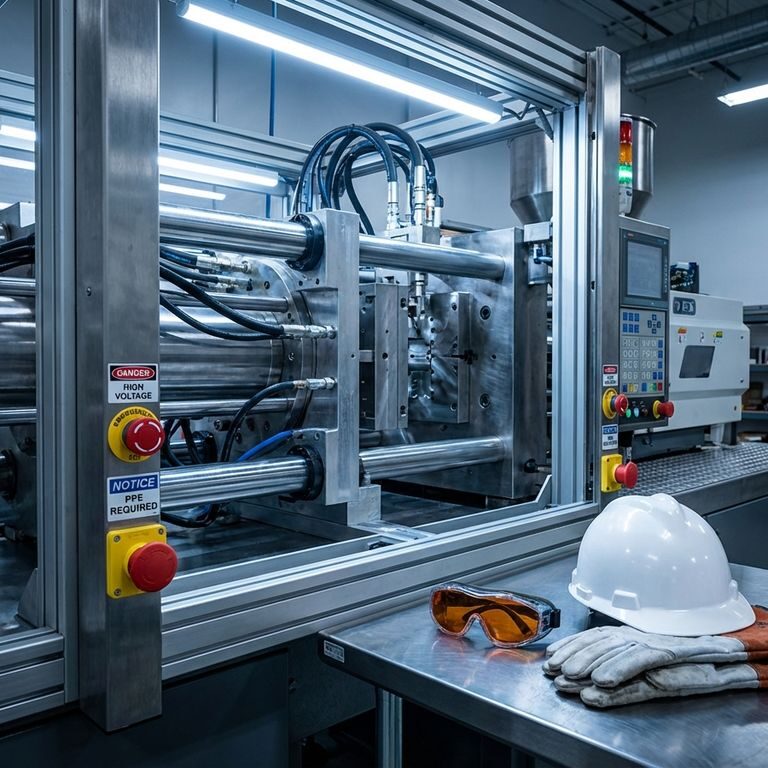
Appropriate personal protective equipment is essential for minimizing risks during daily operations.
Recommended PPE typically includes:
- Safety glasses with side protection
- Heat-resistant gloves
- Safety footwear with reinforced toe protection
- Long-sleeved protective clothing
- Face shields when handling hot materials
- Respiratory protection when required by the materials being processed
Regular inspection and replacement of PPE ensure continued effectiveness and compliance with workplace safety standards.
Safe Mold Change Procedures
Mold changes are among the highest-risk activities in an injection molding facility. Large molds can weigh several tons, requiring careful planning and proper handling equipment.
Best practices for safe mold changes include:
- Fully shutting down equipment before work begins
- Following Lockout/Tagout procedures
- Allowing molds to cool to safe handling temperatures
- Using certified lifting and handling equipment
- Establishing clear communication between team members
- Keeping personnel away from suspended loads
A standardized mold change process reduces the likelihood of injuries while improving operational consistency.
Training and Continuous Safety Awareness
Effective safety programs rely on comprehensive employee training. New operators should receive instruction on machine operation, emergency procedures, hazard recognition, and safe material handling before working independently.
Regular refresher training, safety audits, and toolbox meetings help reinforce best practices and ensure that safety remains a priority throughout the organization.
How EAS Change Systems Enhances Injection Molding Safety
While safety procedures and training are essential, the right equipment can significantly reduce workplace risks. EAS Change Systems develops solutions designed to make mold handling and mold changes faster, safer, and more efficient.
By minimizing manual intervention and reducing operator exposure to hazardous situations, EAS helps manufacturers improve both safety and productivity.
Depending on the application, EAS offers several solutions that contribute directly to safer injection molding operations:
- Quick Mold Clamping Systems that reduce manual intervention during mold installation and removal.
- Rolling Bolsters that enable controlled and secure movement of heavy molds into and out of the machine.
- Die Change Carts that provide safe transportation and accurate positioning of molds.
- Quick-Disconnect Coupling Systems that simplify the connection and disconnection of utilities while reducing operator exposure to hot components.
- Integrated Mold Handling Solutions that improve ergonomics and reduce the risk of lifting and handling injuries.
By reducing manual handling, limiting exposure to pinch points, and standardizing mold change procedures, EAS Change Systems helps manufacturers create safer work environments while minimizing downtime and maximizing machine availability. The result is improved operator safety, higher productivity, and a more efficient injection molding operation overall.
No comments