
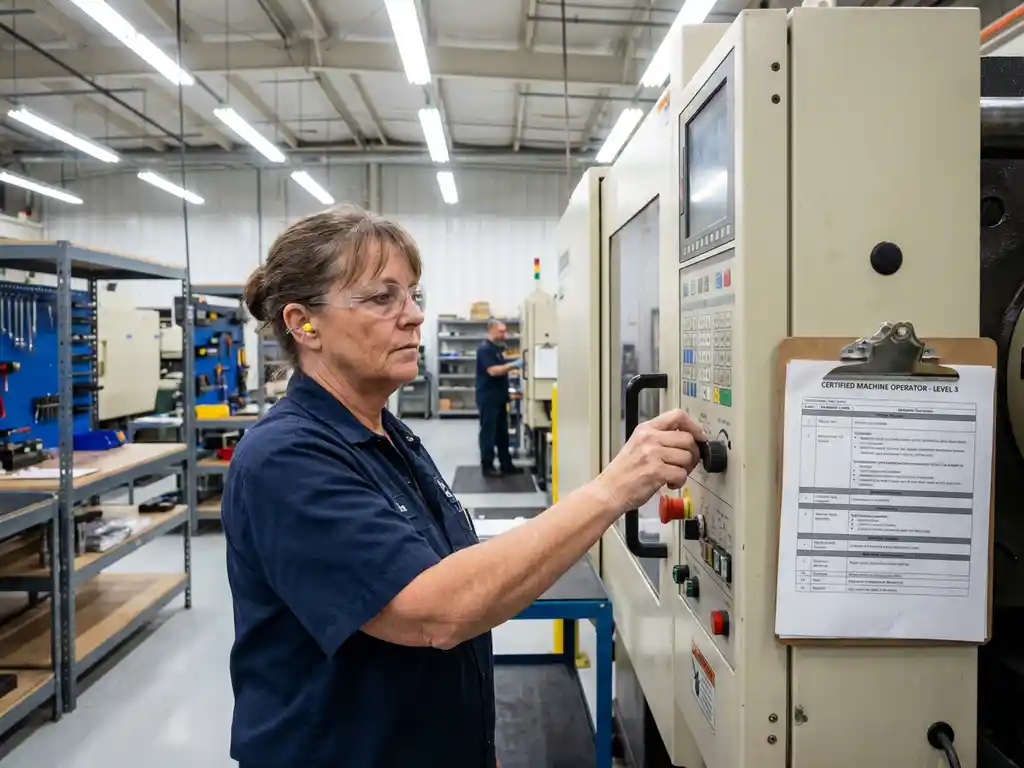
Injection molding operator training certification is a formal credential that validates an operator’s competency in plastic injection molding processes, safety protocols, and equipment operation. These certification programs ensure operators understand machine operation, quality control, and troubleshooting techniques. Certification enhances workplace safety, career advancement opportunities, and manufacturing efficiency while meeting industry standards for professional competency.
What exactly is injection molding operator training certification?
Injection molding operator training certification is a structured program that validates an operator’s knowledge and skills in plastic injection molding processes. These certifications cover machine operation, safety protocols, material handling, and quality control procedures specific to injection molding equipment.
Professional training organizations, technical colleges, and industry associations typically provide these certification programs. They validate competency through written examinations, practical assessments, and hands-on demonstrations of injection molding techniques. The certification process ensures operators understand critical parameters such as temperature control, pressure settings, cycle times, and material properties.
Certified programs often include comprehensive training on troubleshooting common injection molding problems, understanding polymer behavior, and implementing proper safety procedures. Many certifications also cover quality inspection techniques, dimensional measurement, and defect identification to ensure consistent production standards.
Why do injection molding operators need formal certification?
Formal certification reduces workplace accidents, improves product quality, and ensures compliance with manufacturing regulations. Certified operators make fewer errors, operate equipment more efficiently, and contribute to reduced material waste and production downtime.
Workplace safety is significantly enhanced when operators understand proper procedures for handling hot materials, operating under pressure, and managing emergency situations. Certification programs emphasize safety protocols that protect both personnel and expensive injection molding equipment from damage.
Career advancement opportunities increase substantially for certified operators. Many manufacturing facilities require certification for senior operator positions, team leader roles, and technical advancement opportunities. Certification demonstrates professional commitment and validates technical competency to employers.
Quality control improves when certified operators understand the relationship between process parameters and product quality. They can identify potential issues early, make appropriate adjustments, and maintain consistent production standards that meet customer specifications.
What skills and knowledge areas does injection molding certification cover?
Injection molding certification covers machine operation, material handling, quality control procedures, troubleshooting techniques, safety protocols, and an understanding of injection molding processes and parameters. These core competencies ensure operators can manage all aspects of injection molding production effectively.
Machine operation training includes understanding injection molding machine components, proper start-up and shutdown procedures, parameter adjustment techniques, and routine maintenance requirements. Operators learn to control injection pressure, temperature zones, screw speed, and cycle timing for optimal production.
Material handling competencies cover polymer selection, drying procedures, color mixing, regrind usage, and proper storage techniques. Understanding material properties helps operators make informed decisions about processing parameters and quality expectations.
Quality control training encompasses dimensional inspection, visual defect identification, testing procedures, and documentation requirements. Operators learn to use measuring instruments, interpret specifications, and implement corrective actions when quality issues arise.
Troubleshooting skills include identifying common injection molding defects, understanding root causes, and implementing corrective measures. This knowledge helps maintain production efficiency and reduces material waste through effective problem-solving techniques.
How long does it take to complete injection molding operator certification?
Basic injection molding certification typically takes 2-8 weeks, depending on program intensity and prior experience. Full-time programs often complete certification in 2-4 weeks, while part-time options may extend to 6-8 weeks to accommodate work schedules.
Program duration varies based on several factors, including hands-on training requirements, the depth of theoretical knowledge, and the complexity of practical assessments. Operators with prior manufacturing experience may complete certification faster than those new to industrial processes.
Intensive programs often require 40-80 hours of combined classroom instruction and practical training. These programs typically include both theoretical sessions and extensive hands-on practice with actual injection molding equipment.
Part-time certification options accommodate working professionals through evening or weekend sessions. These programs maintain the same content quality but extend the timeline to allow participants to continue their current employment while pursuing certification.
Advanced or specialized certifications may require additional time for complex equipment training or specific process techniques. Some programs offer modular approaches in which operators complete basic certification and then pursue advanced credentials over time.
What are the different types of injection molding certifications available?
Injection molding certifications range from basic operator credentials to advanced technical certifications and specialized equipment training. Industry-recognized programs include general operator certifications, precision molding credentials, and manufacturer-specific equipment certifications.
Basic operator certifications focus on fundamental injection molding principles, safety procedures, and standard machine operation. These entry-level programs prepare operators for general production roles in injection molding facilities.
Advanced technical certifications cover complex processes such as multi-shot molding, insert molding, and precision applications. These programs target experienced operators seeking specialization in high-value or technically demanding injection molding applications.
Equipment-specific certifications focus on particular machine brands or technologies. Manufacturers often provide specialized training for their equipment, covering unique features, programming requirements, and maintenance procedures specific to their systems.
Just as quick die change systems revolutionize efficiency in metal stamping operations, optimizing injection molding through proper operator training can significantly reduce changeover times and improve overall production efficiency. Professional certification ensures operators can maximize equipment capabilities while maintaining safety and quality standards.
Industry association certifications provide widely recognized credentials that transfer between employers and demonstrate professional competency across different injection molding environments. These certifications often require periodic renewal to maintain current knowledge and skills.
How EAS Change Systems Enhances Injection Molding Operations
EAS Change Systems provides specialized solutions that complement certified operator training by optimizing injection molding production efficiency and changeover processes. Our systems help manufacturers maximize the value of their certified operators while reducing downtime and improving overall productivity. Key benefits include:
- Streamlined mold changeover processes that reduce setup time by up to 70%
- Standardized procedures that align with operator certification requirements
- Enhanced safety protocols during changeover operations
- Improved quality consistency through precise positioning systems
- Reduced physical strain on operators during mold handling
Ready to optimize your injection molding operations and maximize the potential of your certified operators? Contact EAS Change Systems today to discover how our proven solutions can transform your production efficiency and support your skilled workforce.