

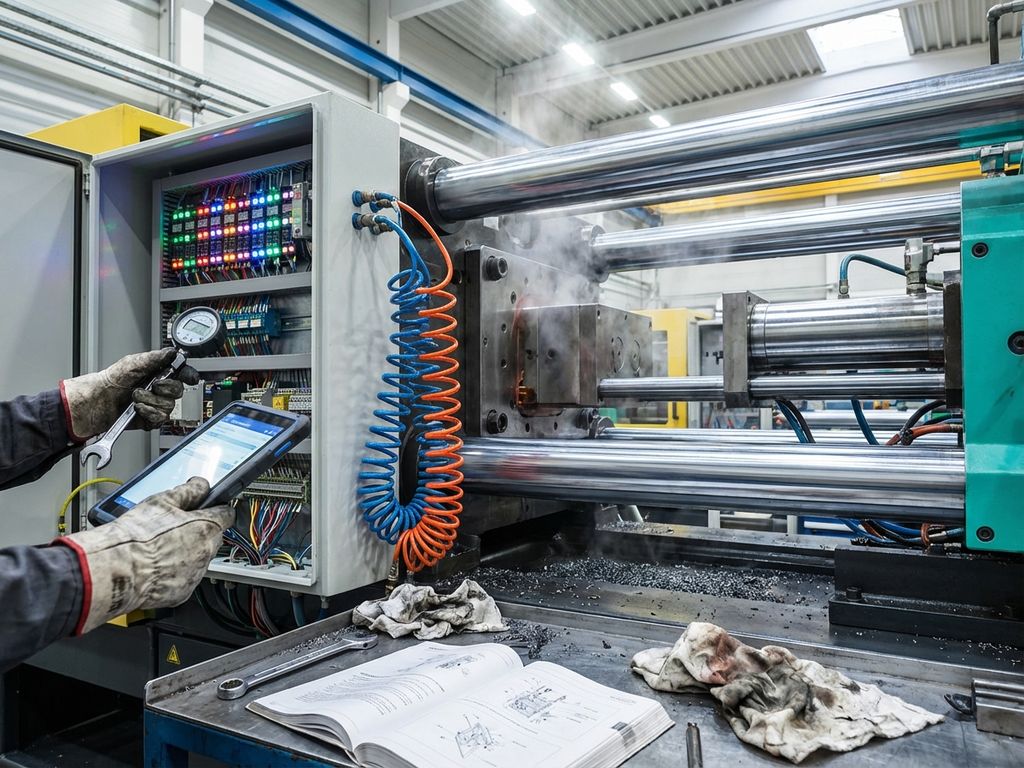
Injection molding machine maintenance involves regular inspection, cleaning, lubrication, and replacement of components to ensure optimal performance and prevent costly breakdowns. Proper maintenance reduces downtime, extends equipment life, and maintains product quality. This comprehensive guide addresses the most important questions about maintaining injection molding equipment effectively.
What is injection molding machine maintenance and why is it critical?
Injection molding machine maintenance is the systematic care and servicing of equipment to prevent failures and maintain production efficiency. It includes scheduled inspections, component cleaning, lubrication, calibration, and replacement of worn parts. This maintenance ensures consistent product quality and prevents expensive emergency repairs.
Regular maintenance is critical because injection molding machines operate under extreme conditions with high temperatures, pressures, and repetitive cycles. Without proper care, components wear rapidly, leading to production delays, quality issues, and costly repairs. Preventive maintenance typically costs 10–20% of reactive maintenance while delivering significantly better results.
The maintenance program should address mechanical, hydraulic, electrical, and control systems. Each system requires specific inspection intervals and procedures. Establishing a comprehensive maintenance schedule protects your investment while ensuring reliable production capacity to meet customer demands.
What are the essential components that need regular maintenance in injection molding machines?
Essential components requiring regular maintenance include the injection unit, clamping system, hydraulic system, heating elements, cooling circuits, and control systems. Each component has specific maintenance requirements and intervals. The injection screw and barrel need particular attention due to material wear.
The hydraulic system requires regular oil changes, filter replacements, and pressure checks. Contaminated oil causes component wear and system failures. Heating elements need temperature calibration and replacement when performance degrades. The clamping system requires lubrication and alignment checks to maintain proper mold closure.
Key maintenance areas include:
- Injection screw and barrel inspection for wear
- Hydraulic oil analysis and replacement
- Temperature controller calibration
- Safety system functionality testing
- Electrical connection inspection
- Cooling water system cleaning
How often should you perform maintenance on injection molding equipment?
Maintenance frequency depends on machine usage, operating conditions, and manufacturer recommendations. Daily checks include visual inspections and basic cleaning. Weekly maintenance covers lubrication and system checks. Monthly maintenance involves detailed component inspection and calibration. Annual maintenance includes major system overhauls.
High-production environments typically require more frequent maintenance than low-volume operations. Machines running abrasive materials need increased attention to wear components. Operating hours, rather than calendar time, often determine maintenance intervals for heavily used equipment.
Recommended maintenance schedule:
- Daily: Visual inspection, cleaning, basic safety checks
- Weekly: Lubrication, temperature verification, pressure checks
- Monthly: Component inspection, calibration, filter replacement
- Quarterly: Detailed system analysis, wear assessment
- Annually: Major overhaul, component replacement, system upgrades
What are the most common injection molding machine problems and how do you prevent them?
Common problems include inconsistent shot size, temperature fluctuations, hydraulic leaks, excessive cycle times, and poor part quality. Most issues stem from inadequate maintenance, worn components, or improper machine settings. Prevention involves regular inspection, prompt repairs, and adherence to operating procedures.
Temperature-related problems often result from faulty heaters, damaged thermocouples, or poor heat distribution. Hydraulic issues typically involve contaminated oil, worn seals, or incorrect pressure settings. Shot consistency problems usually indicate screw or barrel wear requiring immediate attention.
Prevention strategies include:
- Regular component inspection and replacement schedules
- Proper operator training on machine operation
- Maintaining clean operating environments
- Using quality materials and avoiding contamination
- Monitoring machine performance data for early problem detection
How does proper mold maintenance impact overall machine performance?
Proper mold maintenance directly affects machine performance by ensuring consistent clamping forces, proper cooling, and reliable part ejection. Well-maintained molds reduce cycle times, improve part quality, and prevent machine damage. Poor mold condition forces machines to work harder, increasing wear and energy consumption.
Mold maintenance includes cleaning cooling channels, inspecting ejector systems, checking alignment, and maintaining surface finishes. Blocked cooling channels cause uneven temperatures, affecting part quality and cycle times. Damaged ejector systems can jam, causing machine stoppages and potential damage.
Quick mold changes become more reliable with proper maintenance, reducing setup times and production losses. Clean, well-aligned molds clamp properly, preventing flash and reducing clamping force requirements. This extends machine life while maintaining consistent production quality.
How EAS change systems help with injection molding machine maintenance
We provide advanced quick mold change solutions that significantly reduce maintenance complexity and downtime during mold changeovers. Our systems eliminate the need for manual adjustments and reduce wear on machine components through precise, automated clamping and release mechanisms.
Our maintenance-friendly solutions include:
- Self-lubricating clamping systems that reduce maintenance intervals
- Automated coupling systems that prevent connection errors and damage
- Integrated diagnostic systems for predictive maintenance capabilities
- Standardized components that simplify spare parts inventory
- Comprehensive training programs for optimal system operation
Ready to reduce your injection molding maintenance challenges? Contact our technical team to discuss how our quick change systems can streamline your maintenance procedures while improving production efficiency.