

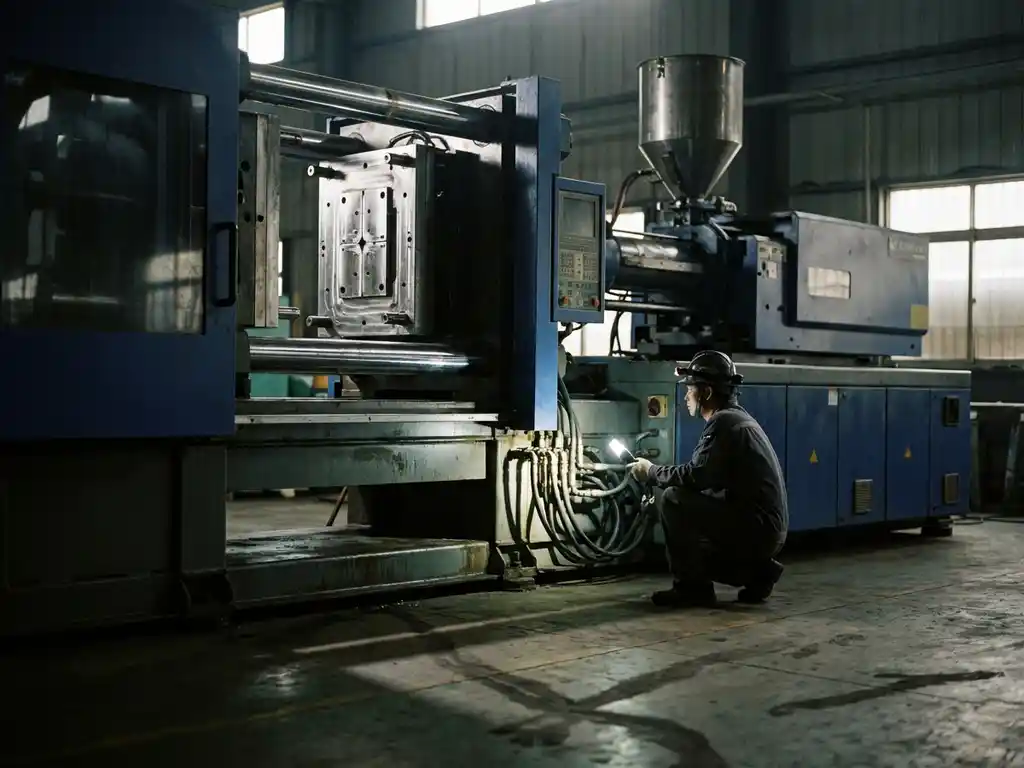
Injection molding is a critical manufacturing process in which every minute of production downtime translates directly into lost revenue, missed deadlines, and increased operational costs. For manufacturers that rely on plastic injection molding, understanding and minimizing downtime isn’t just about efficiency—it’s about maintaining a competitive advantage in today’s fast-paced market.
Reducing production downtime has become a top priority for injection molding facilities worldwide, as even brief interruptions can cascade into significant financial losses. The key to addressing this challenge lies in understanding what causes downtime, why it’s so expensive, and how modern solutions can dramatically reduce these costly interruptions.
What is injection molding downtime, and how does it impact production?
Injection molding downtime refers to any period when production equipment is not actively manufacturing parts, including planned maintenance, mold changes, equipment failures, and troubleshooting activities. This downtime directly reduces overall equipment effectiveness (OEE) and creates a ripple effect throughout the entire production schedule.
The impact on production extends far beyond the immediate stoppage. During downtime, expensive machinery sits idle while operators and technicians work to resolve issues. Raw materials may need to be purged from the system, and the first parts produced after operations resume often require quality checks or may be scrapped. Additionally, downstream processes that depend on injection-molded components face their own delays, potentially affecting entire supply chains.
Manufacturers typically categorize downtime as either planned or unplanned. Planned downtime includes scheduled maintenance and mold changes, while unplanned downtime results from equipment failures, quality issues, or unexpected troubleshooting needs. Both types significantly affect production targets and delivery schedules.
Why does injection molding downtime cost so much money?
Injection molding downtime costs escalate quickly because modern injection molding machines represent substantial capital investments that must generate continuous revenue to justify their expense. A typical injection molding machine can cost hundreds of thousands of dollars, and every hour of downtime represents a lost opportunity to recover that investment.
The financial impact includes several cost categories. Direct costs encompass lost production output, wasted materials during startup and shutdown procedures, and overtime labor needed to meet delivery deadlines. Indirect costs include customer dissatisfaction due to delayed shipments, potential penalty fees for missed delivery windows, and the administrative burden of rescheduling production runs.
Labor costs compound during downtime as skilled technicians and operators remain on payroll while troubleshooting issues or waiting for equipment repairs. Energy costs continue as facilities maintain heating, cooling, and lighting, while the machine’s auxiliary equipment may continue consuming power even when it is not producing parts.
What causes the longest downtime periods in injection molding?
Mold changes represent the single largest source of planned downtime in injection molding operations, often requiring 2–8 hours depending on mold complexity and available equipment. These extended periods occur because traditional mold changes involve multiple manual steps, precise alignment procedures, and extensive testing before full production resumes.
Equipment failures, particularly hydraulic system problems, heating element malfunctions, and control system issues, can create unpredictable downtime lasting several hours or even days. These failures often require specialized technicians and replacement parts that may not be immediately available on-site.
Quality issues and injection molding troubleshooting also contribute to significant downtime. When parts don’t meet specifications, operators must identify root causes, adjust machine parameters, and conduct trial runs. Complex quality problems may require multiple adjustment cycles, extending downtime considerably as teams work through systematic problem-solving procedures.
How long does a typical mold change take without quick-change systems?
A typical mold change without quick-change systems requires 4–8 hours for standard molds and can extend to 12+ hours for large, complex tooling. This lengthy process involves manually disconnecting utilities, using cranes to remove and position molds, performing precise alignment procedures, and conducting extensive testing before reaching full production speed.
The traditional mold change process includes several time-consuming steps. Operators must safely shut down the machine and disconnect water lines, electrical connections, and any specialized utilities. The old mold must be carefully removed using overhead cranes or other lifting equipment, requiring coordination among multiple team members to ensure safety and prevent damage.
Installing the new mold involves reversing this process, with additional time for alignment, connection verification, and parameter adjustments. Once physical installation is complete, operators must conduct test shots, adjust process parameters, and run quality checks before resuming full production. Each of these steps requires careful attention to detail, contributing to the extended timeline.
How do quick mold change systems reduce downtime costs?
Quick mold change systems reduce downtime costs by cutting mold change times from hours to minutes, typically achieving changeovers in 10–30 minutes compared with traditional methods that require 4–8 hours. This dramatic time reduction translates directly into increased production capacity and reduced labor costs per changeover.
These systems eliminate many manual steps through automated clamping mechanisms, quick-connect utilities, and standardized interfaces. Instead of manually connecting water lines, electrical systems, and other utilities, operators can engage preconfigured connections with simple lever actions or push-button controls. This standardization also reduces the skill level required for changeovers and minimizes the risk of connection errors.
The financial benefits extend beyond time savings. Faster changeovers enable manufacturers to run smaller batch sizes economically, reducing inventory carrying costs and improving responsiveness to customer demands. Additionally, reduced physical strain on operators and a lower risk of mold damage during handling contribute to lower long-term operational costs.
How EAS Change Systems Helps Reduce Production Downtime
We specialize in quick mold change and quick die change solutions that dramatically reduce injection molding downtime and associated costs. Our comprehensive products transform traditional changeover processes from hours-long operations into efficient procedures completed in minutes.
Our solutions include:
- Adaptive clamping systems that secure molds quickly and safely without manual adjustments
- Multi-coupler systems that connect all utilities simultaneously with a single action
- Mold change tables and transportation vehicles that streamline material handling
- Complete turnkey installations with project management and application engineering support
- Comprehensive ROI calculations to demonstrate the financial benefits of implementation
Since 1985, we have helped manufacturers worldwide reduce setup times, optimize production efficiency, and significantly lower operational costs across various applications. Our global network ensures local support and service, while our European engineering quality delivers reliable, long-lasting solutions. Contact us today to learn how our quick-change systems can transform your injection molding operations and eliminate costly downtime.