

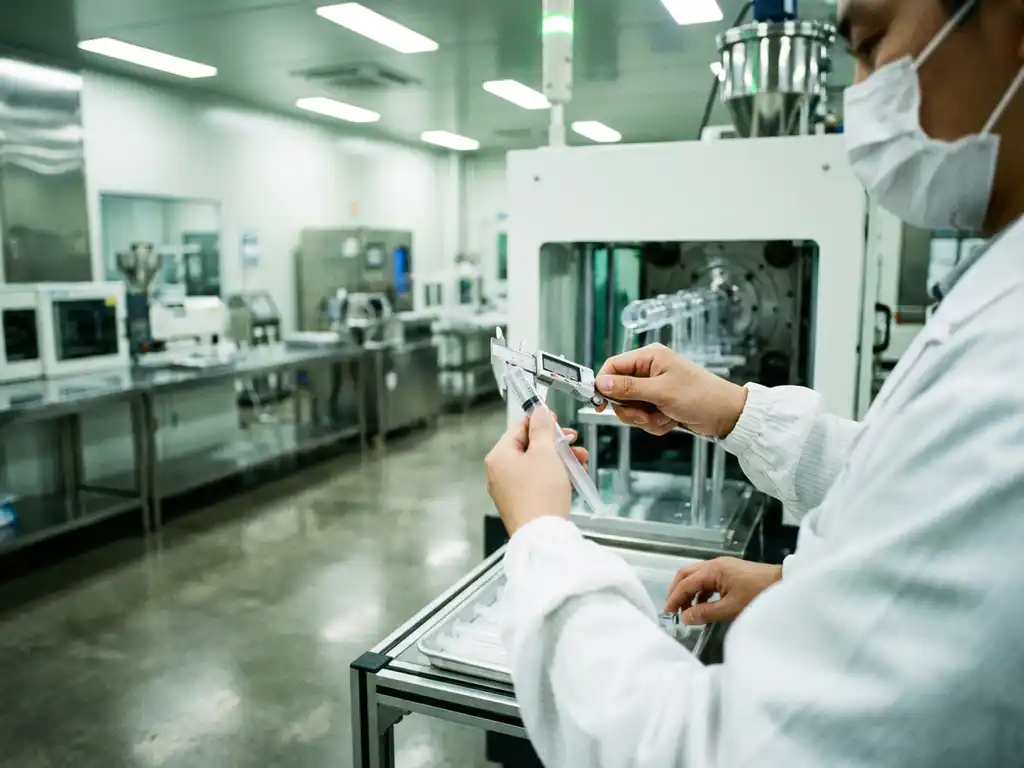
FDA requirements for injection molding validation mandate comprehensive process controls under 21 CFR Part 820 to ensure medical device safety and consistency. These regulations require manufacturers to validate their injection molding processes through documented protocols, testing procedures, and ongoing monitoring. Validation demonstrates that your manufacturing process consistently produces devices that meet predetermined specifications and quality attributes.
What exactly are FDA requirements for injection molding validation?
FDA requirements for injection molding validation are comprehensive process controls mandated under 21 CFR Part 820 (Quality System Regulation) to ensure that medical devices manufactured through injection molding consistently meet safety and performance specifications. These requirements apply to all manufacturers producing medical devices using injection molding processes.
The regulatory framework requires manufacturers to establish and maintain procedures for validating device design and manufacturing processes. For injection molding specifically, this means demonstrating that your process parameters, equipment settings, and environmental controls consistently produce devices that meet predetermined quality specifications.
Key regulatory components include process design documentation, installation qualification (IQ), operational qualification (OQ), and performance qualification (PQ). You must validate critical process parameters such as temperature, pressure, cycle time, and cooling rates. The FDA also requires validation of material handling procedures, mold preparation, and quality control testing methods.
Documentation requirements encompass validation protocols, test procedures, acceptance criteria, and comprehensive records demonstrating process capability. Your validation must address potential failure modes and establish controls to prevent defective products from reaching patients.
Why does the FDA require validation for injection molding processes?
The FDA requires validation for injection molding processes to ensure patient safety through consistent product quality and performance. Medical devices must function reliably in critical applications where failure could cause harm, making process consistency essential for protecting public health.
Injection molding variables significantly impact final product characteristics. Temperature variations can affect material properties, pressure changes influence dimensional accuracy, and cycle time modifications alter molecular structure. These process variations can compromise device performance, biocompatibility, or sterility, potentially endangering patients.
Validation requirements also support quality assurance by establishing documented evidence that manufacturing processes produce consistent results. This systematic approach helps manufacturers identify and control sources of variation before they impact product quality. The FDA uses validation data during inspections to assess manufacturing capability and regulatory compliance.
Additionally, validation protects manufacturers by providing documented evidence of due diligence in product development and manufacturing. Proper validation reduces liability risks and supports regulatory submissions by demonstrating process understanding and control capabilities.
What are the key components of injection molding process validation?
The key components of injection molding process validation follow three distinct stages: Process Design (Stage 1), Process Qualification (Stage 2), and Continued Process Verification (Stage 3). Each stage builds on the previous work to establish comprehensive process control and ongoing monitoring capabilities.
Stage 1: Process Design involves establishing the commercial manufacturing process based on development work and risk analysis. You must define critical process parameters, establish control ranges, and document the rationale for process design decisions. This stage includes equipment selection, tooling specification, and material qualification activities.
Stage 2: Process Qualification demonstrates that your process design consistently produces acceptable products. This stage includes Installation Qualification (IQ) to verify proper equipment installation, Operational Qualification (OQ) to confirm that equipment functions within specifications, and Performance Qualification (PQ) to demonstrate consistent product quality under normal operating conditions.
Stage 3: Continued Process Verification provides ongoing assurance that the process remains in control during routine production. This involves statistical monitoring of process parameters, trending of quality data, and periodic review of process performance. You must establish control charts, investigate out-of-specification results, and implement corrective actions when necessary.
Each stage requires comprehensive documentation, including protocols, test results, and approval signatures. The validation must address all critical aspects of the injection molding process, from raw material handling to finished product testing.
How do you document injection molding validation for FDA compliance?
Documenting injection molding validation for FDA compliance requires comprehensive protocols, detailed test procedures, clearly defined acceptance criteria, and meticulous record-keeping that demonstrates process capability and ongoing control. All documentation must be reviewable, retrievable, and maintained throughout the product lifecycle.
Validation protocols serve as the foundation for your documentation system. These documents must specify test objectives, methodologies, acceptance criteria, and responsibilities for each validation activity. Protocols should address equipment qualification, process parameter studies, and product testing requirements. Include detailed sampling plans, test methods, and statistical analysis approaches.
Test method documentation must provide sufficient detail for reproducible execution by qualified personnel. Specify equipment calibration requirements, environmental conditions, and procedural steps for each test. Document acceptance criteria based on product specifications, regulatory requirements, and clinical needs. Include both individual test limits and overall process capability requirements.
Record-keeping requirements encompass all validation activities, from initial planning through ongoing monitoring. Maintain complete test results, equipment logs, environmental monitoring data, and personnel training records. Document any deviations from protocols, including investigation results and corrective actions. Ensure all records include proper identification, dates, and approval signatures.
Your documentation system must support regulatory inspections by providing clear evidence of validation activities and ongoing compliance. Organize records logically, maintain current procedures, and ensure personnel understand documentation requirements. Regular review and updating of validation documentation help maintain compliance as processes evolve.
What happens if injection molding validation doesn’t meet FDA standards?
If injection molding validation doesn’t meet FDA standards, manufacturers face potential warning letters, product recalls, facility inspections, and mandatory corrective actions. The FDA may also impose consent decrees, import alerts, or criminal prosecution in severe cases involving patient harm or willful violations.
Warning letters represent the most common initial enforcement action for validation deficiencies. These formal notifications require written responses within 15 working days, detailing specific corrective actions and timelines for implementation. The FDA expects comprehensive remediation plans that address root causes, not just the immediate symptoms of validation failures.
Product recalls become necessary when validation deficiencies compromise product safety or effectiveness. Recalls require immediate notification to customers, distributors, and regulatory authorities. Manufacturers must investigate affected products, implement corrective actions, and demonstrate process improvements before resuming distribution. Quick die change systems and similar manufacturing solutions can help facilities improve process control and reduce validation risks through enhanced equipment reliability and consistency.
Facility inspections often follow validation deficiencies to assess overall quality system compliance. FDA investigators review validation documentation, interview personnel, and observe manufacturing operations. Inspection findings may result in additional regulatory actions if systemic quality problems are identified.
Addressing validation deficiencies requires immediate corrective action, comprehensive root cause analysis, and preventive measures to avoid recurrence. Manufacturers should engage qualified consultants, implement robust quality systems, and maintain ongoing compliance monitoring to prevent future violations.
How EAS Change Systems helps with injection molding validation compliance
EAS Change Systems provides comprehensive solutions for manufacturers seeking to meet FDA injection molding validation requirements through improved process control and documentation capabilities. Our specialized tooling and change systems help medical device manufacturers establish the consistent, repeatable processes that FDA validation demands.
Our solutions support validation compliance through:
• Quick die change systems that reduce variability in mold installation and setup procedures
• Standardized tooling interfaces that ensure consistent process parameters across production runs
• Automated changeover processes that minimize human error and improve documentation accuracy
• Integrated monitoring systems that capture critical process data for validation records
• Training programs that help personnel understand validation requirements and proper procedures
Ready to strengthen your injection molding validation program and ensure FDA compliance? Contact EAS Change Systems today to learn how our proven solutions can help you establish robust, validated processes that meet regulatory requirements while improving operational efficiency.