

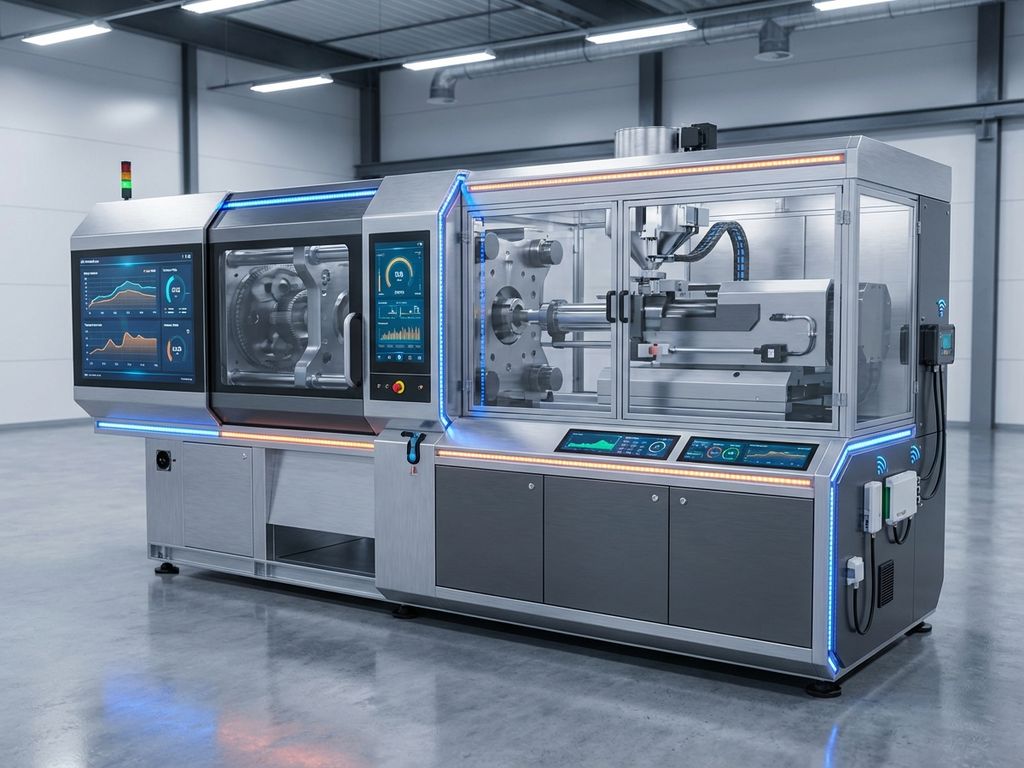
Smart injection molding systems integrate advanced automation, sensors, and data analytics into traditional molding processes to create intelligent, self-monitoring production environments. These systems use real-time data collection and automated controls to optimize parameters, reduce waste, and improve quality consistency. They represent the evolution from manual, reactive manufacturing to predictive, autonomous production that automatically adapts to changing conditions.
What are smart injection molding systems and how do they work?
Smart injection molding systems combine traditional injection molding equipment with intelligent sensors, automated controls, and data analytics to create self-optimizing production environments. These systems continuously monitor temperature, pressure, flow rates, and cycle times while automatically adjusting parameters to maintain optimal performance.
The core components include advanced process controllers that collect data from multiple sensors throughout the molding cycle. Machine learning algorithms analyze this information to predict potential issues before they occur, automatically adjusting injection speed, pressure profiles, and cooling times. Integration with enterprise systems allows real-time production monitoring and quality tracking across entire manufacturing operations.
Communication protocols connect molding machines to central control systems, enabling coordinated operation of multiple machines. This connectivity allows for predictive maintenance scheduling, automatic material handling, and synchronized production planning that responds to changing demands without manual intervention.
What’s the difference between traditional and smart injection molding?
Traditional injection molding relies on manual parameter setting and reactive maintenance, while smart systems use automated optimization and predictive analytics. Traditional operations require skilled technicians to adjust settings based on experience, often resulting in trial-and-error approaches to quality issues.
Smart systems continuously analyze production data to identify optimal parameter combinations for each specific part and material. They automatically compensate for variables like ambient temperature changes, material batch variations, and equipment wear. This eliminates much of the guesswork involved in traditional molding operations.
Quality control differs significantly between approaches. Traditional systems typically rely on periodic sampling and post-production inspection. Smart systems monitor every cycle, detecting defects in real time and automatically adjusting processes to prevent continued production of faulty parts. This immediate feedback loop dramatically reduces waste and improves overall efficiency.
How do smart injection molding systems improve production efficiency?
Smart injection molding systems improve efficiency through automated parameter optimization, predictive maintenance, and real-time quality monitoring. These capabilities reduce cycle times, minimize waste, and eliminate unplanned downtime that typically disrupts traditional manufacturing schedules.
Automated systems optimize injection parameters for each cycle, reducing the time needed to achieve stable production. Predictive analytics identify potential equipment issues before failures occur, allowing maintenance to be scheduled during planned downtime rather than emergency situations. This approach typically increases overall equipment effectiveness significantly.
Energy efficiency improvements result from precise control of heating, cooling, and hydraulic systems. Smart systems use energy only when needed and optimize power consumption based on production requirements. Material waste reduction occurs through better process control and immediate detection of quality issues, preventing continued production of defective parts.
What challenges do manufacturers face when implementing smart injection molding?
Manufacturers commonly face integration complexity, staff training requirements, and initial investment costs when implementing smart injection molding systems. Legacy equipment often requires significant modifications or replacement to accommodate new sensors and control systems.
Technical integration challenges include connecting different equipment brands and ensuring reliable data communication between systems. Many facilities struggle with inconsistent network infrastructure that cannot support the data requirements of smart manufacturing systems. Cybersecurity concerns also arise when connecting production equipment to broader network systems.
Workforce adaptation represents another significant challenge. Operators accustomed to manual control methods need training on automated systems and data interpretation. Maintenance staff require new skills for servicing sophisticated electronic components and software systems. The transition period often involves temporary productivity decreases as teams adapt to new workflows and procedures.
How EAS change systems enhance smart injection molding operations
We enhance smart injection molding operations through advanced quick mold change solutions that integrate seamlessly with automated production systems. Our QMC technology reduces changeover times from hours to minutes, enabling the flexibility that smart manufacturing systems require for responsive production scheduling.
Our comprehensive solutions support smart injection molding through:
- Automated clamping systems that integrate with production control software
- Multi-coupler systems that connect utilities automatically during mold changes
- Transportation systems that coordinate with factory automation networks
- Inspection units that provide quality data to smart manufacturing systems
- ROI calculation services that quantify smart manufacturing benefits
These integrated solutions enable manufacturers to maximize the benefits of smart injection molding by eliminating manual changeover processes that disrupt automated production flows. Our specialized applications are designed to work with various manufacturing environments and production requirements. Contact us today to discover how our QMC solutions can enhance your smart manufacturing initiatives and improve overall production efficiency.