

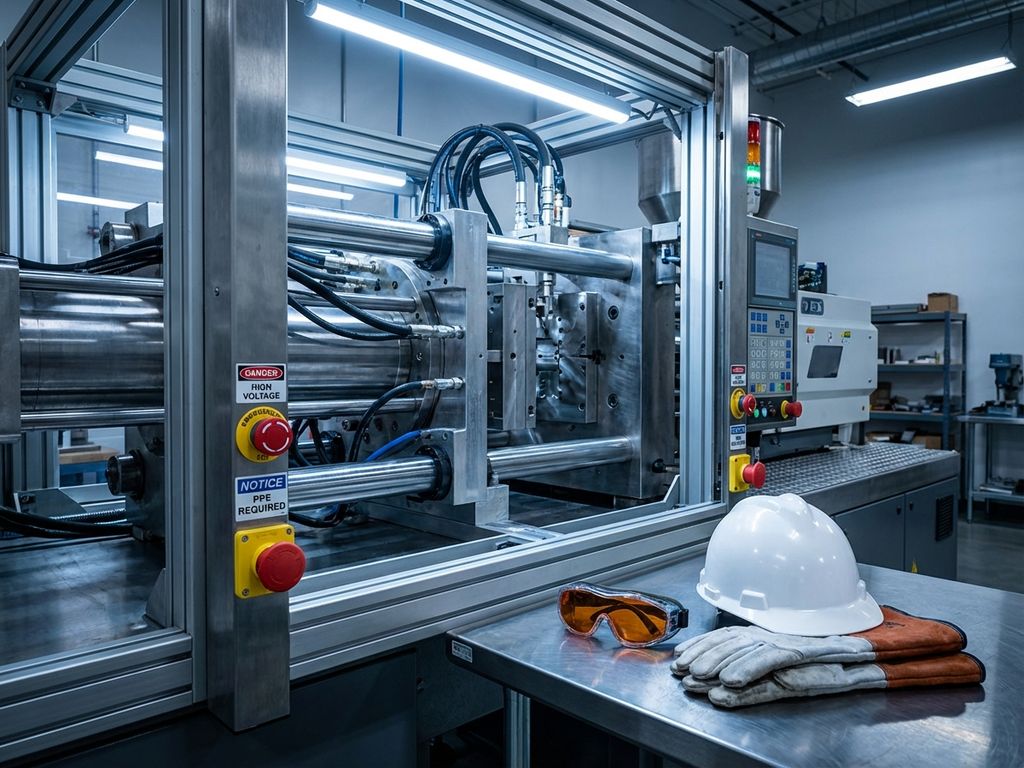
Injection molding safety protocols are comprehensive procedures designed to protect workers from hazards including hot surfaces, high pressures, toxic fumes, and mechanical injuries. These protocols encompass lockout/tagout procedures, proper ventilation systems, personal protective equipment requirements, and safe maintenance practices. Effective safety measures reduce workplace accidents while ensuring regulatory compliance and operational efficiency.
What are the most critical injection molding safety hazards to watch for?
The most dangerous injection molding hazards include high-temperature burns from heated materials and equipment, crushing injuries from heavy molds, toxic fume exposure from plastic resins, and high-pressure injection injuries. Electrical hazards from machinery and repetitive strain injuries also pose significant risks to operators.
Hot surfaces throughout injection molding operations can reach temperatures exceeding 300°C, making burn injuries a constant threat. Molten plastic temperatures often exceed 200°C, and contact with heated barrels, nozzles, or freshly molded parts can cause severe burns. Workers must remain aware of all heated components and must never attempt to clear blockages or perform maintenance on hot equipment.
Mechanical hazards present equally serious dangers. Heavy molds weighing several tonnes can cause crushing injuries during installation, removal, or maintenance. Moving machine parts, including reciprocating screws and hydraulic systems, create pinch points and crushing zones. High-pressure injection systems operate at pressures up to 2000 bar, capable of causing injection injuries if safety systems fail.
Chemical exposure risks vary depending on the materials processed. Many thermoplastics release harmful vapours when heated, including formaldehyde, styrene, and other volatile organic compounds. Some additives and colorants contain toxic substances that require special handling procedures and enhanced ventilation systems.
How do you establish proper lockout/tagout procedures for injection molding equipment?
Lockout/tagout procedures require complete energy isolation before maintenance work begins. This includes electrical disconnection, hydraulic pressure release, pneumatic system depressurization, and thermal energy dissipation. Each energy source must have individual lockout devices applied by authorized personnel only.
Effective lockout procedures start with comprehensive energy source identification. Injection molding machines typically have multiple energy inputs, including electrical power, hydraulic systems, pneumatic controls, and stored thermal energy. Each system requires specific isolation methods and verification procedures to ensure complete de-energization.
Documentation plays a crucial role in lockout effectiveness. Written procedures must specify exact isolation points, required lock types, verification steps, and authorized personnel responsibilities. Machine-specific lockout procedures should be posted at each workstation and regularly updated when equipment modifications occur.
Training requirements extend beyond basic lockout concepts. Authorized employees need detailed instruction on energy source recognition, proper isolation techniques, and emergency response procedures. Affected employees must understand lockout restrictions and communication protocols during maintenance activities.
What personal protective equipment is essential for injection molding operations?
Essential PPE includes heat-resistant gloves for handling hot parts, safety glasses with side shields, steel-toed boots, and appropriate respiratory protection when required. Long-sleeved clothing and aprons provide additional protection from hot splashes and chemical contact during normal operations.
Eye protection requirements vary based on specific operations. Safety glasses with side shields provide basic protection from flying particles and chemical splashes. Face shields become necessary when handling molten materials or performing maintenance on heated equipment. Prescription safety glasses ensure that vision correction does not compromise protection.
Hand protection presents particular challenges due to dexterity requirements. Heat-resistant gloves protect against thermal hazards but may reduce the tactile sensitivity needed for precise operations. Cut-resistant gloves protect during mold handling and maintenance activities. Chemical-resistant gloves become necessary when handling certain additives or cleaning solvents.
Respiratory protection depends on material types and ventilation effectiveness. Basic dust masks may suffice for some operations, while organic vapour respirators become necessary when processing materials that release harmful fumes. Supplied-air systems provide maximum protection in poorly ventilated areas or when handling particularly hazardous materials.
Why is proper ventilation crucial in injection molding facilities?
Proper ventilation removes toxic vapours and fumes released during plastic heating and processing. Adequate air circulation prevents the accumulation of harmful substances, maintains acceptable air quality, and reduces fire and explosion risks from volatile compounds. Effective ventilation systems also help control temperature and humidity levels.
Local exhaust ventilation provides the most effective fume control by capturing contaminants at their source. Properly designed hood systems positioned near injection points, mold areas, and material feed zones prevent vapour dispersion throughout the facility. Exhaust rates must match emission levels to maintain capture effectiveness.
General ventilation supplements local exhaust systems by providing overall air movement and temperature control. Air change rates typically need to be higher than in standard industrial facilities due to thermal loads from heated equipment and potential chemical emissions. Fresh air intake must be sufficient to replace exhausted contaminated air.
Monitoring systems ensure ventilation effectiveness over time. Regular air quality testing identifies potential problems before they affect worker health. Pressure monitoring confirms proper system operation, while filter condition indicators prevent reduced performance from clogged components.
How do you safely perform mold changes and equipment maintenance?
Safe mold changes require complete equipment shutdown, proper lifting equipment, and coordinated team procedures. All energy sources must be isolated, molds allowed to cool to safe temperatures, and appropriate lifting devices used for heavy components. Clear communication between team members prevents accidents during complex procedures.
Preparation steps significantly impact safety outcomes. Equipment must be completely shut down using proper lockout/tagout procedures before beginning mold change activities. Hydraulic systems require complete pressure relief, and heated components need sufficient cooling time to reach safe handling temperatures.
Lifting and handling procedures prevent the most serious mold change injuries. Overhead cranes, forklifts, or specialized mold-handling equipment must be properly rated for mold weights. Rigging hardware requires regular inspection, and lifting points must be clearly identified and structurally sound. Multiple workers should never position themselves under suspended loads.
Communication protocols coordinate team activities and prevent accidents. Clear role assignments ensure that everyone understands their responsibilities during mold changes. Hand signals or radio communication maintain coordination when noise levels prevent verbal communication. Emergency stop procedures must be clearly established and understood by all team members.
How EAS change systems enhance injection molding safety protocols
EAS change systems significantly improve injection molding safety through advanced quick mold change technology that reduces worker exposure to hazardous conditions. Our solutions minimize manual handling requirements, reduce mold change times, and incorporate built-in safety features that protect operators throughout the process.
Our comprehensive safety enhancements include:
- Automated clamping systems that eliminate manual positioning of heavy molds
- Quick-disconnect couplers that reduce exposure time to heated components
- Integrated lifting and transportation systems that prevent manual handling injuries
- Standardized procedures that reduce human error during mold changes
- Remote operation capabilities that keep operators away from pinch points and crush zones
We provide complete turnkey solutions, including installation, training, and ongoing support, to ensure that your safety protocols meet the highest standards. Our experienced engineers work with your team to develop customized safety procedures that integrate seamlessly with your existing operations while maximizing protection for your workforce.
Contact our safety specialists today to learn how our quick mold change systems can enhance your facility’s safety protocols while improving operational efficiency and reducing downtime.