

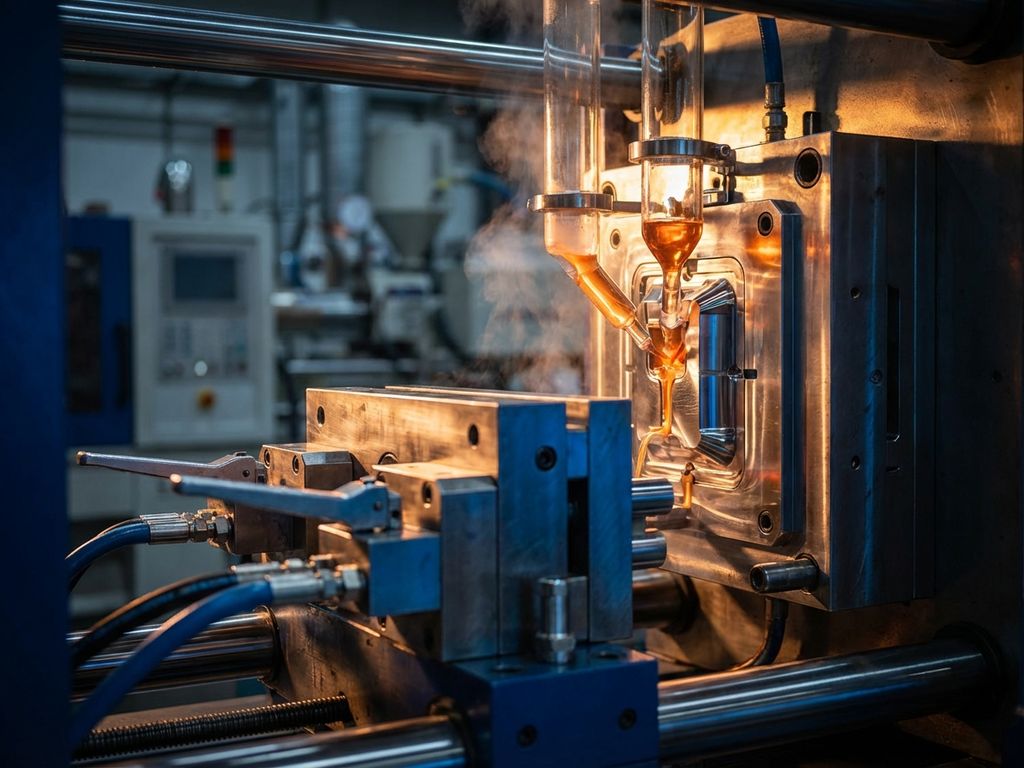
Injection molding isn’t inherently difficult, but it involves complex processes that require technical knowledge and precision. The perception of difficulty comes from lengthy setup times, precise parameter control, and the expertise needed for consistent quality. Modern automation and quick-change systems have made injection molding more accessible and efficient for manufacturers.
What makes injection molding seem difficult for manufacturers?
The complexity of injection molding stems from multiple technical requirements that must work together perfectly. Setup procedures involve precise temperature controls, pressure settings, and timing parameters that affect product quality. Material considerations add another layer of complexity, as different plastics require specific processing conditions, drying times, and handling procedures.
Technical expertise becomes crucial when troubleshooting problems or optimizing production. Operators must understand material flow, cooling rates, and mold behavior to maintain consistent quality. The precision required for dimensional accuracy and surface finish means small adjustments can significantly impact results.
Safety considerations also contribute to the perceived difficulty. High temperatures, pressures, and heavy machinery require proper training and adherence to safety protocols. These factors combine to create a learning curve that can seem daunting to newcomers in the industry.
How long does it take to set up an injection molding machine?
Traditional injection molding setup typically takes 2–8 hours, depending on mold complexity and changeover requirements. Simple molds with minimal parameter changes might require 2–3 hours, while complex molds with different materials or significant size differences can take a full shift or longer.
The setup process involves several time-consuming steps. Mold installation requires careful alignment and securing, which can take 1–2 hours alone. Material changeover, including purging previous materials and establishing new processing parameters, adds another hour or more. First article inspection and parameter fine-tuning often require additional time to achieve acceptable quality.
Manual processes significantly extend setup times. Operators must manually position heavy molds, connect utilities, and perform multiple safety checks. Each step requires careful attention to prevent damage or safety issues, contributing to longer changeover periods that impact overall production efficiency.
What are the most common problems in injection molding operations?
The most frequent operational issues include material flow problems, temperature control challenges, and quality consistency concerns. Short shots, flash, warping, and sink marks are common defects that manufacturers encounter regularly. These problems often stem from improper parameter settings or equipment maintenance issues.
Temperature control presents ongoing challenges throughout production. Inconsistent heating or cooling affects material flow, cycle times, and part quality. Mold temperature variations can cause dimensional inconsistencies and surface defects that require constant monitoring and adjustment.
Cycle time optimization becomes problematic when balancing speed with quality. Rushing cycles can lead to incomplete filling or inadequate cooling, while overly conservative settings reduce productivity. Finding the optimal balance requires experience and ongoing adjustment based on material behavior and part requirements.
Why do mold changes take so long in traditional injection molding?
Conventional mold changing involves manual procedures that require significant time and labor. Operators must safely remove heavy molds using overhead cranes, disconnect multiple utility connections, and carefully position replacement molds. Each step demands attention to safety and precision to prevent equipment damage.
Alignment challenges contribute significantly to changeover time. Molds must be precisely positioned within the machine, with proper alignment of guide pins, ejector systems, and clamping surfaces. Manual alignment often requires multiple adjustments and test closures to ensure proper fit and operation.
Safety considerations mandate careful procedures that cannot be rushed. Lockout/tagout procedures, pressure relief, and temperature considerations add necessary time to protect operators and equipment. These cumulative factors result in lengthy changeovers that reduce available production time and impact profitability.
How can manufacturers make injection molding easier and more efficient?
Modern injection molding optimization focuses on automation technologies and standardized procedures that reduce complexity and human error. Automated parameter storage and recall systems eliminate manual setup adjustments, while standardized mold interfaces reduce changeover complexity and time requirements.
Training programs play a crucial role in simplifying operations. Well-trained operators understand troubleshooting procedures, preventive maintenance requirements, and optimization techniques that improve overall efficiency. Comprehensive training reduces the learning curve and builds confidence in handling complex situations.
System improvements include implementing predictive maintenance schedules, upgrading control systems, and standardizing tooling interfaces. These improvements reduce unexpected downtime, simplify operations, and create more consistent production environments that support efficient manufacturing processes across various applications.
How EAS change systems simplify injection molding operations
We address injection molding challenges through comprehensive quick mold change solutions that dramatically reduce setup times and operational complexity. Our products transform traditional manual changeovers into efficient, automated processes that minimize downtime and maximize productivity.
Our solutions include:
- Automated clamping systems that eliminate manual mold positioning and alignment
- Quick-connect utility couplers for rapid connection of cooling, heating, and ejector systems
- Standardized mold interfaces that ensure consistent setup procedures
- Comprehensive training and support services to optimize system performance
- ROI calculations and project management to ensure successful implementation
These integrated solutions reduce mold changeover times from hours to minutes, making injection molding more accessible and profitable for manufacturers of all sizes. Our specialized systems serve diverse industries with proven results. Contact us today to discover how our quick mold change systems can transform your injection molding operations and improve your bottom line.
