

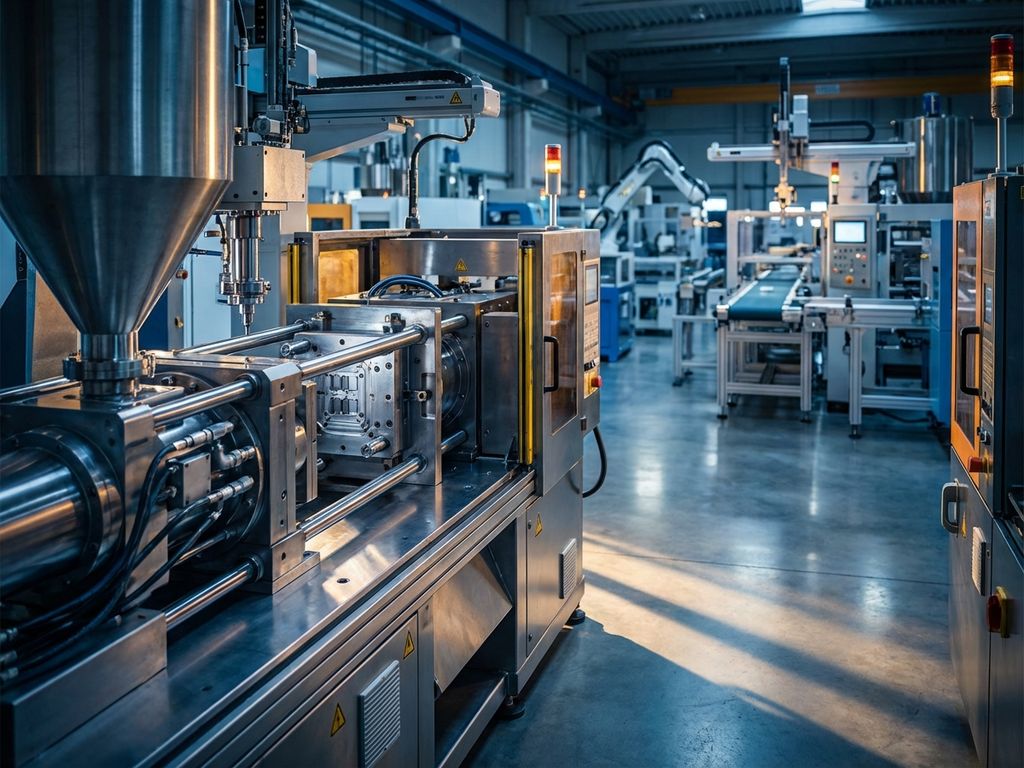
Manufacturing productivity improvement involves optimising processes, reducing waste, and implementing technologies that increase output while maintaining quality. Key strategies include reducing setup times, implementing automation, improving workflow efficiency, and measuring performance through data-driven metrics. These improvements help manufacturers remain competitive while reducing costs and increasing profitability.
What are the biggest productivity challenges facing manufacturers today?
Modern manufacturers face several critical productivity barriers that significantly impact their operational efficiency. Extended setup times remain one of the most persistent challenges, often consuming hours of valuable production time when switching between different products or tooling configurations.
Equipment downtime presents another major obstacle, with unplanned maintenance interruptions disrupting production schedules and reducing overall equipment effectiveness. These unexpected stops can cascade through the entire production line, affecting delivery commitments and customer satisfaction.
Inefficient workflows compound these issues, particularly when manual processes create bottlenecks or when poor communication between departments leads to coordination problems. Resource allocation challenges also emerge when manufacturers struggle to balance labour, materials, and machine capacity effectively.
Additional productivity barriers include outdated technology systems that lack integration capabilities, insufficient employee training on new processes, and quality control issues that result in rework or scrap. These interconnected challenges require systematic approaches to address effectively and achieve meaningful manufacturing productivity improvement.
How does reducing setup time impact overall manufacturing productivity?
Setup time reduction creates a multiplier effect on manufacturing productivity by enabling more frequent changeovers and smaller batch sizes. Shorter setup times allow manufacturers to respond quickly to customer demands while maintaining efficient production schedules and reducing inventory holding costs.
When setup times decrease from hours to minutes, manufacturers gain significant flexibility in production planning. This improvement enables just-in-time manufacturing approaches, where products can be made closer to actual demand rather than producing large batches to justify lengthy changeover periods.
The relationship between setup time and overall equipment effectiveness becomes particularly evident in batch size optimisation. Reduced setup times make smaller production runs economically viable, leading to lower work-in-progress inventory and faster cash flow cycles.
Manufacturing productivity improvement through setup time reduction also impacts quality outcomes. Shorter changeovers mean less opportunity for errors during transitions, and operators maintain better focus when setup procedures are streamlined and standardised. This combination of speed and reliability creates sustainable competitive advantages in dynamic market conditions.
What automation technologies deliver the highest productivity gains?
Several automation technologies consistently deliver substantial productivity improvements across manufacturing operations. Quick-change systems for tooling and moulds represent one of the most impactful investments, transforming setup processes from manual, time-intensive tasks into rapid, automated procedures.
Robotic integration provides significant gains in repetitive tasks, material handling, and precision operations. Modern collaborative robots work alongside human operators, handling dangerous or monotonous tasks while allowing workers to focus on higher-value activities requiring problem-solving and creativity.
Smart manufacturing technologies, including IoT sensors and predictive maintenance systems, prevent costly downtime by identifying potential equipment issues before they cause production interruptions. These systems continuously monitor machine performance and automatically alert maintenance teams when intervention becomes necessary.
Automated quality control systems using vision technology and sensors ensure consistent product standards while reducing inspection time. Integration platforms that connect different manufacturing systems create seamless data flow, eliminating manual data entry and reducing errors that impact productivity and decision-making speed.
How do you measure and track manufacturing productivity improvements?
Effective measurement of manufacturing productivity improvements requires a combination of key performance indicators that provide comprehensive visibility into operational performance. Overall Equipment Effectiveness (OEE) serves as the primary metric, combining availability, performance, and quality measurements into a single productivity indicator.
Cycle time analysis tracks the duration required to complete specific manufacturing processes, helping identify bottlenecks and measure improvement progress over time. This metric becomes particularly valuable when comparing performance before and after implementing productivity enhancement initiatives.
Essential productivity metrics include throughput rates, setup time reduction percentages, and defect rates. Labour productivity measurements track output per worker hour, while machine utilisation rates indicate how effectively equipment capacity is being used during available production time.
Return-on-investment calculations for manufacturing productivity improvement projects require tracking both cost savings and revenue increases. These measurements should include reduced labour costs, decreased material waste, improved delivery performance, and increased production capacity utilisation. Regular monitoring of these metrics enables continuous improvement and validates investment decisions in productivity enhancement technologies.
How EAS change systems helps improve manufacturing productivity
EAS change systems directly addresses the most significant productivity challenges through advanced quick mould change and quick die change solutions that transform lengthy setup processes into rapid, efficient operations. Our comprehensive approach reduces setup times from hours to minutes, enabling manufacturers to achieve substantial manufacturing productivity improvement across their operations.
Our solutions deliver measurable productivity benefits through:
- Dramatic setup time reduction – converting manual changeover processes into automated systems that complete tool changes in minutes rather than hours
- Increased production flexibility – enabling economical small-batch production and rapid response to changes in customer demand
- Enhanced equipment utilisation – maximising productive machine time by minimising non-productive changeover periods
- Improved operator safety – eliminating manual handling of heavy moulds and dies through automated systems
- Consistent changeover quality – standardising processes to reduce setup errors and improve first-run quality
We provide complete turnkey solutions, including adaptive clamping systems, coupler systems, mould change tables, and comprehensive project management from installation through ongoing support. Our global experience across three continents ensures proven results for manufacturers seeking sustainable productivity improvements across various industrial applications.
Contact EAS change systems today to discover how our quick-change solutions can transform your manufacturing productivity and provide measurable return on investment for your operations.
