

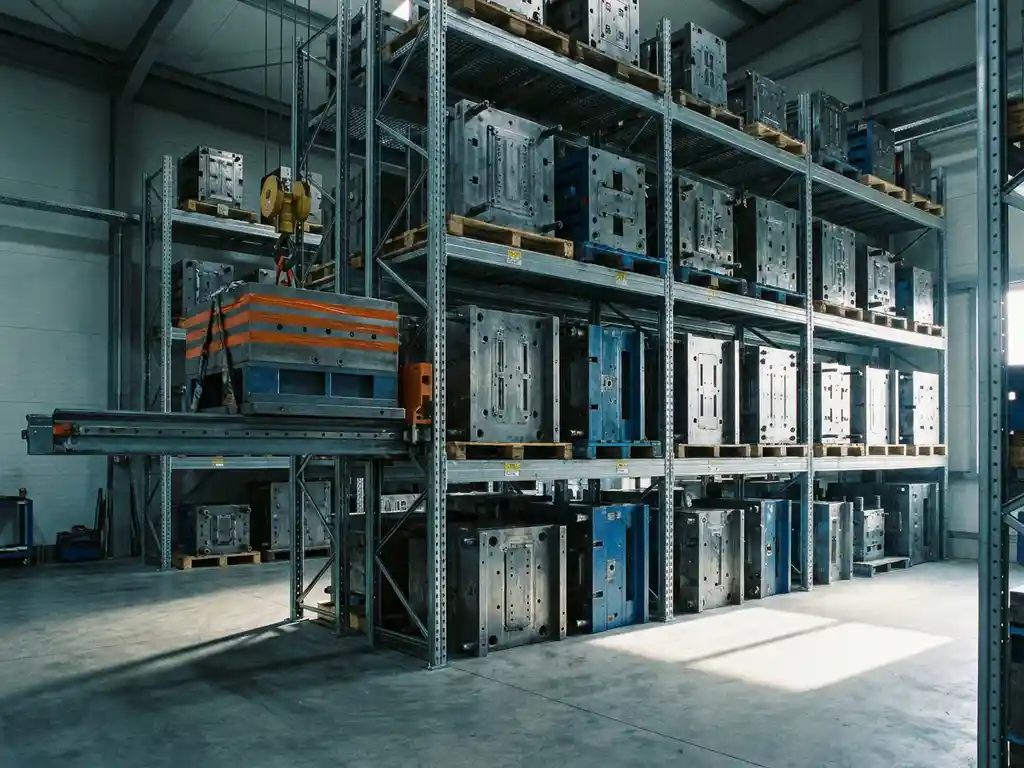
A mold storage rack can safely hold anywhere from a few hundred kilograms to several tonnes per shelf level, depending on its design, materials, and construction quality. Most industrial mold racks are engineered to support loads between 1,000 kg and 10,000 kg per tier, though heavy-duty systems built for large injection molds can exceed this range. The right capacity for your facility depends on a combination of structural, operational, and safety factors — all of which this article breaks down in detail.
What factors determine a mold storage rack’s weight capacity?
A mold storage rack’s weight capacity is determined by its structural design, the grade and thickness of steel used, the rack’s footprint and tier spacing, the quality of welds and connections, and the floor anchoring system. No single factor works in isolation — capacity is the result of how all these elements perform together under load.
The most critical structural variables include:
- Steel grade and profile: Heavier-gauge steel and reinforced uprights allow for greater load distribution without deformation.
- Beam span: The wider the shelf span, the more the beam flexes under weight. Shorter spans generally support higher loads more reliably.
- Tier height: Lower tier spacing improves rack stability under heavy loads. Tall racks with widely spaced tiers are more vulnerable to racking forces.
- Floor anchoring: Racks that are not properly anchored to a concrete floor can tip or shift under uneven loads, regardless of their rated capacity.
- Load distribution: A rack rated for 3,000 kg per level assumes that weight is spread evenly. Concentrated loads in one area can cause localized failure even within the rated limit.
Always request engineering documentation from the rack manufacturer that specifies the rated capacity per shelf, per bay, and for the entire structure. Generic estimates are not a substitute for verified load ratings.
How much does a typical injection mold weigh?
A typical injection mold weighs anywhere from 50 kg for small, single-cavity molds to well over 10,000 kg for large multi-cavity or automotive-grade tooling. The average mid-size production mold used in consumer goods or packaging manufacturing commonly falls in the 500 kg to 3,000 kg range.
Several variables drive mold weight:
- Mold base material: Most molds are made from hardened or pre-hardened steel, which is dense. Aluminum tooling is lighter but less common for high-volume production.
- Number of cavities: Multi-cavity molds require larger plates and more material, increasing overall weight significantly.
- Part complexity: Complex geometries with lifters, slides, and core pulls add mechanical components that increase weight.
- Mold size relative to machine tonnage: Molds built for large injection molding machines (above 1,000 tonnes of clamping force) are consistently heavier than those for smaller presses.
Knowing the actual weight of each mold in your inventory is essential before selecting or loading any storage rack. Weigh molds directly rather than estimating from part size or machine specifications, as tooling modifications over time can alter original weights.
What’s the difference between static and dynamic load ratings on mold racks?
Static load rating refers to the maximum weight a rack can support when the load is completely stationary. Dynamic load rating refers to the maximum weight the rack can safely handle during movement, such as when a mold is being slid onto or off a shelf using rollers or a transfer cart. Dynamic ratings are always lower than static ratings for the same rack.
This distinction matters enormously in a mold storage environment. When a mold is moved across a shelf surface using die lifters, pre-rollers, or a mold change table, the force applied to the rack structure is not constant. Impact loads, lateral forces, and uneven weight transfer during movement create stresses that a rack rated only for static loads may not handle safely.
When specifying a mold storage rack, always confirm both ratings with the manufacturer. If your facility uses any form of mechanized mold transfer directly on the rack, the dynamic load rating is the figure that governs safe operation. Using a rack beyond its dynamic rating — even if the mold’s weight falls within the static limit — is a genuine safety risk. Exploring purpose-built mold handling products designed with both static and dynamic performance in mind can help ensure your storage setup meets the demands of active production environments.
How should molds be distributed across rack tiers to stay within safe limits?
Molds should be distributed so that the heaviest loads occupy the lowest tiers, weight is spread evenly across each shelf level, and no single tier exceeds its rated capacity. Concentrating heavy molds on upper tiers raises the rack’s center of gravity and increases the risk of tipping or structural fatigue over time.
Practical guidelines for safe load distribution include:
- Heaviest molds at floor level or tier one: Storing the largest tooling at the bottom reduces leverage on the rack’s uprights and anchors.
- Balance left to right on each shelf: Avoid placing a heavy mold on one side of a bay while the other side is empty. Uneven loading creates torsional stress on beams.
- Keep a load plan and update it: Maintain a written or digital record of which mold sits on which shelf, including its verified weight. Update this plan every time molds are moved.
- Leave buffer below the rated limit: Do not load shelves to 100% of their rated capacity. A working limit of 80% of the rated load provides a meaningful safety margin.
- Account for accessories: Mold protection plates, insulation boards, and clamping hardware stored alongside a mold add weight that must be included in the tier total.
What safety standards apply to mold storage rack installations?
Mold storage rack installations are subject to a combination of general industrial racking standards, local building codes, and workplace safety regulations. The applicable standards vary by region, but the most widely referenced frameworks include EN 15512 (Europe), ANSI MH16.1 (North America), and AS 4084 (Australia). Facilities in regulated industries may also face additional requirements from occupational health and safety authorities.
Key compliance areas to address during installation include:
- Floor load capacity: The facility’s concrete floor must be rated to support the combined weight of the rack structure and its maximum load. A structural engineer should verify this before installation.
- Seismic considerations: In earthquake-prone regions, racks must be designed and anchored to resist lateral seismic forces, which typically requires heavier anchoring and cross-bracing.
- Aisle width and clearance: Safety regulations specify minimum aisle widths for the equipment used to move molds, including forklifts, cranes, and mold change carts.
- Load capacity labeling: Most standards require that each rack bay is visibly labeled with its maximum permissible load, so operators can verify compliance without consulting documentation.
- Installation by qualified personnel: Racks should be installed according to the manufacturer’s drawings by personnel familiar with the relevant standards. Self-installation without engineering oversight is a common source of non-compliance.
When should a mold storage rack be inspected or replaced?
A mold storage rack should be inspected at least once per year under normal operating conditions, and immediately after any collision, overload event, or visible structural change. Racks showing bent uprights, cracked welds, deformed beams, or damaged floor anchors should be taken out of service until professionally assessed and repaired or replaced.
Routine inspection should cover:
- Upright plumb alignment: Uprights that lean more than 1/240 of their height out of vertical are considered unsafe under most racking standards and require immediate attention.
- Beam connectors and locking pins: Check that all beam-to-upright connections are fully engaged and that locking devices have not been dislodged by impact or vibration.
- Surface corrosion: Surface rust on painted racks is cosmetic, but deep corrosion that pits the steel reduces structural integrity and warrants replacement of affected components.
- Floor anchor condition: Anchors can loosen over time due to floor movement or repeated loading cycles. Verify that all anchors remain tight and that the surrounding concrete shows no cracking.
- Load signage legibility: Capacity labels that have faded or been removed must be replaced so operators always have visible load guidance.
In high-throughput facilities where molds are moved frequently, consider scheduling inspections every six months. Document each inspection with photographs and written findings, and retain records to demonstrate compliance with safety obligations.
How EAS Change Systems Supports Safe and Efficient Mold Storage
Mold storage is only one part of the picture. Keeping molds in optimal condition while they are in storage and ensuring they re-enter production in the best possible state is where we at EAS Change Systems make a direct difference. Our maintenance solutions are designed to complement safe storage practices with structured, reliable mold care. Learn more about the range of mold handling applications we support across different production environments.
We offer three dedicated mold maintenance solutions:
- Inspection Unit: Allows thorough mold inspection in a safe, controlled environment, reducing the risk of sending a damaged mold into production.
- Mold Rotator: Enables molds to be tilted and rotated for complete access during maintenance, eliminating the need for manual repositioning that can damage tooling or injure operators.
- Inspection Tables: Purpose-built surfaces that support molds securely during detailed examination and servicing.
Beyond equipment, our Tool Care program provides expert guidance and ongoing support to help manufacturers introduce molds into production in the best technically optimal condition. Whether you are building a new mold storage area or reviewing your existing setup, we can help you combine the right storage racking with the right maintenance workflow.
Contact EAS Change Systems to discuss how our mold maintenance solutions and quick mold change expertise can support your facility’s safety and productivity goals.