

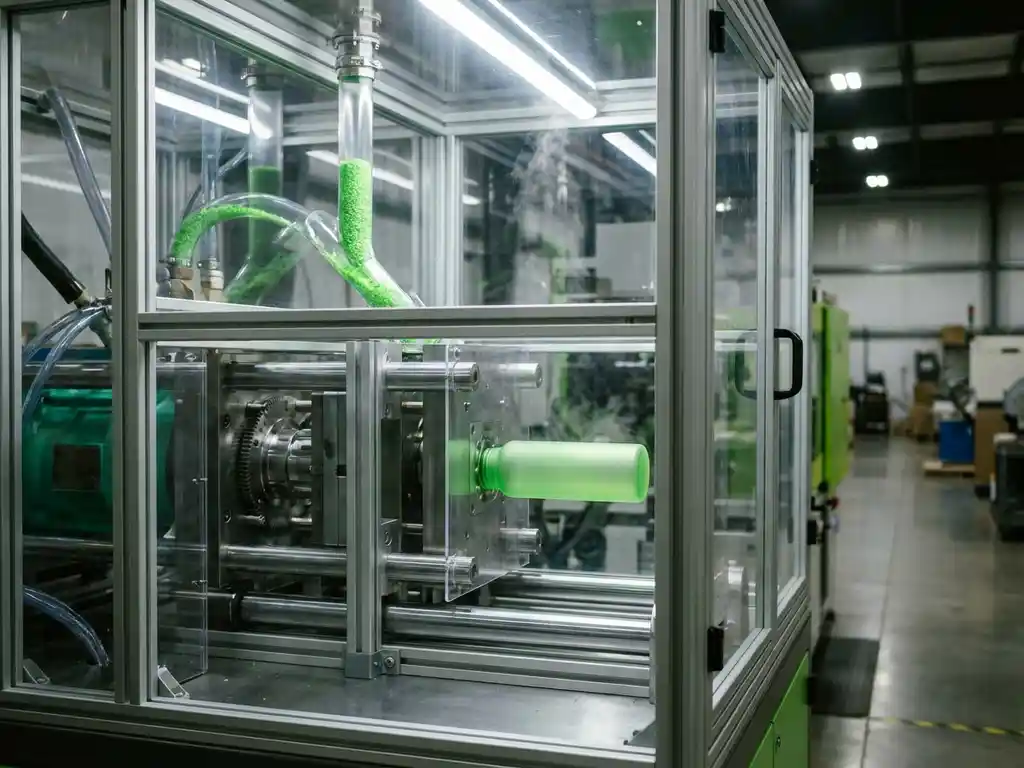
Sustainable injection molding practices combine environmental responsibility with operational efficiency to reduce manufacturing’s ecological impact while maintaining profitability. These approaches focus on reducing energy use, optimizing materials, minimizing waste, and improving processes. Modern manufacturers increasingly adopt these methods to meet regulatory requirements, reduce costs, and maintain a competitive advantage in environmentally conscious markets.
What is sustainable injection molding, and why does it matter for manufacturers?
Sustainable injection molding integrates environmentally responsible practices throughout the manufacturing process to minimize ecological impact while maintaining production quality and efficiency. This approach encompasses reducing energy use, optimizing materials, minimizing waste, and improving processes that benefit both the environment and business operations.
Environmental benefits include reduced carbon emissions, decreased plastic waste, and lower resource consumption. These practices help manufacturers comply with increasingly strict environmental regulations while avoiding potential penalties and restrictions. Many regions now require detailed environmental reporting, making sustainable practices essential for regulatory compliance.
Cost advantages emerge through reduced energy consumption, minimized material waste, and improved operational efficiency. Energy-efficient equipment and optimized processes typically reduce utility costs significantly. Material waste reduction directly affects raw material expenses, while improved efficiency increases overall productivity.
Competitive advantages include an enhanced brand reputation, access to environmentally conscious markets, and potential partnerships with sustainability-focused companies. Many large corporations now require suppliers to demonstrate environmental responsibility, making sustainable practices essential for maintaining and expanding business relationships.
How do you reduce energy consumption in injection molding operations?
Reducing energy consumption involves optimizing equipment performance, improving heating systems, reducing cycle times, implementing preventive maintenance protocols, and installing monitoring systems. These strategies typically achieve measurable energy savings while maintaining or improving production quality.
Equipment optimization includes upgrading to energy-efficient injection molding machines with servo-driven hydraulic systems or all-electric drives. Modern machines consume significantly less energy during idle periods and operate more efficiently during production cycles. Variable-frequency drives help optimize motor performance based on actual demand.
Heating system improvements focus on optimizing barrel and mold temperatures. Proper insulation reduces heat loss, while precise temperature control prevents energy waste from overheating. Hot-runner systems maintain consistent temperatures more efficiently than cold-runner alternatives.
Reducing cycle time through process optimization decreases overall energy consumption per part. This includes optimizing injection speeds, cooling times, and mold design for faster heat dissipation. Shorter cycles mean less energy consumed per unit produced.
Preventive maintenance ensures equipment operates at peak efficiency. Regular servicing of hydraulic systems, heating elements, and cooling circuits prevents energy waste caused by worn or poorly functioning components. Monitoring systems track energy usage patterns and identify opportunities for further optimization.
What materials and processes make injection molding more environmentally friendly?
Environmentally friendly materials include recycled plastics, bio-based polymers, biodegradable alternatives, and optimized virgin materials. Process modifications focus on waste reduction, efficient material use, and circular-economy principles that minimize environmental impact throughout the product lifecycle.
Recycled plastics offer significant environmental benefits when properly processed and applied. Post-consumer recycled content reduces demand for virgin materials while diverting waste from landfills. Post-industrial recycled materials from manufacturing waste provide consistent quality for many applications.
Bio-based polymers derived from renewable resources reduce dependence on fossil fuels. These materials include polylactic acid (PLA), polyhydroxyalkanoates (PHA), and bio-based polyethylene. Selection criteria include application requirements, end-of-life considerations, and supply-chain sustainability.
Waste reduction techniques include optimizing runner systems, implementing closed-loop recycling for production waste, and designing parts for material efficiency. Proper material handling prevents contamination and ensures maximum recyclability of production waste.
Process modifications include precise material dosing to minimize waste, optimized cooling to reduce cycle times, and improved mold design for better material flow. These changes reduce material consumption while maintaining part quality and dimensional accuracy.
How can quick mold change systems support sustainable manufacturing goals?
Quick mold change systems support sustainability through reduced setup times, minimized material waste during changeovers, improved production flexibility, and optimized resource utilization. These advanced automation solutions contribute significantly to overall environmental objectives while enhancing operational efficiency.
Reduced setup times mean less energy consumption during changeover periods. Traditional mold changes require extended machine idle time with heating systems maintained at operating temperatures. Quick-change systems minimize this energy waste through faster transitions between production runs.
Material waste reduction occurs because shorter changeover times require fewer purging cycles and test shots. Traditional setup procedures often generate substantial waste during mold installation and process optimization. Efficient changeover systems reduce this waste through precise, repeatable setup procedures.
Production flexibility enables manufacturers to run smaller batches economically, reducing inventory requirements and material waste from obsolete stock. This supports just-in-time manufacturing principles that minimize resource consumption throughout the supply chain.
Resource optimization includes better utilization of machine time, reduced labor requirements during changeovers, and improved overall equipment effectiveness. These benefits contribute to lower environmental impact per unit produced while maintaining production quality and delivery schedules.
How EAS Change Systems Advances Sustainable Injection Molding
EAS Change Systems provides comprehensive mold change automation solutions that significantly reduce environmental impact while improving operational efficiency. Our systems deliver measurable sustainability benefits through:
• Energy reduction by minimizing changeover times from hours to minutes, reducing machine idle time and associated energy consumption
• Material waste elimination through precise, repeatable setup procedures that reduce purging cycles and test shots by up to 80%
• Production flexibility that enables smaller batch runs, reducing inventory waste and supporting just-in-time manufacturing principles
• Resource optimization with automated systems that maximize equipment utilization while reducing labor requirements
Ready to transform your injection molding operation with sustainable automation solutions? Contact EAS Change Systems today to discover how our mold change systems can reduce your environmental footprint while improving productivity and profitability.