

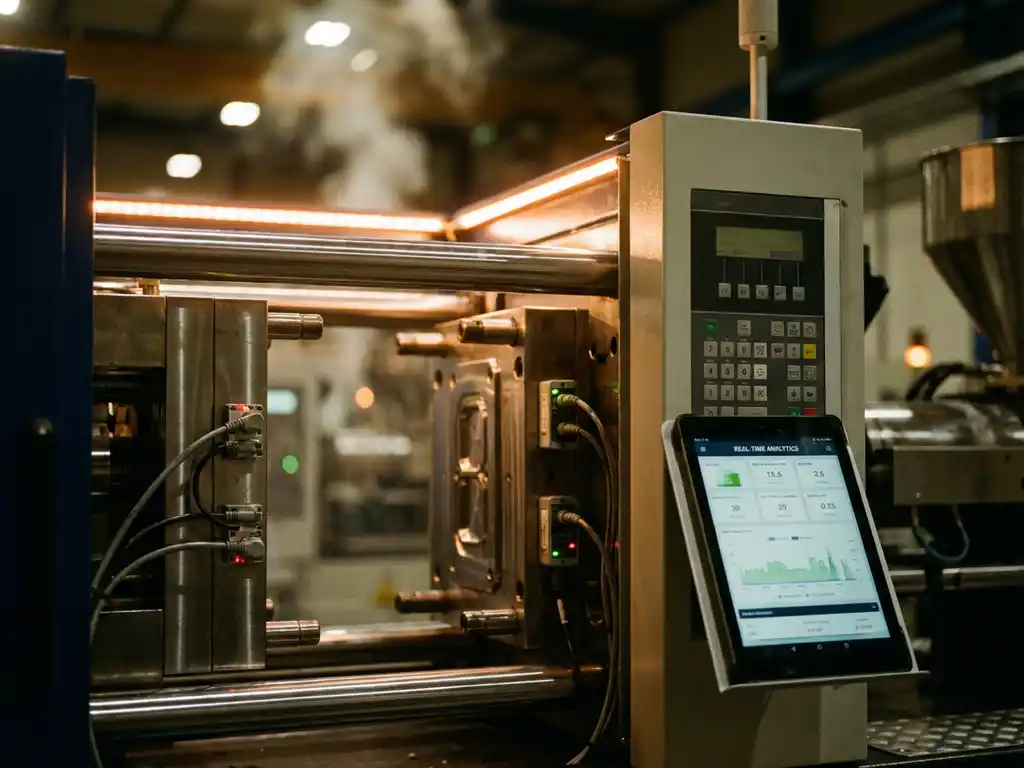
Digital transformation in injection molding involves integrating IoT sensors, data analytics, predictive maintenance, and connected manufacturing systems to create intelligent production environments. This goes beyond simple automation by establishing real-time monitoring, process optimization, and data-driven decision-making throughout your molding operations. Modern facilities are adopting these technologies to improve efficiency, reduce downtime, and maintain competitive advantages.
What does digital transformation actually mean for injection molding operations?
Digital transformation in injection molding means creating a connected manufacturing ecosystem in which machines, processes, and systems communicate through integrated technology platforms. This involves installing IoT sensors on injection molding machines to monitor temperature, pressure, cycle times, and material flow in real time.
The transformation differs from traditional automation because it focuses on data collection and intelligent analysis rather than just mechanical control. Your molding machines become part of a larger network that can predict maintenance needs, automatically optimize processing parameters, and provide instant visibility into production performance across multiple machines and shifts.
Connected manufacturing systems enable your facility to respond immediately to quality issues, adjust processing parameters based on material variations, and schedule maintenance before equipment failures occur. This creates an intelligent production environment in which decisions are based on real data rather than experience alone.
Why are injection molding companies investing in digital transformation now?
Injection molding companies are investing in digital transformation due to competitive pressure and operational challenges, including labor shortages, increasing quality demands, and sustainability requirements. Modern customers expect consistent quality, faster delivery times, and environmentally responsible manufacturing practices.
Labor shortages in manufacturing have made it essential to maximize productivity with existing staff. Digital systems can monitor multiple machines simultaneously, alert operators to issues before they become problems, and provide guided troubleshooting to reduce the level of expertise required for complex operations.
Quality demands continue to increase while tolerance for defects decreases. Digital monitoring systems can detect quality variations within individual cycles, allowing immediate corrections rather than discovering problems after producing hundreds of defective parts. This level of quality control was impossible with manual monitoring methods.
Sustainability requirements from customers and regulators demand detailed tracking of energy consumption, material waste, and production efficiency. Digital systems provide the detailed reporting needed to meet these requirements while identifying opportunities to reduce environmental impact and operating costs.
What are the essential technologies needed for digital injection molding?
Essential technologies for digital injection molding include IoT sensors for machine monitoring, cloud-based data platforms, artificial intelligence for process optimization, digital twins for simulation, and integrated manufacturing execution systems that connect all production activities.
IoT sensors monitor critical parameters, including barrel temperatures, injection pressures, cycle times, and material flow rates. These sensors provide continuous data streams that enable real-time process adjustments and predictive maintenance scheduling. Modern sensors can detect variations that human operators cannot perceive.
Cloud-based data platforms collect information from multiple machines and shifts, creating comprehensive production databases that reveal patterns and optimization opportunities. These platforms can integrate with existing enterprise systems to provide complete visibility from raw material receipt through finished product delivery.
Artificial intelligence analyzes production data to automatically optimize processing parameters, predict quality issues before they occur, and recommend process improvements. Digital twin technology creates virtual models of your molding processes, allowing you to test changes and optimize parameters without disrupting actual production.
Manufacturing execution systems coordinate all production activities, from job scheduling through quality control, ensuring that the benefits of digital transformation extend throughout your entire operation rather than being limited to individual machines.
How do you start implementing digital transformation in your molding facility?
Start digital transformation by assessing your current systems and identifying pilot projects that can demonstrate clear value while minimizing disruption to ongoing production. Begin with one or two critical machines rather than attempting facility-wide implementation immediately.
Assess your existing equipment to determine which machines can be retrofitted with sensors and which may require replacement or significant modification. Evaluate your current data collection methods, network infrastructure, and staff’s technical capabilities to identify gaps that need to be addressed.
Select pilot projects that address your most pressing operational challenges, such as reducing downtime on problem machines or improving quality consistency for critical parts. Choose technology partners who understand injection molding operations and can provide ongoing support rather than just equipment installation.
Develop a phased rollout plan that allows you to learn from early implementations before expanding to additional machines and processes. Include comprehensive staff training to ensure your team can effectively use new technologies and interpret the data they provide.
Create clear success metrics for each phase of implementation, focusing on measurable improvements in productivity, quality, or cost reduction. This approach allows you to demonstrate return on investment while building internal support for continued digital transformation efforts.
How EAS Change Systems helps with digital transformation initiatives
EAS Change Systems provides comprehensive manufacturing optimization solutions that complement and enhance digital transformation initiatives in injection molding facilities. Our expertise in lean manufacturing principles and change management creates the foundation needed for successful technology integration and operational excellence.
Our approach to supporting digital transformation includes:
- Process analysis and optimization to ensure your operations are streamlined before adding digital technologies
- Change management consulting to help your team adapt to new digital workflows and data-driven decision making
- Integration planning that aligns digital initiatives with your existing quick changeover systems and lean practices
- Training programs that build internal capabilities for managing connected manufacturing systems
- Ongoing support to maximize the return on your digital transformation investments
Digital transformation in injection molding requires careful planning and gradual implementation, but the benefits of improved efficiency, quality, and competitiveness make it essential for modern manufacturing operations. Contact EAS Change Systems today to learn how we can help you successfully implement digital technologies while maintaining operational excellence throughout your transformation journey.