

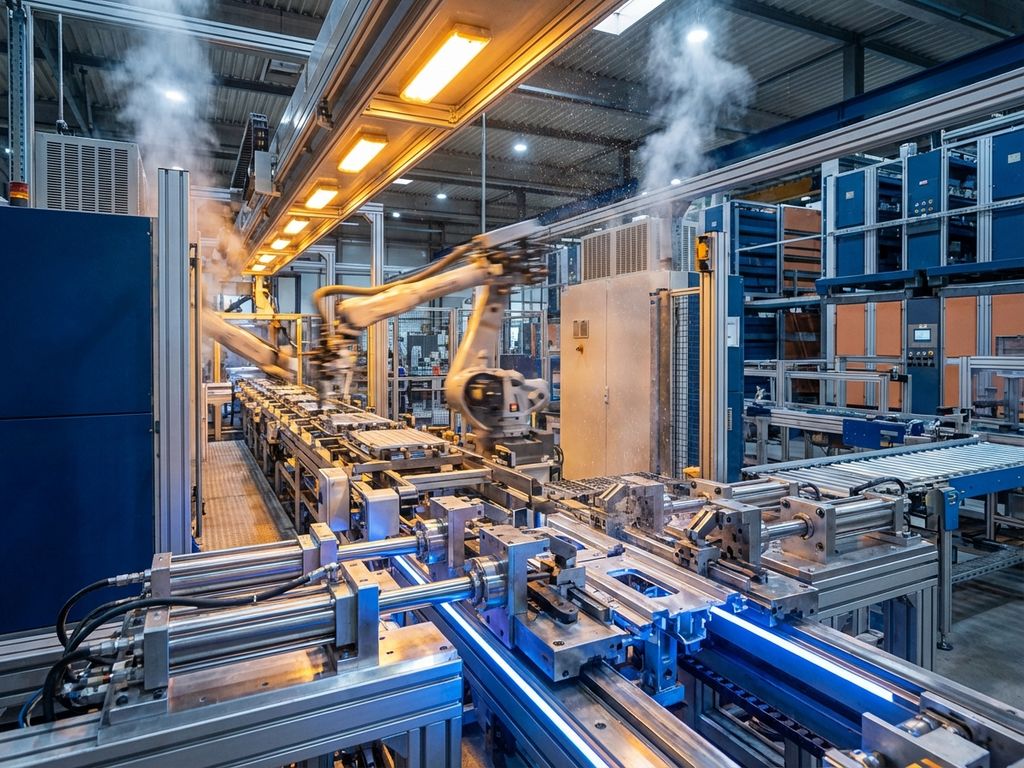
Manufacturing improvement involves optimising production processes, reducing waste, and increasing efficiency through strategic changes to equipment, workflows, and systems. Modern manufacturers achieve significant gains by addressing setup times, implementing automation, and adopting quick-change technologies. The most impactful improvements focus on eliminating bottlenecks, standardising procedures, and investing in advanced tooling systems that reduce downtime and increase overall manufacturing productivity.
What are the biggest obstacles preventing manufacturing efficiency?
The primary obstacles to manufacturing efficiency include lengthy setup times, unplanned equipment downtime, inefficient changeover processes, poor workflow design, and inadequate automation systems. These bottlenecks create cascading effects that limit production capacity and significantly increase operational costs.
Setup and changeover times represent one of the most significant efficiency barriers. Traditional clamping and tool change methods can consume hours of productive time, forcing manufacturers to run longer batches to justify the downtime. This approach ties up capital in inventory and reduces flexibility to respond to market demands.
Equipment downtime compounds these challenges through unpredictable maintenance needs and breakdowns. Poor workflow design creates unnecessary material handling, worker movement, and production delays. Meanwhile, inadequate automation leaves manufacturers dependent on manual processes that introduce variability and limit throughput potential.
Addressing these obstacles requires a systematic approach that examines each element of the production process. Manufacturers must identify where time and resources are being wasted, then implement targeted solutions that address root causes rather than symptoms.
How can manufacturers reduce setup and changeover times?
Manufacturers can dramatically reduce setup times through SMED (Single-Minute Exchange of Die) methodology, standardised procedures, quick-change tooling systems, pre-setup preparation, and comprehensive employee training programmes. These strategies can transform changeovers from hours-long processes into operations completed in minutes.
The SMED approach distinguishes between internal activities (requiring machine shutdown) and external activities (performed while machines run). By converting internal tasks to external ones and streamlining remaining internal work, manufacturers achieve remarkable time reductions. Standardised procedures ensure consistent, efficient changeovers regardless of operator or shift.
Quick-change tooling systems eliminate traditional clamping methods that require extensive manual adjustment. These systems use hydraulic, pneumatic, or magnetic clamping that engages and releases uniformly across the entire tool surface. Pre-setup preparation involves staging tools, materials, and equipment before changeover begins.
Employee training ensures operators understand proper procedures and can execute changeovers safely and efficiently. Cross-training multiple operators on changeover procedures prevents bottlenecks when primary operators are unavailable. Regular practice and continuous improvement sessions help teams refine their techniques and identify further optimisation opportunities.
What role does automation play in modern manufacturing improvement?
Automation technologies, including robotic systems, automated tool changers, smart sensors, and integrated control systems, enhance manufacturing efficiency by improving consistency, reducing manual intervention, and enabling higher production speeds. Modern automation delivers both immediate productivity gains and long-term competitive advantages.
Robotic systems handle repetitive tasks with precision and speed that surpass human capabilities. They operate continuously without fatigue, maintaining consistent quality while reducing labour costs and safety risks. Automated tool change systems eliminate manual handling of heavy moulds and dies, reducing changeover times from hours to minutes.
Smart sensors provide real-time monitoring of production parameters, enabling immediate adjustments that prevent quality issues and equipment problems. These systems collect data that helps manufacturers optimise processes and predict maintenance needs before failures occur.
Integrated control systems coordinate multiple production elements, ensuring smooth workflow and optimal resource utilisation. They enable manufacturers to respond quickly to production changes while maintaining quality standards. The combination of these technologies creates a foundation for manufacturing productivity improvement that scales with business growth.
Why do quick tool change systems matter for manufacturing productivity?
Quick tool change systems eliminate traditional clamping methods, reduce changeover complexity, improve safety, and enable manufacturers to achieve faster production cycles with minimal manual intervention. These systems transform changeovers from complex, time-consuming operations into simple, standardised procedures that any trained operator can complete efficiently.
Traditional clamping requires extensive manual adjustment of multiple individual clamps, each requiring precise positioning and torque application. This process is time-consuming, physically demanding, and prone to inconsistency. Quick-change systems apply uniform clamping force across the entire tool surface simultaneously, ensuring a consistent setup every time.
The safety improvements are substantial, as operators no longer need to handle heavy tools manually or work in awkward positions to reach individual clamps. Automated systems reduce the risk of injury while improving ergonomics for production staff.
These systems enable manufacturers to run smaller batch sizes economically, respond more effectively to customer demands, and reduce inventory requirements. The ability to change tools quickly supports just-in-time production strategies and allows manufacturers to offer greater product variety without sacrificing efficiency.
How EAS change systems help improve manufacturing efficiency
We provide comprehensive quick mould change and die change solutions that directly address manufacturing efficiency challenges through advanced clamping systems, automated couplers, and turnkey automation solutions. Our systems transform traditional changeover processes into streamlined operations that support flexible, efficient production.
Our solutions include:
- Adaptive clamping systems that eliminate manual adjustment and ensure uniform tool positioning
- Automated ejector couplers that connect utilities instantly during tool changes
- Integrated mould change tables and transportation vehicles for safe, efficient tool handling
- Complete project management and installation services for seamless system integration
- Ongoing maintenance and support to ensure optimal system performance
These comprehensive solutions enable manufacturers to reduce changeover times from hours to minutes while improving safety and consistency. Our systems support both plastic injection moulding and metal stamping applications, providing flexibility for diverse manufacturing requirements.
Contact us today to discuss how our quick-change solutions can transform your manufacturing efficiency and support your production goals.
