

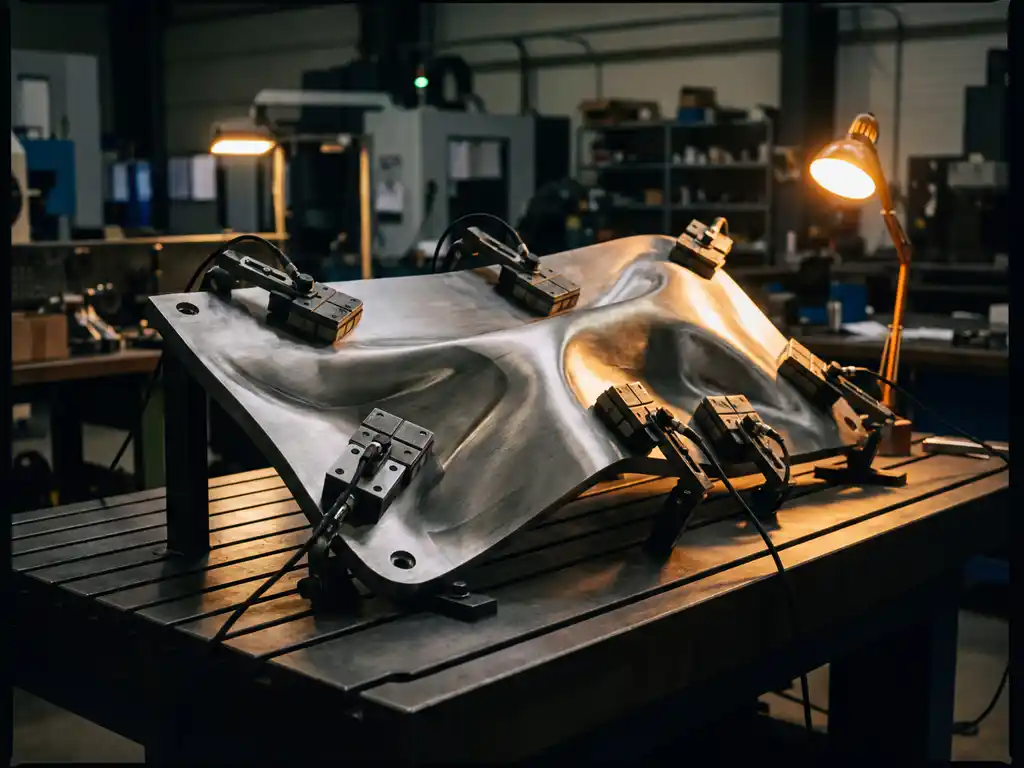
Magnetic clamping systems offer powerful holding solutions for many manufacturing applications, but their effectiveness with irregularly shaped workpieces often raises questions among production managers. Understanding the capabilities and limitations of these systems is crucial for making informed decisions about workholding solutions in metal stamping and fabrication operations.
While magnetic clamping systems excel with flat, ferromagnetic materials, their performance with irregular shapes depends on several factors, including contact area, material properties, and system design. Let’s explore how these systems handle complex workpiece geometries and when alternative solutions might be more appropriate.
What Are Magnetic Clamping Systems and How Do They Work?
Magnetic clamping systems are workholding devices that use magnetic force to secure ferromagnetic workpieces during machining, stamping, or assembly operations. These systems generate powerful magnetic fields through permanent magnets or electromagnets to create secure holding forces without mechanical fasteners.
The systems work by creating magnetic circuits between the chuck and the workpiece. When activated, the magnetic field flows through the workpiece material, creating attractive forces that hold the part firmly in place. The strength of this holding force depends on the magnetic field intensity, the contact area between the chuck and the workpiece, and the magnetic permeability of the material being held.
Modern magnetic clamping systems come in various configurations, including permanent magnetic chucks, electromagnetic chucks, and hybrid systems that combine both technologies. Each type offers specific advantages for different applications, with electromagnetic systems providing on-demand control and permanent-magnet systems offering consistent holding power without electrical requirements.
Can Magnetic Chucks Hold Irregularly Shaped Workpieces Effectively?
Magnetic chucks can hold irregularly shaped workpieces, but their effectiveness decreases significantly as the contact area between the chuck surface and the workpiece diminishes. The holding force is directly proportional to the surface area in contact with the magnetic field.
For irregular shapes to work effectively with magnetic clamping systems, they typically need at least 60–70% surface contact with the chuck face. Workpieces with curved surfaces, angled cuts, or protruding features create air gaps that weaken the magnetic circuit and reduce holding power. The magnetic field cannot effectively bridge large gaps or maintain consistent force across non-uniform surfaces.
However, some irregularly shaped parts can still be held successfully using specialized techniques. Parts with one relatively flat surface can often be positioned to maximize contact area. Additionally, magnetic pole extensions, custom-shaped pole pieces, or magnetic vises can help adapt standard systems to accommodate specific irregular geometries while maintaining adequate holding force.
What Types of Irregular Shapes Work Best with Magnetic Clamping?
Parts with predominantly flat surfaces interrupted by small features, grooves, or holes work best with magnetic clamping systems. These workpieces maintain sufficient contact area to generate reliable holding forces while accommodating minor surface irregularities.
Successful irregular shapes for magnetic clamping include:
- Stamped parts with raised or recessed features covering less than 30% of the base surface
- Machined components with one flat reference surface and minimal height variations
- Sheet metal assemblies with flanges or bends that don’t significantly reduce contact area
- Parts with through-holes or slots that don’t compromise the overall magnetic circuit
Conversely, shapes that perform poorly include parts with significant curvature, multiple angled surfaces, or complex three-dimensional geometries. Cylindrical parts, spherical components, or workpieces with minimal flat surfaces typically require alternative clamping methods to achieve reliable holding forces during manufacturing operations.
How Do You Adapt Magnetic Systems for Complex Workpiece Geometries?
Adapting magnetic systems for complex workpiece geometries involves using specialized accessories, custom pole pieces, and strategic positioning techniques to maximize contact area and holding force. The key is creating the most effective magnetic circuit possible given the workpiece constraints.
Common adaptation methods include using magnetic vises with adjustable jaws that conform to angled surfaces, implementing pole extensions that reach into recessed areas, and employing multiple smaller magnetic chucks positioned at optimal contact points. Custom-shaped pole pieces can be machined to match specific workpiece profiles, creating better surface contact than standard flat chuck surfaces.
For production environments, magnetic fixture plates with strategically positioned holding points can accommodate families of similar irregular parts. These systems often incorporate mechanical stops and locating features alongside magnetic holding to ensure consistent positioning while maximizing the magnetic circuit’s effectiveness across varying workpiece geometries.
What Are the Best Alternatives to Magnetic Clamping for Irregular Shapes?
Mechanical clamping systems, vacuum workholding, and specialized fixture designs typically provide better solutions for irregularly shaped workpieces than magnetic clamping alone. These alternatives can conform to complex geometries while maintaining reliable holding forces.
Mechanical clamping options include adjustable clamps, toggle clamps, and custom fixture designs that physically grip or support irregular workpieces. These systems work with both ferromagnetic and non-magnetic materials while providing consistent holding force regardless of workpiece geometry. Hydraulic and pneumatic clamps offer automated operation for high-volume production environments.
Vacuum clamping systems excel with parts that have complex surfaces, as they can hold workpieces through suction applied to available flat areas or custom-formed vacuum cups. Combined clamping approaches, using both magnetic and mechanical elements, often provide the most robust solutions for challenging workpiece geometries in demanding production applications.
How EAS Change Systems Helps with Workholding Solutions
We specialize in comprehensive clamping and workholding solutions that go beyond traditional magnetic systems to address the full spectrum of manufacturing challenges. Our expertise in quick die change systems extends to integrated workholding solutions that accommodate both regular and irregular workpiece geometries.
Our approach includes:
- Custom fixture design and engineering services tailored to specific workpiece requirements
- Adaptive clamping systems that combine multiple holding technologies for optimal performance
- Integration of workholding solutions with quick-change systems for maximum efficiency
- ROI calculations and application engineering to optimize your specific production needs
Whether you’re dealing with complex stamped parts, irregular die castings, or challenging workpiece geometries, our team can design and implement workholding solutions that improve your production efficiency while reducing setup times. Contact us today to discuss how our expertise in quick die change systems and adaptive clamping technologies can solve your most challenging workholding applications.