

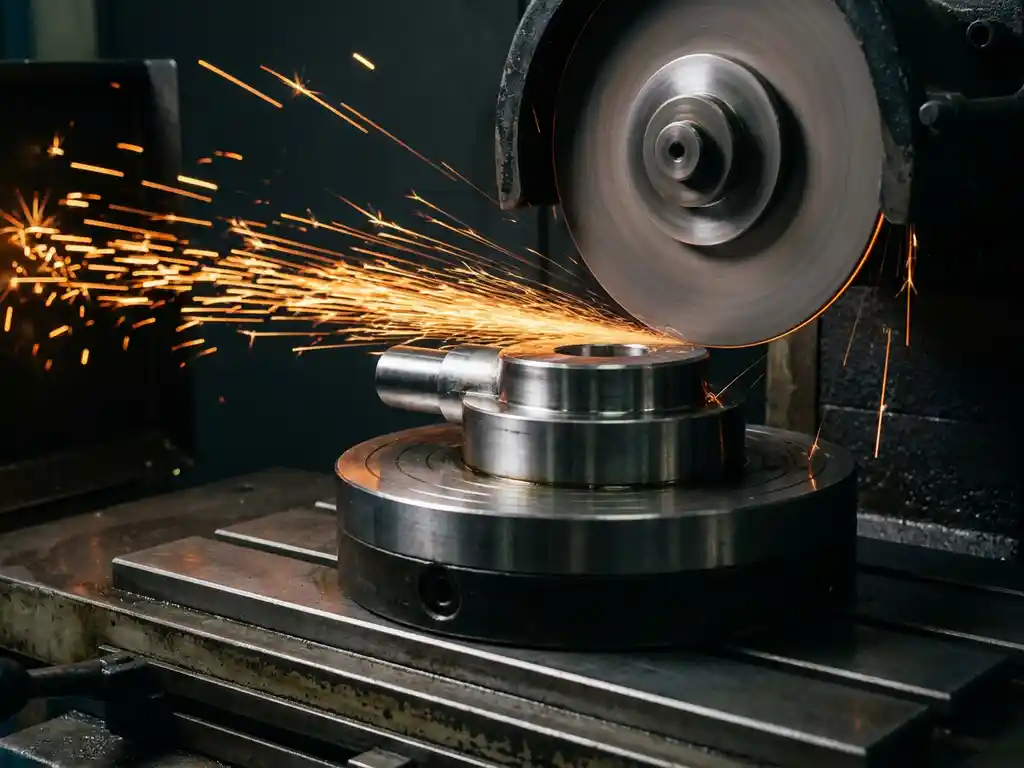
Magnetic clamping systems can be suitable for high-speed grinding applications, but only when the right type of magnetic chuck is selected and properly matched to the workpiece material, geometry, and grinding forces involved. The key factor is whether the magnetic holding force is strong enough to resist the lateral and vibrational forces generated at elevated grinding speeds. This article walks through the most important questions manufacturers ask before committing to magnetic clamping in demanding grinding environments.
How do magnetic clamping systems work during grinding?
Magnetic clamping systems secure ferromagnetic workpieces to a machine table by generating a powerful magnetic field that holds the part in place without mechanical clamps or fixtures. During grinding, the workpiece sits directly on the magnetic chuck surface, and the magnetic force acts across the entire contact area, distributing holding pressure evenly and reducing the risk of distortion that traditional clamps can introduce.
There are two main technologies used in grinding applications. Permanent magnetic chucks use a fixed arrangement of permanent magnets and are activated or deactivated by rotating a lever that shifts the magnetic circuit. Electromagnetic chucks run an electrical current through coils to generate the magnetic field, allowing the holding force to be adjusted by varying the current. Electropermanent magnetic systems combine both principles: they use a brief electrical pulse to set the magnetic state but require no ongoing power to maintain the hold, making them both energy-efficient and safe in the event of a power failure.
During the grinding process, the chuck must resist not just downward gravitational force but also lateral forces created by the grinding wheel, vibration transmitted through the spindle, and any intermittent shock loads. A well-designed magnetic clamping system accounts for all of these by providing a holding force that significantly exceeds the expected machining forces.
What makes high-speed grinding different from standard grinding?
High-speed grinding operates at wheel peripheral speeds significantly above conventional grinding, which changes the nature of the forces acting on the workpiece. At higher speeds, the cutting action becomes more aggressive, the heat generated at the contact zone increases, and the vibrational characteristics of the process shift in ways that can challenge workpiece stability.
In standard grinding, lateral forces are relatively predictable and moderate. In high-speed grinding, the dynamic forces acting on the workpiece increase substantially, and any micro-movement of the part can lead to chatter, surface finish defects, or dimensional inaccuracy. The grinding wheel itself may also exert upward lift forces on the workpiece depending on the direction of wheel rotation relative to the feed direction, which reduces the effective holding force of the magnetic chuck.
High-speed grinding also generates more heat at the workpiece surface. Elevated temperatures can temporarily reduce the magnetic permeability of ferromagnetic materials, which in turn slightly weakens the holding force. For most applications, this effect is minor, but in extreme cases it is worth accounting for when calculating the required chuck capacity.
What are the risks of using magnetic chucks at high grinding speeds?
The primary risks of using magnetic clamping systems at high grinding speeds are workpiece slippage, vibration-induced movement, and thermal effects on holding force. If the magnetic holding force is insufficient relative to the lateral grinding forces, the workpiece can shift during the cut, leading to scrapped parts or, in severe cases, a dangerous ejection of the workpiece from the machine.
Vibration is a compounding risk. High-speed grinding can excite resonant frequencies in the setup, and if the workpiece is not held firmly enough, it may begin to oscillate or chatter. This not only damages the surface finish but can progressively loosen the effective magnetic grip as the contact area between the workpiece and chuck surface fluctuates.
Thin or small workpieces present additional challenges. A part with a small footprint on the chuck has a limited contact area for the magnetic field to act through, reducing total holding force. Thin parts are also more susceptible to thermal distortion, which can cause the workpiece to bow slightly, further reducing contact area and grip.
Proper risk management involves selecting a chuck with a holding force rating that provides a generous safety margin above the calculated machining forces, ensuring the workpiece surface and chuck surface are clean and flat, and using fine-pole magnetic chucks for small or thin parts to maximize the number of magnetic poles acting across the contact area.
Which types of magnetic clamping systems are best suited for grinding?
For grinding applications, fine-pole permanent magnetic chucks and electropermanent magnetic chucks are generally the best choices. Fine-pole chucks have a high density of alternating north and south poles across the chuck surface, which means the magnetic field penetrates the workpiece more uniformly and the holding force is distributed more evenly, even for thin or small parts. You can explore the full range of magnetic and hydraulic clamping products available to find the right fit for your grinding setup.
Electropermanent magnetic chucks are particularly well suited to high-speed grinding because they maintain holding force without continuous electrical power, eliminating the risk of losing grip during a power interruption. They also allow the holding force to be set precisely for each application, which is valuable when working with materials of varying magnetic permeability.
Electromagnetic chucks offer adjustable holding force and are widely used in surface grinding. However, because they depend on a continuous power supply, they require a reliable power source and ideally a backup system to prevent workpiece release in the event of an electrical fault.
For very high-speed or heavy-duty grinding where the forces are extreme, some manufacturers combine magnetic clamping with mechanical stops or side supports. These mechanical elements do not carry the primary holding load but act as a safety backstop against lateral movement, allowing the magnetic chuck to be used confidently even under demanding conditions.
How does workpiece material affect magnetic clamping performance?
Magnetic clamping systems only work directly with ferromagnetic materials, meaning materials that are attracted to a magnetic field. Common ferromagnetic workpiece materials suitable for magnetic clamping include carbon steel, tool steel, cast iron, and many alloyed steels. Non-ferromagnetic materials such as aluminum, copper, brass, titanium, and most stainless steels cannot be held directly by a magnetic chuck.
Even within ferromagnetic materials, the degree of magnetic permeability varies. Soft iron and low-carbon steels have high permeability and respond strongly to the magnetic field, giving excellent holding force. Hardened tool steels have somewhat lower permeability, which can reduce holding force compared to the same geometry in annealed steel. This is an important consideration when clamping hardened workpieces for finish grinding.
Residual magnetism is another material-related concern. After machining on a magnetic chuck, ferromagnetic workpieces retain some residual magnetism that can interfere with downstream assembly or measurement processes. Demagnetizing the workpiece after grinding is standard practice and is typically done with a demagnetizer built into or adjacent to the grinding machine.
When should you use mechanical clamping instead of magnetic clamping for grinding?
Mechanical clamping is the better choice for grinding when the workpiece is non-ferromagnetic, when its geometry makes full contact with a flat magnetic chuck surface impossible, or when the grinding forces are so extreme that no magnetic chuck in the available range can provide an adequate safety margin. Mechanical clamping is also preferred when residual magnetism in the finished part is absolutely unacceptable for the application.
Very small workpieces that have only a tiny contact footprint on the chuck may not generate enough magnetic holding force to be safe at high grinding speeds, even with fine-pole chucks. In these cases, dedicated fixtures or vises are more reliable. Similarly, workpieces with complex shapes, significant surface curvature, or large central holes may not make sufficient contact with the chuck surface to be held securely.
There are also situations where a hybrid approach makes sense. Using a magnetic chuck as the primary holding method while adding mechanical side stops or end stops provides the convenience of magnetic clamping for loading and unloading while adding a mechanical safety margin against lateral forces. This approach is common in production grinding environments where both speed and security are priorities. To see how these solutions are applied across different industries, visit our clamping applications page.
How EAS Change Systems helps with magnetic clamping for grinding
At EAS Change Systems, we understand that selecting the right clamping solution for grinding applications requires more than just picking a product from a catalog. Our clamping solutions are designed to match the specific demands of each application, including the forces, materials, and speeds involved in your grinding process.
Our offering includes the Magnetic Pressmag LP and SP systems, which use magnetic technology to secure workpieces reliably and efficiently. Beyond magnetic solutions, we also offer hydraulic clamping options, including the MOD, ELY, and HECS systems, for applications where mechanical holding is more appropriate. Our adaptive clamping systems are built for integration into both existing equipment and new OEM setups.
When you work with us, we help you evaluate:
- Whether your workpiece material and geometry are compatible with magnetic clamping
- The holding force required to safely resist your specific grinding forces
- Whether a magnetic, hydraulic, or combined clamping approach best fits your application
- Integration requirements for your existing or new grinding equipment
- ROI calculations to justify the investment in a clamping upgrade
If you are evaluating magnetic clamping systems for a grinding application and want expert guidance tailored to your production environment, get in touch with our team. We are ready to help you find the right solution for your specific needs.