

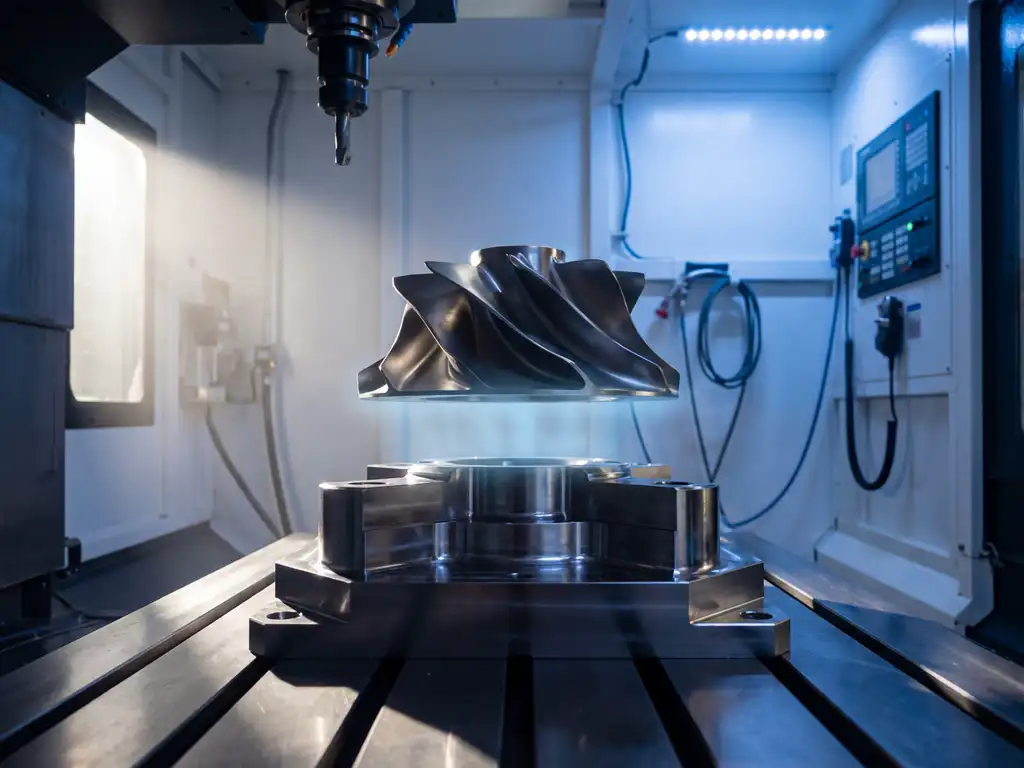
The aerospace industry demands precision, reliability, and efficiency in every manufacturing process. As aircraft components become increasingly complex and tolerances become tighter, traditional workholding methods often fall short of meeting these stringent requirements. Magnetic workholding innovations are transforming how aerospace manufacturers secure parts during machining operations, offering superior accuracy and flexibility compared with conventional clamping systems.
These advanced magnetic workholding solutions enable manufacturers to achieve consistent part positioning while reducing setup times and improving surface-finish quality. From adaptive magnetic chucks to smart force-monitoring systems, these innovations are revolutionizing aerospace manufacturing workflows and helping companies maintain their competitive edge in this demanding industry.
Why Magnetic Workholding Is Reshaping Aerospace
Aerospace manufacturing requires exceptional precision and consistency that traditional mechanical clamping often cannot deliver. Magnetic workholding systems eliminate the distortion and stress-concentration points created by mechanical clamps, allowing for more accurate machining of thin-walled components and complex geometries common in aerospace applications.
The technology provides uniform holding force across the entire contact surface, preventing part deflection during high-speed machining operations. This consistent pressure distribution is particularly valuable when working with lightweight aluminum alloys and composite materials, where traditional clamping can cause deformation or surface damage that compromises part integrity.
1: Adaptive Magnetic Chuck Technology
Adaptive magnetic chuck technology automatically adjusts holding force based on part geometry and material properties. These systems use variable magnetic-field strength to provide optimal clamping pressure for different workpiece thicknesses and shapes, eliminating the guesswork in setup procedures.
The technology excels in aerospace applications where parts often feature varying wall thicknesses and complex contours. Advanced adaptive systems can create custom magnetic-field patterns that conform to irregular surfaces, ensuring secure holding even on components with cutouts, pockets, or curved profiles that would challenge traditional workholding methods.
2: Electromagnetic Pulse Workholding Systems
Electromagnetic pulse systems deliver rapid activation and deactivation cycles that significantly reduce setup and changeover times. These systems can switch from full holding force to complete release in milliseconds, enabling faster part loading and unloading than permanent magnetic systems that require gradual demagnetization.
The instant on-off capability proves invaluable in high-volume aerospace production environments where minimizing nonproductive time directly impacts profitability. Pulse systems also offer programmable force levels, allowing operators to optimize holding strength for specific machining operations without manual adjustments.
3: Permanent Magnet Hybrid Solutions
Permanent magnet hybrid systems combine the reliability of permanent magnets with the controllability of electromagnetic systems. These solutions provide consistent holding force without electrical power consumption during machining, while still offering the ability to quickly release parts when needed.
Hybrid systems deliver exceptional holding strength for heavy aerospace components while maintaining energy efficiency. The permanent-magnet base provides continuous clamping force even during power interruptions, ensuring part security throughout extended machining cycles common in aerospace manufacturing.
4: What Makes Multi-Pole Magnetic Systems Essential?
Multi-pole magnetic systems feature alternating magnetic poles across the chuck surface, creating localized magnetic circuits that provide superior holding power for thin materials. This design concentrates magnetic flux more effectively than single-pole systems, making them ideal for aerospace sheet-metal components and thin-walled structures.
The alternating pole configuration also reduces magnetic-field interference with sensitive machining operations. This characteristic is particularly important when working with advanced aerospace materials that may be affected by strong magnetic fields, ensuring both secure workholding and material integrity throughout the manufacturing process.
5: Temperature-Resistant Magnetic Workholding
Temperature-resistant magnetic systems maintain consistent holding force across the wide temperature ranges encountered in aerospace machining operations. These systems incorporate specialized magnetic materials and thermal-management features that prevent performance degradation during high-speed cutting or when working with heat-generating processes.
Advanced temperature-resistant designs include active cooling systems and thermal barriers that protect magnetic components from heat generated during intensive machining cycles. This thermal stability ensures reliable part holding even during extended operations on difficult-to-machine aerospace alloys that generate significant heat.
6: Modular Magnetic Fixturing Systems
Modular magnetic fixturing systems offer unprecedented flexibility through interchangeable magnetic modules that can be reconfigured for different part geometries. These systems allow manufacturers to create custom workholding setups quickly without investing in dedicated fixtures for each unique aerospace component.
The modular approach significantly reduces tooling costs and setup times while providing the precise positioning required for aerospace applications. Standardized magnetic modules can be combined in various configurations to accommodate everything from small brackets to large structural components, maximizing equipment utilization across diverse product lines.
7: Smart Magnetic Systems With Force Monitoring
Smart magnetic systems incorporate real-time force monitoring and feedback capabilities that ensure consistent part holding throughout machining operations. These systems continuously monitor magnetic-field strength and can alert operators to potential holding issues before they result in part movement or damage.
Integrated sensors provide data-logging capabilities that support quality-control initiatives and predictive-maintenance programs. The monitoring data helps identify optimal holding parameters for different materials and can detect gradual performance changes that might indicate the need for system maintenance or recalibration.
Implementing Magnetic Workholding in Your Operation
Successful implementation of magnetic workholding requires careful evaluation of your specific manufacturing requirements and part characteristics. Consider factors such as material composition, part geometry, required holding force, and integration with existing machining centers when selecting the appropriate magnetic workholding technology.
Start with a pilot program using representative parts to validate performance and establish optimal operating parameters. This approach allows you to refine procedures and train operators before full-scale implementation, ensuring smooth integration with your existing aerospace manufacturing processes.
How EAS Change Systems Helps Improve Manufacturing Efficiency
While we specialize in quick die-change and mold-change solutions, we understand the critical importance of efficient workholding and setup reduction in manufacturing operations. Our products and expertise in minimizing changeover times and optimizing production workflows can complement magnetic workholding implementations in several ways:
- Applying SMED methodology to reduce magnetic workholding setup and changeover times
- Integration consulting to incorporate magnetic systems into existing production lines
- Workflow optimization to maximize the efficiency gains from advanced workholding technologies
- Training programs focused on quick-changeover techniques that apply across various workholding systems
Our proven track record of reducing unproductive time from hours to minutes can help you maximize the return on investment from magnetic workholding innovations. Contact us today to learn how our change-system expertise can enhance your manufacturing-efficiency initiatives.