

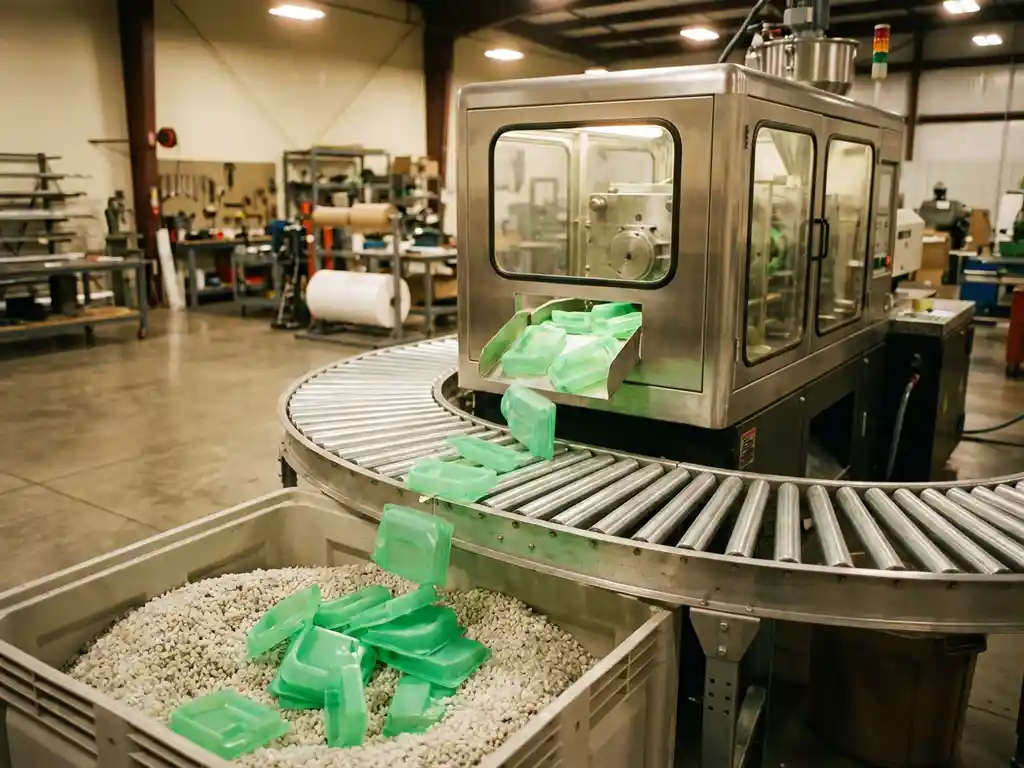
Injection molding contributes to the circular economy by enabling precise manufacturing that minimizes waste, supporting the use of recycled materials, and creating durable products designed for longevity. This manufacturing process aligns with circular economy principles through efficient resource utilization and reduced environmental impact. Modern injection molding techniques help manufacturers transition from linear „take-make-dispose“ models to sustainable production systems.
What is the circular economy and how does injection molding fit in?
The circular economy is an economic model that eliminates waste and keeps resources in use through the principles of reducing, reusing, and recycling. Unlike linear production models, circular systems design out waste and pollution while regenerating natural systems.
Injection molding aligns perfectly with these principles by creating precise, durable products that use exact amounts of material. The process supports the reduce principle through minimal material waste and energy-efficient production cycles. Manufacturers can implement reuse strategies by designing products for disassembly and component recovery.
The recycling aspect becomes particularly relevant because injection molding machines can process both post-consumer and post-industrial recycled plastics. This capability allows manufacturers to close material loops and reduce dependence on virgin resources. The precision of injection molding ensures that recycled materials maintain quality standards while contributing to circular production goals.
How does injection molding reduce material waste in manufacturing?
Injection molding reduces material waste through precision manufacturing that uses exact material quantities for each part. The process achieves minimal scrap rates because material flows directly into mold cavities without excess trimming or cutting operations.
The closed-loop system of injection molding captures and reuses runner and sprue material, which would otherwise become waste. Modern injection molding optimization techniques include hot runner systems that eliminate waste entirely by keeping plastic molten throughout the process. These systems reduce material consumption by up to 30% compared to cold runner alternatives.
Advanced process control ensures consistent part quality, reducing rejection rates and associated material waste. The ability to produce complex geometries in single operations eliminates assembly waste and reduces overall material requirements. This precision approach supports lean manufacturing principles while maintaining high production volumes.
What role does recycled plastic play in modern injection molding?
Recycled plastic plays an increasingly important role in injection molding by providing sustainable material sources while maintaining product quality. Modern injection molding processes can incorporate 20–100% recycled content, depending on application requirements and material specifications.
Post-consumer recycled plastics undergo processing to remove contaminants and restore properties suitable for injection molding. Post-industrial recycled materials, including regrind from manufacturing processes, offer higher quality and consistency. The key technical consideration involves maintaining material properties through proper temperature control and processing parameters.
Manufacturers must balance recycled content with performance requirements, particularly for structural or safety-critical applications. Material characterization becomes crucial when incorporating recycled plastics to ensure consistent flow properties and mechanical performance. Advanced sorting and cleaning technologies continue to improve recycled material quality, expanding their use in injection molding applications.
Why is injection molding considered more sustainable than other manufacturing methods?
Injection molding demonstrates superior sustainability through high energy efficiency, excellent material utilization, and rapid production speeds that reduce overall environmental impact. The process achieves material utilization rates above 95%, significantly higher than subtractive manufacturing methods.
Energy consumption per part remains low due to process efficiency and the ability to produce multiple parts simultaneously. Compared to machining operations, injection molding generates minimal waste material and requires no cutting fluids or coolants. The automated nature of injection molding reduces labor-related energy consumption while maintaining consistent quality.
The durability of injection molded products contributes to sustainability by extending product lifecycles and reducing replacement frequency. Process repeatability ensures consistent quality without the energy-intensive rework common in other manufacturing methods. Additionally, the ability to produce complex geometries in single operations eliminates assembly processes and associated transportation impacts.
How do quick mold change systems support circular economy goals?
Quick mold change systems support circular economy goals by enabling flexible production runs, reducing setup waste, and facilitating on-demand manufacturing that optimizes resource utilization. These systems allow manufacturers to switch between different products rapidly without extended downtime periods.
The flexibility provided by quick mold change solutions enables smaller batch sizes that align with just-in-time production principles. This approach reduces inventory requirements and minimizes waste from overproduction. Manufacturers can respond quickly to market demand without maintaining large stockpiles of finished goods.
Setup waste reduction occurs through standardized changeover procedures that eliminate trial runs and material waste during mold transitions. The ability to produce diverse products on single machines maximizes equipment utilization while reducing the need for dedicated production lines. This operational flexibility supports circular economy principles by optimizing resource efficiency and enabling responsive manufacturing that matches actual demand patterns.
How EAS Change Systems Accelerates Circular Economy Implementation
EAS Change Systems provides comprehensive solutions that enable manufacturers to maximize their circular economy potential through advanced quick mold change technology and strategic implementation support. Our systems directly address the key challenges manufacturers face when transitioning to sustainable production models:
• Rapid changeover technology that reduces setup time by up to 90%, enabling smaller batch sizes and just-in-time production
• Standardized procedures that eliminate trial runs and material waste during mold transitions
• Equipment optimization services that maximize machine utilization and reduce the need for multiple production lines
• Training and support programs that ensure your team can implement circular economy principles effectively
• Custom solutions designed to integrate seamlessly with your existing injection molding operations
Ready to transform your manufacturing operations and accelerate your circular economy goals? Contact EAS Change Systems today to schedule a consultation and discover how our proven solutions can reduce waste, improve efficiency, and support your sustainability objectives.