

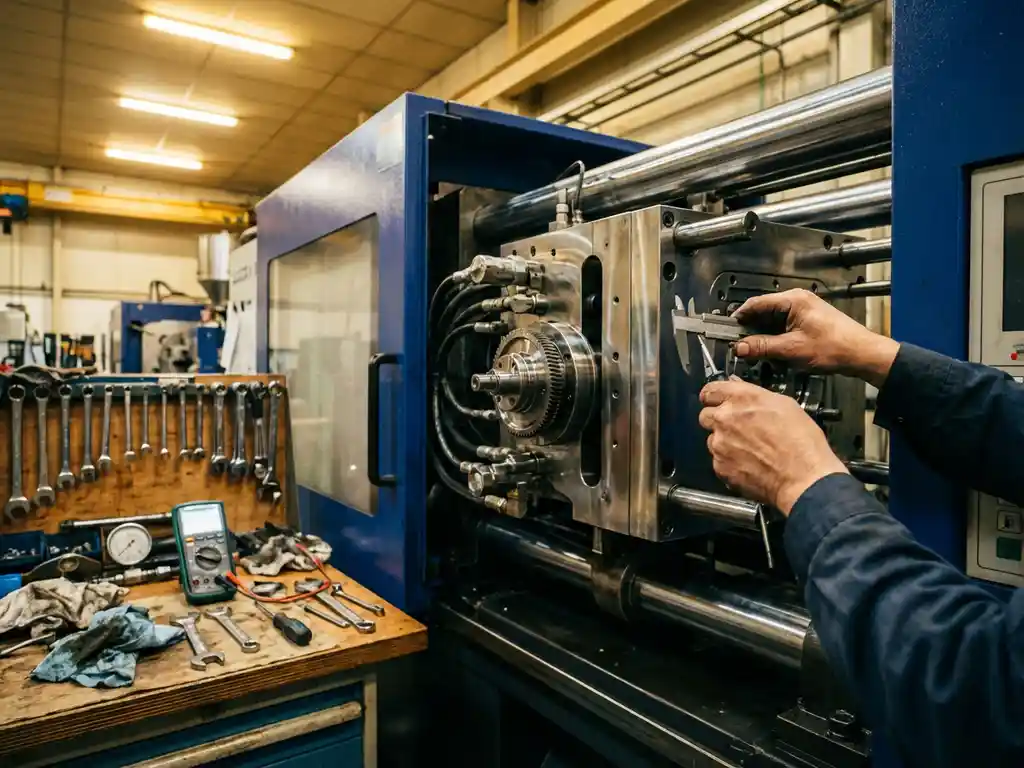
Production downtime in injection molding can cost manufacturers thousands of dollars per hour in lost productivity, wasted materials, and delayed deliveries. While equipment failures and unexpected breakdowns are often seen as inevitable parts of manufacturing, the reality is that most downtime is preventable through strategic maintenance approaches.
Understanding how preventive maintenance strategies can dramatically reduce injection molding downtime is crucial for manufacturers looking to optimize their operations. By implementing systematic maintenance practices and leveraging modern quick-change technologies, facilities can transform their approach to reducing production downtime and improving injection molding troubleshooting.
What is preventive maintenance in injection molding?
Preventive maintenance in injection molding is a proactive approach that involves scheduled inspections, cleaning, lubrication, and component replacement before equipment failures occur. This systematic strategy focuses on maintaining optimal machine performance through regular upkeep rather than waiting for breakdowns to happen.
The core components of preventive maintenance include hydraulic system checks, temperature control system maintenance, screw and barrel inspections, and mold condition assessments. Technicians follow predetermined schedules to examine wear patterns, replace consumable parts, and calibrate systems to manufacturer specifications. This approach extends equipment lifespan while maintaining consistent product quality and reducing unexpected production interruptions.
Modern preventive maintenance programs also incorporate predictive technologies such as vibration analysis and thermal imaging to identify potential issues before they become critical failures. These advanced techniques allow maintenance teams to schedule repairs during planned downtime windows rather than dealing with emergency shutdowns.
How does unplanned downtime impact injection molding costs?
Unplanned downtime in injection molding operations typically costs manufacturers between $22,000 and $50,000 per hour, depending on production volume and product complexity. These costs accumulate through lost production time, wasted materials, overtime labor expenses, and potential customer penalties for delayed deliveries.
The financial impact extends beyond immediate production losses. Emergency repairs often require expedited parts ordering at premium prices, while rushed troubleshooting can lead to secondary equipment damage. Labor costs escalate as maintenance teams work overtime, and production schedules must be adjusted to compensate for lost time.
Quality issues frequently accompany unplanned shutdowns, as equipment that fails during production may have been operating outside optimal parameters beforehand. This can result in scrapped parts, rework expenses, and potential warranty claims. Additionally, repeated downtime events can damage customer relationships and affect future business opportunities, creating long-term revenue consequences that far exceed the immediate repair costs.
What are the main causes of injection molding downtime?
The primary causes of injection molding downtime include mold-related issues, hydraulic system failures, heating and cooling system problems, and mechanical component wear. Mold problems account for approximately 40% of all downtime events, while hydraulic issues represent another 25% of production interruptions.
Mold-related downtime often stems from improper mold changes, inadequate mold maintenance, or damage during handling and storage. Common issues include worn ejector pins, damaged cooling channels, and misaligned mold components that prevent proper closing or part ejection. These problems are frequently exacerbated by lengthy mold-change procedures that increase handling risks.
Hydraulic system failures typically involve seal deterioration, contaminated fluid, or pump malfunctions that affect clamping force and injection pressure consistency. Temperature control problems arise from blocked cooling channels, faulty heaters, or thermostat failures that prevent proper material processing. Mechanical wear in screws, barrels, and drive components gradually reduces performance until replacement becomes necessary, often at the most inconvenient times.
How can quick mold change systems reduce maintenance downtime?
Quick mold change systems reduce maintenance downtime by minimizing mold handling time from hours to minutes, decreasing the risk of damage during changeovers, and enabling more frequent preventive maintenance windows. These automated systems eliminate manual lifting and positioning, reducing both changeover time and the potential for mold damage that leads to production delays.
Traditional mold changes requiring 2–4 hours create significant maintenance scheduling challenges, as facilities often defer routine maintenance to avoid extended production interruptions. Quick-change systems reduce changeover time to 15–30 minutes, making it practical to perform maintenance tasks during regular production breaks rather than waiting for extended shutdown periods.
The precision and repeatability of automated mold change systems also reduce wear on both molds and machines. Consistent mold positioning eliminates alignment issues that can cause equipment stress, while reduced handling minimizes the risk of drops or impacts that damage mold components. This reliability allows maintenance teams to focus on proactive care rather than reactive repairs, ultimately extending equipment life and improving overall production efficiency.
What should be included in an injection molding maintenance schedule?
A comprehensive injection molding maintenance schedule should include daily operational checks, weekly system inspections, monthly component servicing, and quarterly comprehensive overhauls. Daily tasks focus on visual inspections, temperature monitoring, and basic cleaning, while weekly activities involve hydraulic fluid checks and safety system testing.
Monthly maintenance activities should encompass screw and barrel wear assessments, mold inspection and cleaning, heating element testing, and cooling system maintenance. These tasks require more specialized knowledge and may involve temporary production interruptions, making scheduling coordination essential for maintaining efficiency.
Quarterly overhauls involve comprehensive system analysis, including vibration testing, pressure calibration, and major component replacement based on wear patterns. Annual maintenance should include complete system audits, software updates, and long-term component replacement planning. The schedule must also incorporate flexibility for predictive maintenance findings and emergency repairs while maintaining clear documentation of all activities to track equipment performance trends and optimize future maintenance timing.
How EAS Change Systems Helps with Production Downtime Reduction
We specialize in quick mold change and quick die change solutions that dramatically reduce maintenance-related downtime in injection molding operations. Our comprehensive systems transform lengthy changeover processes into efficient, automated procedures that support proactive maintenance strategies.
Our solutions directly address downtime reduction through:
- Automated mold change systems that reduce changeover time from hours to minutes
- Precision clamping technology that eliminates mold damage during handling
- Integrated mold transportation and storage systems that streamline workflow
- Adaptive clamping systems that ensure consistent mold positioning and reduce equipment stress
- Comprehensive maintenance support and ROI calculations to optimize your investment
With over 35 years of experience and installations across three continents, we provide proven solutions that enable manufacturers to implement more frequent maintenance windows without sacrificing productivity. Our diverse applications span multiple industries, and our innovative products are designed to meet the unique challenges of modern manufacturing environments. Contact our application engineering team today to discover how our quick-change systems can transform your approach to injection molding troubleshooting and maintenance scheduling.