

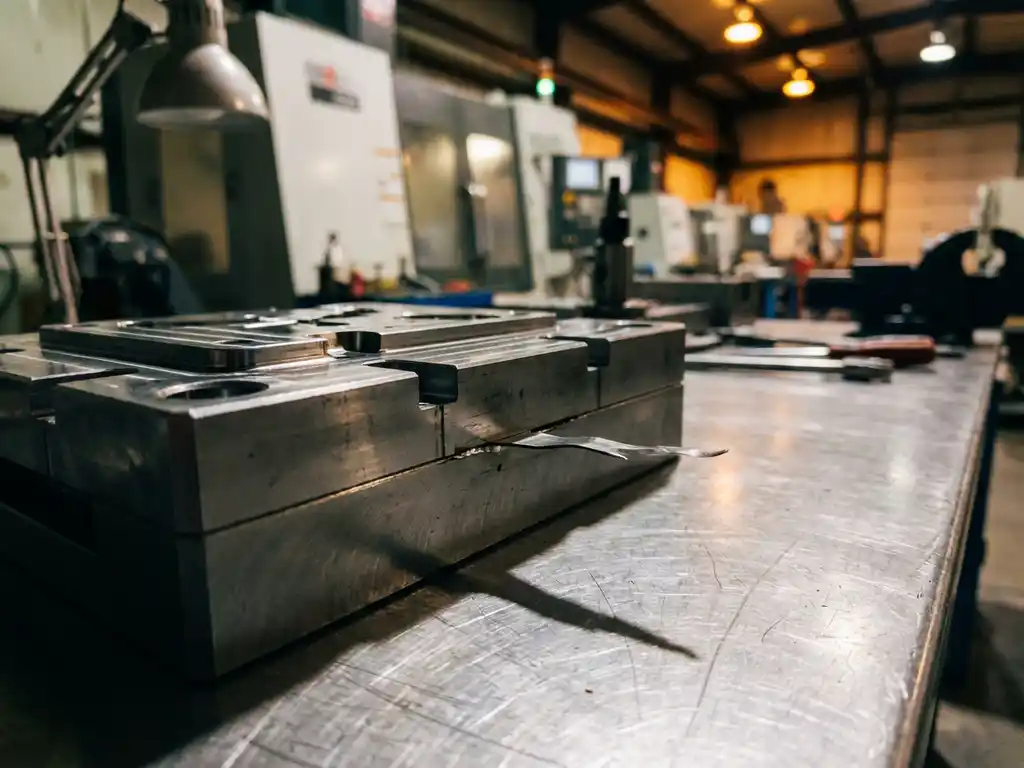
Flash defects represent one of the most frustrating challenges in injection molding production, causing significant quality issues and costly downtime. When molten plastic escapes from the mold cavity and creates unwanted thin layers of material along parting lines, manufacturers face immediate production stops, extensive cleanup, and potential mold damage.
Understanding flash defects and their impact on reducing production downtime is crucial for maintaining efficient manufacturing operations. This comprehensive guide explores what causes these defects and how modern injection molding troubleshooting techniques can minimize their disruptive effects on your production schedule.
What is a flash defect in injection molding?
A flash defect occurs when molten plastic escapes from the mold cavity during injection, creating thin, unwanted layers of plastic along the parting line or other mold surfaces. This excess material appears as a thin fin or web extending beyond the intended part geometry, requiring removal and often rendering parts unusable.
The defect manifests in several forms, depending on where the material escapes. Parting line flash appears along the main mold separation, while ejector pin flash occurs around ejector pin locations. Vent flash develops when material flows into venting channels, and sprue flash forms around the injection point. Each type creates unique challenges for quality control and production efficiency.
Flash defects are particularly problematic because they often indicate underlying issues with mold condition, machine settings, or material properties. The presence of flash typically signals that the injection molding process has moved outside optimal parameters, requiring immediate attention to prevent further quality issues and production delays.
What causes flash defects to occur during production?
Flash defects result from excessive injection pressure, worn mold components, improper machine settings, or inadequate clamping force, allowing molten plastic to escape the intended cavity areas. The most common cause is insufficient clamping tonnage relative to the projected area and injection pressure, creating gaps where material can flow.
Mold-related factors contribute significantly to flash formation. Worn parting line surfaces, damaged ejector pins, or poorly maintained mold components create pathways for material escape. Poor mold design, such as inadequate draft angles or improper venting, can also force material into unintended areas. Additionally, contamination or buildup on mold surfaces prevents proper sealing between mold halves.
Process parameters play a crucial role in flash development. Excessive injection pressure forces material into microscopic gaps that would otherwise remain sealed. High melt temperatures reduce material viscosity, making it more likely to flow into small openings. Incorrect injection speed can create pressure spikes that overwhelm the mold’s sealing capability, while inadequate cooling time may prevent proper material solidification before the mold opens.
How does a flash defect increase manufacturing downtime?
Flash defects increase manufacturing downtime through immediate production stops, extensive mold cleaning, part rejection, and process-adjustment cycles that can halt operations for hours or even entire shifts. Each flash occurrence triggers a cascade of time-consuming corrective actions that compound into significant productivity losses.
The immediate impact involves stopping production to address the source of the defect. Operators must halt the injection molding cycle, inspect the mold condition, and determine the root cause before resuming operations. This investigation process alone can take 30 minutes to several hours, depending on the complexity of the issue and the experience level of maintenance personnel.
Mold maintenance requirements extend downtime significantly. Removing flash buildup from mold surfaces requires careful cleaning to avoid damage to critical dimensions. Worn components need replacement, which may involve removing the entire mold from the machine. Complex molds with intricate geometries demand specialized cleaning procedures that can take several hours to complete properly.
Quality control complications further extend production delays. Flash-contaminated parts require sorting and potential rework, while operators must verify that subsequent parts meet specifications. Process adjustments to eliminate flash often require multiple trial runs and parameter optimization, adding additional cycles to the downtime period before stable production resumes.
How can quick mold change systems reduce flash-related downtime?
Quick mold change systems reduce flash-related downtime by enabling rapid mold removal for maintenance, facilitating faster component replacement, and providing consistent clamping force that helps prevent flash formation. These systems transform time-consuming mold maintenance from hours-long procedures into efficient operations completed in minutes.
The primary advantage lies in improved access for maintenance procedures. Traditional mold changes require extensive manual setup, alignment, and connection procedures that consume valuable production time. Quick mold change systems eliminate these steps through standardized interfaces and automated positioning, allowing maintenance teams to access problematic molds immediately when flash issues arise.
Preventive maintenance becomes more practical with quick-change capabilities. Regular mold inspection and component replacement can be scheduled during planned downtime rather than waiting for flash defects to force emergency stops. This proactive approach helps prevent flash-causing wear patterns from developing and maintains optimal mold condition throughout the production cycle.
Consistent clamping and alignment provided by quick-change systems also prevent many flash-causing conditions. Precise mold positioning ensures proper parting line contact, while standardized clamping force distribution eliminates pressure variations that can create flash-prone gaps. This systematic approach addresses root causes rather than merely responding to symptoms.
How EAS Change Systems Helps with Flash Defect Prevention
We provide comprehensive quick mold change solutions that directly address flash-related downtime through our advanced clamping systems and precision engineering. Our solutions enable manufacturers to maintain optimal mold conditions and respond quickly when flash issues arise, minimizing production disruptions and maintaining consistent quality standards.
Our flash defect prevention capabilities include:
- Adaptive clamping systems that ensure consistent, optimal pressure distribution across all mold surfaces
- Quick mold change tables and transportation systems for rapid mold access during maintenance
- Precision alignment systems that maintain proper parting line contact and prevent gap formation
- Standardized coupling systems that eliminate setup variations contributing to flash conditions
- Comprehensive service and maintenance programs to optimize system performance
Transform your injection molding troubleshooting approach and achieve significant reductions in production downtime with our proven quick mold change technology. Contact our application engineering team today to discuss how our solutions can eliminate flash-related production delays and optimize your manufacturing efficiency.