
Ejector pin marks are visible impressions or damage on plastic parts caused by ejector pins during the molding process. These marks appear when pins exert excessive force, are improperly placed, or when molds lack proper design considerations. Preventing ejector pin marks requires attention to mold design, maintenance practices, and injection molding process optimization.
What are ejector pin marks and why do they appear on plastic parts?
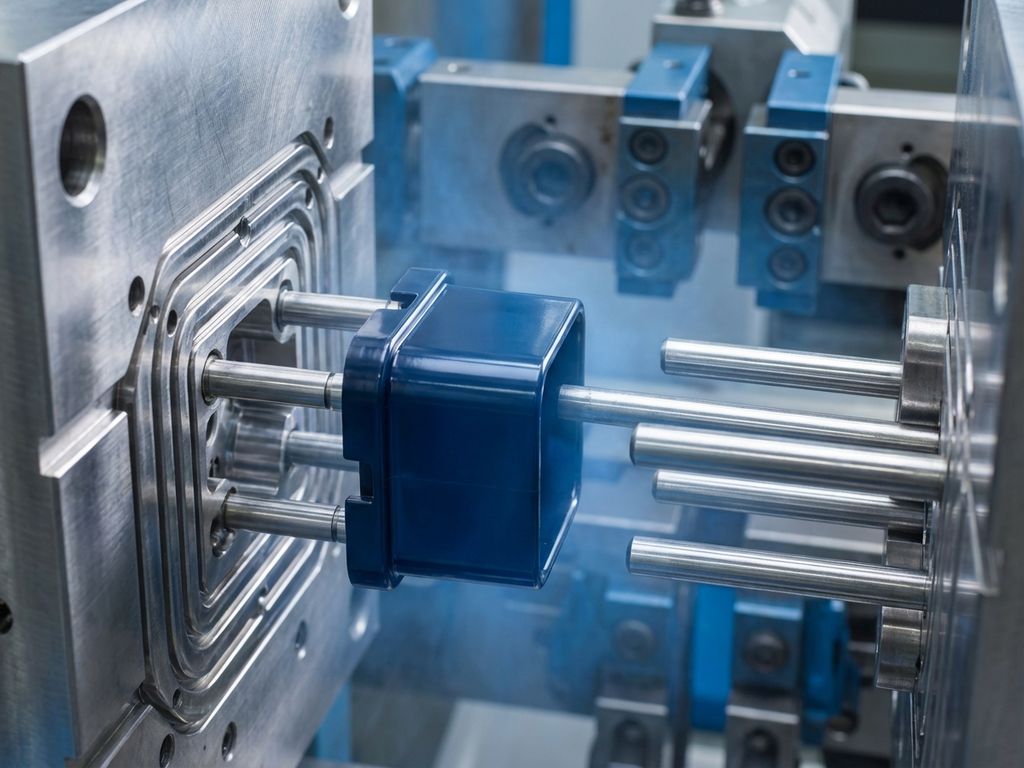
Ejector pin marks are visible impressions, scratches, or damage on the surface of plastic parts caused by the ejector pins during the molding process. These marks occur when the ejector pin system pushes the finished part out of the mold cavity after the cooling cycle is complete.
The ejection mechanism works by activating pins that push against the part to remove it from the mold. Pin marks typically appear when excessive ejection force is applied, causing the pins to deform or damage the plastic surface. Common scenarios include improper pin placement on thin or delicate part sections, worn or damaged pins with rough surfaces, and inadequate mold design that concentrates force on small areas.
Other causes include insufficient draft angles that create resistance during ejection, premature ejection before the part has cooled properly, and misaligned pins that create uneven pressure distribution. Understanding these root causes helps manufacturers implement targeted solutions for injection molding optimization.
How can proper mold design prevent ejector pin marks?
Proper mold design prevents ejector pin marks through strategic pin placement, appropriate sizing, and force distribution considerations. Optimal design distributes ejection forces across larger surface areas and positions pins on stronger part sections rather than thin walls or cosmetic surfaces.
Key design principles include calculating the proper pin diameter based on ejection force requirements and part geometry. Larger pins distribute force more evenly, reducing surface pressure. Pin placement should target structural ribs, thick sections, or non-visible areas when possible. Surface area distribution often involves using multiple smaller pins rather than fewer large ones to spread the ejection load.
Draft angles of 0.5–2 degrees facilitate easier part release, reducing the required ejection force. Design software tools can simulate ejection forces and predict potential problem areas before mold construction. Modern CAD systems include ejection analysis modules that highlight high-stress zones and suggest alternative pin configurations for improved part quality.
What maintenance practices help avoid ejector pin damage?
Regular maintenance practices prevent ejector pin damage through systematic inspection, cleaning, and replacement schedules. Proper maintenance ensures pins remain smooth, properly aligned, and function within design parameters throughout their service life.
Essential maintenance procedures include daily visual inspections for pin wear, scoring, or misalignment. Weekly cleaning protocols remove plastic residue and contamination that can cause surface roughness. Lubrication requirements vary by pin material and operating conditions, but regular application of appropriate lubricants reduces friction and wear.
Pin replacement indicators include visible wear patterns, surface roughness, dimensional changes, or increased ejection force requirements. Preventive maintenance checklists should document pin condition, replacement dates, and performance metrics. Early warning signs of deterioration include inconsistent part release, visible marks on parts, unusual noise during ejection, and increased cycle times due to ejection problems.
Which injection molding parameters affect ejector pin marking?
Critical injection molding parameters that influence ejector pin marks include ejection speed, ejection force, holding pressure, cooling time, material temperature, and cycle timing. Optimizing these parameters reduces pin marking while maintaining part quality and production efficiency.
Ejection speed should be controlled to prevent sudden impact forces that can damage part surfaces. Slower, controlled ejection reduces peak forces and allows for gentler part release. Ejection force must be sufficient for part removal without being excessive, requiring careful calibration based on part geometry and material properties.
Holding pressure affects part shrinkage and mold release characteristics. Excessive pressure can increase ejection force requirements, while insufficient pressure may cause dimensional issues. Cooling time directly impacts part rigidity during ejection—premature ejection of hot, flexible parts increases marking risk. Material temperature influences part flexibility and mold release properties, with proper temperature control reducing ejection force requirements and improving surface quality.
How EAS change systems help prevent ejector pin marks
EAS change systems help prevent ejector pin marks through precision-engineered quick mold change solutions that ensure consistent ejector pin alignment and controlled ejection forces. Our adaptive clamping systems and ejector couplers maintain optimal pin positioning throughout production runs and mold changes.
Our solutions provide specific benefits for ejector pin performance:
- Mono and multi-coupler systems ensure precise ejector pin alignment during mold installation
- Adaptive clamping systems maintain consistent ejection forces across production cycles
- Quick-change capabilities enable frequent mold maintenance without extended downtime
- Enhanced mold protection during changeovers prevents ejector pin damage
- Reduced setup times allow for more thorough ejector system inspections
The precision alignment capabilities of our systems prevent the misalignment issues that commonly cause ejector pin marks. By enabling faster mold changes, manufacturers can implement more frequent maintenance schedules that keep ejector pins in optimal condition. Learn more about EAS and how our quick mold change solutions can improve your injection molding process optimization and reduce ejector pin marking issues by contacting our team today.
