

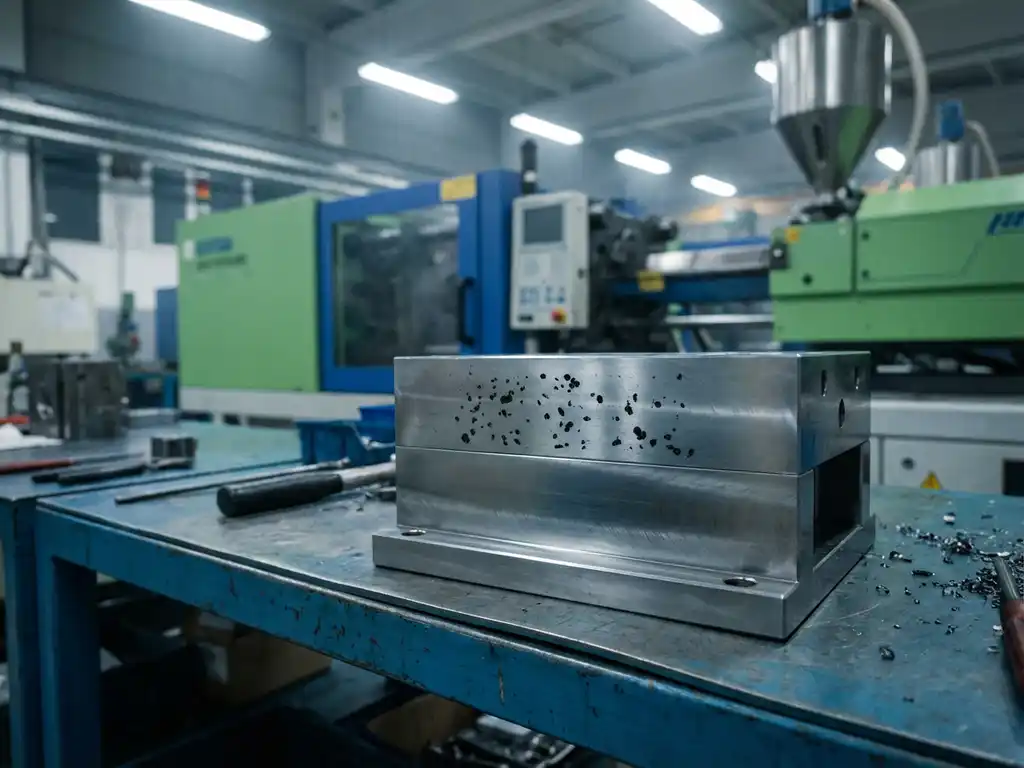
Material contamination represents one of the most costly and frustrating challenges in modern manufacturing. When foreign substances infiltrate production materials, they can trigger a cascade of problems that bring entire production lines to a halt. Understanding how contamination leads to production downtime becomes essential for manufacturers seeking to maintain efficient operations and minimize costly interruptions.
From plastic injection molding to metal stamping operations, contamination issues affect virtually every manufacturing process. The resulting delays don’t just impact immediate production schedules; they can also create ripple effects throughout the entire supply chain, making contamination prevention a critical component of effective injection molding troubleshooting strategies.
What is material contamination in manufacturing?
Material contamination in manufacturing occurs when unwanted foreign substances mix with raw materials, components, or finished products during the production process. These contaminants can include dirt, oil, metal particles, moisture, chemical residues, or incompatible materials that compromise product quality and manufacturing efficiency.
Contamination manifests in various forms depending on the manufacturing environment. In plastic injection molding, contamination might involve color bleed from previous runs, degraded plastic particles, or foreign materials that create surface defects. Metal stamping operations face contamination from cutting-fluid residues, metal shavings, or oxidation. Severity ranges from minor surface blemishes to complete product failure, with each type requiring different detection and remediation approaches.
The challenge lies not just in identifying contamination, but in understanding its source and preventing recurrence. Modern manufacturing environments involve multiple material-handling steps, each presenting opportunities for contamination.
How does contamination lead to production delays?
Contamination causes production delays through immediate quality failures, mandatory cleaning procedures, equipment damage, and cascading schedule disruptions. When contaminated materials enter production systems, manufacturers must stop operations to identify the source, clean affected equipment, and restart with verified clean materials.
The delay mechanism typically follows a predictable pattern. First, quality control systems detect defective products, triggering an immediate production halt. Operators must then trace the contamination source, which can involve dismantling equipment, inspecting material-handling systems, and testing raw-material batches. This investigation phase alone can take several hours.
Once the source is identified, cleaning and decontamination procedures begin. In injection molding operations, this might require purging the entire system, cleaning molds, and replacing filters. The restart process involves material verification, equipment calibration, and initial test runs to ensure the contamination has been eliminated. These combined activities can extend downtime from minutes to entire shifts, depending on contamination severity and system complexity.
What are the most common sources of material contamination?
The most common sources of material contamination include inadequate material-handling procedures, cross-contamination between different product runs, environmental factors such as dust and humidity, equipment wear that generates particles, and improper storage conditions that allow foreign substances to infiltrate materials.
Material handling represents the largest contamination risk. Conveyor systems, hoppers, and transfer equipment can harbor residual materials from previous runs or accumulate environmental contaminants. Poor cleaning protocols between product changeovers allow incompatible materials to mix, creating quality issues and processing problems.
Environmental contamination enters through inadequate facility controls. Dust, moisture, and airborne particles can infiltrate production areas through poor ventilation or insufficient cleanroom protocols. Equipment degradation contributes through worn seals, damaged filters, and aging components that generate particles or allow contaminants to enter. Storage issues compound these problems when raw materials are exposed to moisture, temperature fluctuations, or chemical vapors that alter material properties.
How much downtime does contamination typically cause?
Material contamination typically causes 2–8 hours of immediate downtime per incident, with severe cases requiring 12–24 hours for complete system decontamination and restart. The duration depends on the contamination type, the complexity of the affected equipment, and the level of thoroughness required for effective remediation.
Minor contamination events, such as color bleed in plastic injection molding, might require only 1–2 hours for purging and restart procedures. However, significant contamination involving multiple production lines or complex equipment systems can extend downtime considerably. Chemical contamination, or situations requiring complete equipment disassembly and cleaning, can consume entire production shifts.
Beyond immediate downtime, contamination creates secondary delays through quality-verification requirements, potential product recalls, and customer-notification processes. These indirect impacts can extend total business disruption well beyond the initial production halt, making contamination prevention a critical operational priority.
How can manufacturers prevent material contamination?
Manufacturers can prevent material contamination through comprehensive cleaning protocols, proper material-handling procedures, environmental controls, regular equipment maintenance, and robust quality assurance systems that detect contamination before it affects product quality.
Effective prevention starts with establishing strict material-handling protocols. This includes dedicated equipment for different material types, thorough cleaning procedures between product changeovers, and proper storage conditions that protect materials from environmental contamination. Regular equipment maintenance helps prevent contamination caused by worn components, while environmental controls help maintain clean production environments.
Quality assurance systems provide early contamination detection through regular material testing, in-process monitoring, and final product inspection. Training programs ensure operators understand contamination risks and follow established prevention procedures. Documentation systems track material sources, handling procedures, and cleaning activities to identify contamination patterns and prevent recurrence.
How EAS Change Systems Helps Reduce Production Downtime
At EAS Change Systems, we help manufacturers significantly reduce contamination-related downtime through our advanced quick mold change and quick die change solutions. Our systems minimize contamination risks by reducing the time materials are exposed during changeovers and by providing sealed, controlled transfer environments.
Our contamination-prevention solutions include:
- Sealed coupling systems that prevent environmental contamination during tool changes
- Rapid changeover capabilities that minimize material exposure time
- Precision clamping systems that reduce the risk of cross-contamination between production runs
- Automated handling equipment that reduces human contact with sensitive materials
- Comprehensive cleaning protocols integrated into our quick-change procedures
Ready to eliminate contamination-related production delays? Contact our application engineering team today to learn how our quick-change systems can streamline your operations while maintaining the highest contamination-prevention standards. Discover more about our solutions for various applications and how they can benefit your specific manufacturing environment.