

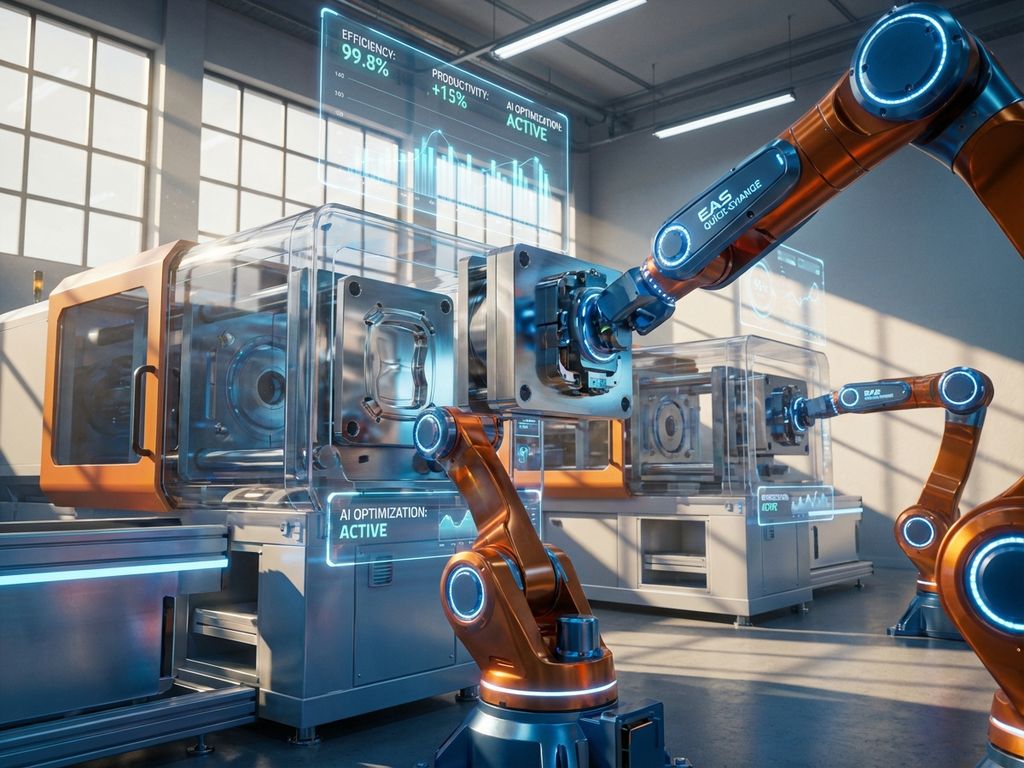
Artificial intelligence improves manufacturing productivity by automating quality control, predicting equipment maintenance needs, and optimising production schedules in real time. AI systems reduce waste, minimise downtime, and enable faster decision-making throughout manufacturing processes. This technology transforms traditional factories into smart, data-driven operations that respond dynamically to changing conditions and demands.
What is AI in manufacturing and why does it matter for productivity?
AI in manufacturing refers to intelligent systems that use machine learning, predictive analytics, and automation technologies to optimise production processes. These systems analyse vast amounts of data from sensors, machines, and operations to make autonomous decisions that improve efficiency and reduce human error.
The technology matters for productivity because it transforms reactive manufacturing into proactive operations. Traditional factories respond to problems after they occur, while AI-enabled facilities predict and prevent issues before they impact production. This shift from reactive to predictive management creates substantial manufacturing productivity improvement across all operational areas.
Machine learning algorithms continuously analyse production patterns, identifying opportunities for optimisation that humans might miss. Predictive analytics forecast demand fluctuations, equipment failures, and quality issues, allowing manufacturers to adjust operations accordingly. Automation technologies execute these insights instantly, creating responsive production environments that adapt to changing conditions without manual intervention.
How does AI actually improve manufacturing efficiency?
AI improves manufacturing efficiency through predictive maintenance that prevents unexpected equipment failures, automated quality control that catches defects instantly, and real-time process adjustments that optimise production flow. These capabilities reduce downtime, eliminate waste, and maximise output quality simultaneously.
Predictive maintenance represents one of the most significant efficiency gains. AI systems monitor equipment vibrations, temperatures, and performance patterns to predict failures weeks in advance. This allows planned maintenance during scheduled downtime rather than emergency repairs that halt production unexpectedly.
Quality control automation uses computer vision and sensor data to inspect products at speeds impossible for human operators. These systems detect defects, variations, and anomalies in real time, immediately flagging issues and adjusting processes to prevent further problems. The result is consistent quality with minimal waste.
Supply chain optimisation through AI coordinates material flows, production schedules, and delivery timelines. The technology anticipates bottlenecks, suggests alternative suppliers, and adjusts production priorities based on real-time demand data. This coordination eliminates delays and reduces inventory costs while maintaining production continuity.
What are the most common AI applications in modern manufacturing?
The most common AI applications in manufacturing include computer vision for automated inspection, robotic process automation for repetitive tasks, demand forecasting for production planning, and equipment monitoring for maintenance scheduling. These applications address the primary challenges manufacturers face daily.
Computer vision systems inspect products for defects, measure dimensions, and verify assembly accuracy at production speeds. These visual inspection systems work continuously without fatigue, catching quality issues that might escape human attention during long shifts.
Robotic process automation handles repetitive tasks like material handling, packaging, and simple assembly operations. These systems work alongside human operators, taking over mundane tasks while allowing workers to focus on complex problem-solving and quality oversight.
Demand forecasting algorithms analyse historical sales data, market trends, and external factors to predict future demand accurately. This enables better production planning, inventory management, and resource allocation. Manufacturers can avoid overproduction waste while ensuring adequate stock levels.
Equipment monitoring systems track machine performance, energy consumption, and operational parameters continuously. They identify patterns that indicate developing problems, enabling proactive maintenance and preventing costly breakdowns that disrupt production schedules.
How do manufacturers overcome challenges when implementing AI?
Manufacturers overcome AI implementation challenges by starting with pilot projects, investing in data quality improvement, providing comprehensive workforce training, and partnering with experienced technology providers. Success requires addressing technical, human, and organisational factors simultaneously.
Data quality issues represent the biggest obstacle for AI implementation. Manufacturers must clean existing data, standardise collection methods, and establish consistent data governance practices. This often requires upgrading sensors, implementing new data collection systems, and training staff on proper data management procedures.
Workforce training addresses employee concerns about AI replacing jobs while building the skills needed to work with intelligent systems. Successful programmes emphasise how AI enhances human capabilities rather than replacing workers, focusing on new roles in system oversight, problem-solving, and continuous improvement.
Integration complexities arise when connecting AI systems with existing manufacturing equipment and software. Manufacturers address this through phased implementation approaches, starting with standalone applications before integrating across systems. This reduces risk while allowing teams to build experience gradually.
Cost considerations require careful ROI planning and realistic expectations about implementation timelines. Successful manufacturers begin with high-impact, low-complexity applications that demonstrate value quickly, then reinvest savings into broader AI initiatives.
What should manufacturers consider before investing in AI technology?
Manufacturers should assess their data readiness, define clear productivity goals, evaluate technology options carefully, and develop realistic implementation timelines before investing in AI. Success depends on aligning AI capabilities with specific business needs rather than adopting technology for its own sake.
Readiness assessment examines current data collection capabilities, IT infrastructure, and workforce skills. Manufacturers need reliable data streams, adequate computing resources, and employees willing to adapt to new technologies. Gaps in these areas must be addressed before AI implementation begins.
ROI evaluation requires identifying specific productivity improvements AI will deliver and calculating realistic financial returns. Focus on measurable outcomes like reduced downtime, improved quality rates, or decreased waste rather than vague efficiency gains.
Technology selection criteria should prioritise solutions that integrate well with existing systems and address genuine operational challenges. Avoid complex AI platforms that promise everything but deliver little practical value. Choose proven technologies with clear implementation paths and ongoing support.
Implementation planning must account for the time needed to prepare data, train staff, and integrate systems gradually. Realistic timelines prevent disappointment and ensure adequate resources for successful deployment. Plan for iterative improvement rather than expecting immediate transformation.
How EAS change systems enhance AI-driven manufacturing productivity
EAS change systems perfectly complement AI-driven manufacturing initiatives by enabling the rapid changeovers that AI-optimised production schedules demand. When AI systems identify opportunities for improved efficiency through smaller batch sizes or more frequent product changes, quick mould change and quick die change solutions make these optimisations practical and profitable.
Our solutions support AI-enhanced manufacturing productivity improvement through:
- Rapid changeover capabilities that enable AI-recommended production schedules with frequent product switches
- Reduced setup times from hours to minutes, allowing manufacturers to act on AI insights immediately
- Flexible production runs that support AI-driven demand forecasting and just-in-time manufacturing
- Data integration potential through sensors that feed changeover times and efficiency metrics to AI systems
- Consistent setup procedures that eliminate variability and support AI quality control systems
Ready to enhance your AI manufacturing strategy with faster, more flexible production capabilities? Contact our team to discover how EAS change systems can support your smart manufacturing initiatives and maximise your AI investment returns.
