

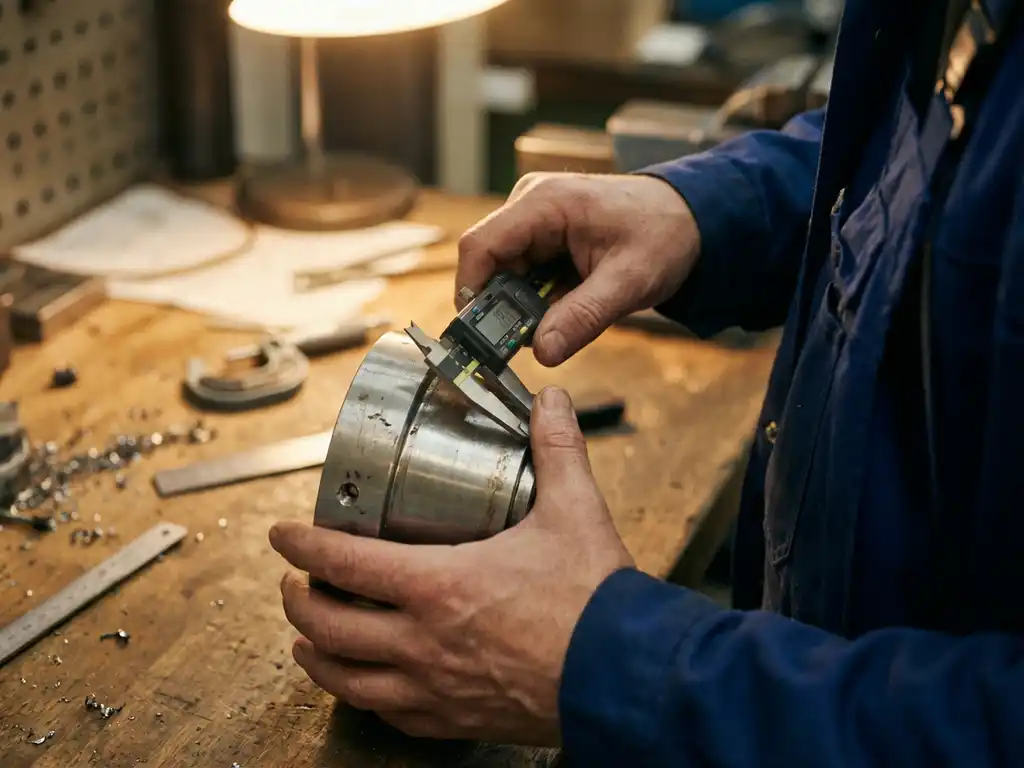
Inconsistent part dimensions can turn a smooth production run into a costly headache, leading to increased scrap rates, customer complaints, and production downtime. When your manufactured parts don’t consistently meet specifications, it’s crucial to identify the root cause quickly and implement effective solutions.
Understanding the difference between random and systematic dimensional variation, along with proper diagnostic techniques, can help you resolve these issues efficiently. This guide covers the most common causes of dimensional inconsistency and provides practical troubleshooting strategies to get your injection molding process back on track.
What Causes Inconsistent Part Dimensions in Manufacturing?
Inconsistent part dimensions typically result from variations in material properties, processing parameters, tooling wear, or environmental conditions that affect the manufacturing process. These factors can act independently or combine to create dimensional instability across production runs.
The most common causes include temperature fluctuations in the mold or material, inconsistent material flow rates, worn or damaged tooling components, and inadequate machine calibration. Material-related issues such as variations in moisture content, differences between lots, or contamination can also significantly impact dimensional consistency. Additionally, machine-related factors like inconsistent injection pressure, varying cycle times, or mechanical wear in critical components contribute to dimensional problems.
Environmental factors shouldn’t be overlooked, either. Changes in ambient temperature, humidity levels, or vibrations from nearby equipment can influence part dimensions, especially in precision manufacturing applications. Understanding these root causes helps prioritize troubleshooting efforts and implement targeted solutions.
How Do You Diagnose Dimensional Accuracy Problems?
Diagnosing dimensional accuracy problems requires systematic data collection, statistical analysis of measurement trends, and careful examination of process variables to identify patterns and correlations. Start by implementing comprehensive measurement protocols across multiple production cycles.
Begin by establishing a baseline: measure critical dimensions on consecutive parts using calibrated instruments. Document all process parameters, including temperatures, pressures, cycle times, and material lot numbers. Create control charts to visualize dimensional trends over time and identify when variations exceed acceptable limits.
Next, conduct correlation analysis between dimensional variation and process parameters. Look for relationships between temperature changes and part shrinkage, pressure variations and wall thickness, or cycle-time differences and overall dimensions. This systematic approach helps isolate the primary contributing factors rather than addressing symptoms.
Physical inspection of tooling components is equally important. Check for wear patterns, damage, or contamination that could affect part formation. Verify that cooling systems are functioning properly and maintaining consistent temperatures throughout the mold.
What’s the Difference Between Random and Systematic Dimensional Variation?
Random dimensional variation appears unpredictably, without clear patterns, and typically results from minor fluctuations in multiple process variables. Systematic variation follows identifiable patterns or trends that can be traced to specific causes, such as tool wear or temperature drift.
Random variation is characterized by measurements that scatter around the target dimension without obvious correlation to time, sequence, or specific process changes. These variations often stem from minor inconsistencies in material properties, small temperature fluctuations, or normal machine operating tolerances. While random variation can’t be eliminated entirely, it can be minimized through better process control and equipment maintenance.
Systematic variation, on the other hand, shows clear patterns such as gradual dimensional drift over time, cyclical changes, or sudden shifts that correspond to specific events. Common systematic causes include progressive tool wear that gradually changes cavity dimensions, thermal expansion effects that create predictable size changes, or calibration drift in process equipment.
Identifying the type of variation is crucial for selecting appropriate corrective actions. Random variation typically requires process optimization and tighter control limits, while systematic variation requires targeted interventions to address the underlying cause.
How Can Quick Mold Change Systems Reduce Dimensional Issues?
Quick mold change systems reduce dimensional issues by maintaining consistent mold positioning, eliminating setup variation, and preserving optimal process parameters between production runs. These systems ensure repeatable mold installation and consistent connection of utilities such as cooling lines and ejector systems.
Traditional mold changes often introduce dimensional inconsistencies because manual setup procedures can vary between operators and changeovers. Each time a mold is removed and reinstalled, slight differences in positioning, clamping-force distribution, or utility connections can affect part dimensions. Quick-change systems eliminate these variables by providing standardized, repeatable mounting and connection procedures.
The precision-engineered clamping mechanisms in quick-change systems ensure identical mold positioning every time, which is critical for maintaining consistent parting-line locations and cavity alignment. Automatic coupling of cooling lines maintains optimal temperature control without the risk of incorrect connections or air pockets that can cause hot spots.
Additionally, quick mold change systems reduce the time molds spend outside the machine, minimizing temperature variation that can affect initial part dimensions when production resumes. This consistency in thermal conditions helps maintain stable processing parameters from the start of each production run.
When Should You Replace Tooling to Fix Dimensional Problems?
Tooling should be replaced when wear patterns, damage, or dimensional drift exceed repair capabilities and significantly impact part quality or production efficiency. Key indicators include consistent dimensional drift that can’t be corrected through process adjustments, visible wear or damage to critical surfaces, or repair costs that approach the cost of replacement.
Evaluate tooling condition through regular inspection schedules that measure critical dimensions, assess surface-finish quality, and document wear patterns. When cavity dimensions have changed beyond acceptable limits due to wear or corrosion, replacement becomes necessary. Similarly, if cooling-channel blockages or damage prevent proper temperature control—leading to dimensional instability—replacement may be more cost-effective than extensive repairs.
Consider replacement timing carefully to minimize production disruptions. Plan tooling replacement during scheduled maintenance windows or when transitioning between production campaigns. This approach allows for proper validation of the new tooling without impacting delivery commitments.
Economic factors also influence replacement decisions. Calculate the total cost of continued operation with degraded tooling—including increased scrap rates, additional inspection requirements, and potential customer complaints—versus the investment in new tooling and associated validation activities.
How EAS Change Systems Helps with Dimensional Consistency
We provide comprehensive quick mold change solutions that directly address dimensional consistency challenges through precision-engineered systems and expert support services. Our products eliminate common sources of dimensional variation while improving overall production efficiency.
Our quick-change systems deliver dimensional consistency through:
- Precision clamping mechanisms that ensure identical mold positioning at every changeover
- Automatic utility-coupling systems that maintain consistent cooling and ejection parameters
- Reduced thermal cycling through faster changeover times
- Standardized setup procedures that eliminate operator-induced variation
- Comprehensive training and ongoing technical support to optimize system performance
With over 35 years of experience in quick-change technology and a global presence across three continents, we understand the critical relationship between consistent tooling setup and dimensional accuracy. Contact our application engineering team today to discuss how our quick mold change solutions can help resolve your dimensional consistency challenges and reduce production downtime.