

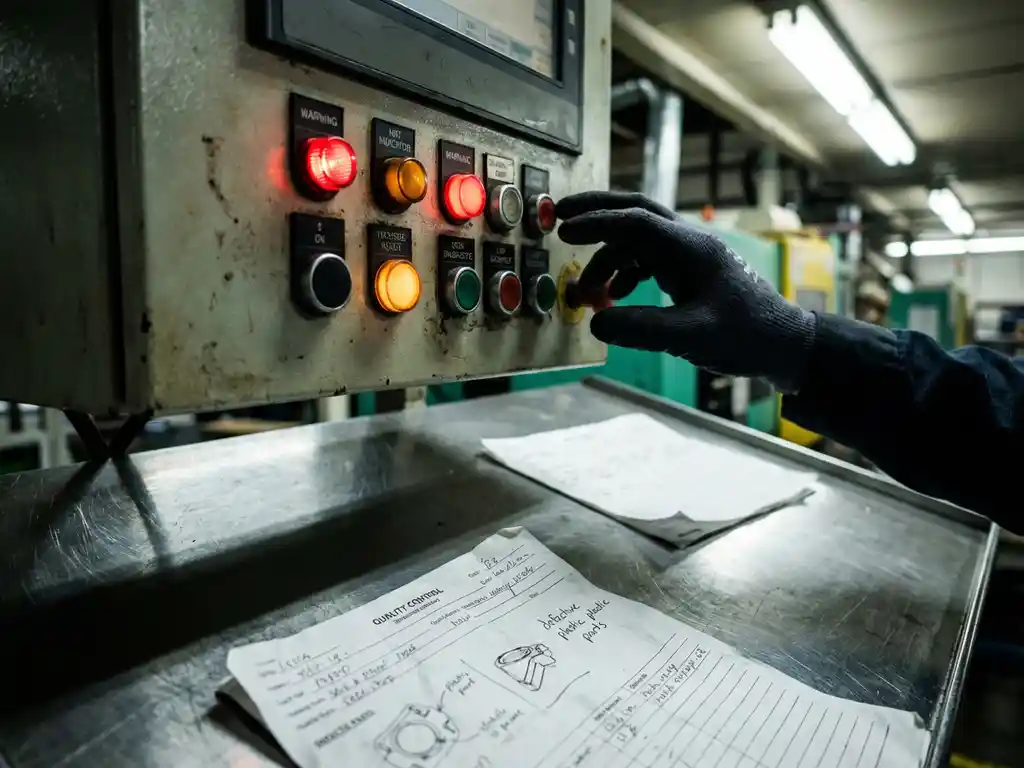
Identifying injection molding process risks requires systematic monitoring of material conditions, equipment performance, and production parameters. Common risks include temperature variations, pressure inconsistencies, material degradation, and contamination, which can lead to defective parts and costly production delays. Early detection through proper monitoring and inspection prevents minor issues from becoming major problems.
What are the most common injection molding process risks manufacturers face?
Material degradation, temperature variations, pressure inconsistencies, contamination issues, and equipment malfunctions represent the primary process risks in injection molding operations. These risks can cause dimensional variations, surface defects, incomplete fills, and structural weaknesses that compromise part quality and increase scrap rates.
Material degradation occurs when plastic resins break down due to excessive heat, moisture absorption, or prolonged residence time in the barrel. This degradation affects flow characteristics and mechanical properties, leading to brittle parts and a poor surface finish. Temperature variations throughout the heating zones create inconsistent melt quality, causing flow marks, warpage, and dimensional instability.
Pressure inconsistencies during the injection and holding phases result in short shots, sink marks, and internal voids. These variations often stem from worn components, inconsistent material feed, or hydraulic system problems. Contamination from foreign particles, color carryover, or degraded material creates visual defects and potential mechanical failures.
Equipment malfunctions affecting heating elements, injection units, or mold components disrupt the delicate balance required for consistent part production. Regular maintenance and monitoring help prevent these issues from escalating into major production disruptions.
How do you detect early warning signs of injection molding problems?
Visual defects, dimensional variations, cycle time changes, pressure fluctuations, and material flow irregularities serve as key indicators of developing process problems. Monitoring these parameters allows operators to identify potential risks before they result in significant quality issues or equipment damage.
Visual inspection reveals surface defects such as flow marks, weld lines, color variations, and contamination spots that indicate process instabilities. Dimensional measurements using gauges and coordinate measuring machines detect gradual changes in part geometry that suggest mold wear, temperature drift, or pressure variations.
Cycle time monitoring identifies changes in cooling efficiency, material flow rates, or equipment response times. Sudden increases in cycle time often indicate cooling system problems, while decreases may suggest insufficient cooling that compromises part quality. Pressure monitoring during the injection and holding phases reveals trends that predict equipment wear or material consistency issues.
Material flow observations during startup and production runs help identify viscosity changes, contamination, or degradation. Operators should watch for changes in material color, flow patterns, and gate freeze times that signal developing problems. Quick die change systems can help reduce setup variations that contribute to process inconsistencies.
What tools and methods help identify injection molding process risks?
Statistical process control methods, monitoring equipment, inspection techniques, and diagnostic tools provide systematic approaches for identifying and tracking process risks. These tools enable data-driven decisions that prevent quality problems and optimize production efficiency.
Process monitoring systems track critical parameters such as temperature, pressure, and cycle time in real time. Modern injection molding machines include integrated monitoring that alerts operators to deviations from established parameters. Data logging capabilities allow trend analysis that identifies gradual process drift before it affects part quality.
Statistical process control charts help identify patterns and trends in dimensional measurements, cycle times, and other critical variables. Control charts distinguish between normal process variation and special causes that require investigation. Regular sampling and measurement protocols ensure consistent data collection for meaningful analysis.
Inspection techniques include visual examination, dimensional measurement, and functional testing of produced parts. Coordinate measuring machines provide precise dimensional data, while optical inspection systems detect surface defects and color variations. Material testing equipment evaluates resin properties and identifies degradation or contamination issues.
Thermal imaging cameras detect temperature variations in molds and heating systems, while vibration analysis identifies mechanical problems in injection units and auxiliary equipment. These diagnostic tools provide early warning of developing problems that could affect process stability.
Why do injection molding process risks often go unnoticed until it’s too late?
Inadequate monitoring systems, insufficient operator training, complex process interactions, and the gradual nature of many process degradations contribute to delayed risk detection. Many problems develop slowly over time, making them difficult to notice without systematic monitoring and analysis.
Process complexity makes it challenging to identify the root causes of quality problems. Multiple variables interact simultaneously, and changes in one parameter can mask problems in another area. Operators may adjust settings to compensate for developing problems without addressing the underlying causes.
Limited monitoring capabilities on older equipment prevent comprehensive data collection and analysis. Without real-time feedback and historical trending, operators rely on visual inspection and experience to detect problems. This approach often misses gradual changes that accumulate over time.
Insufficient training leaves operators unprepared to recognize early warning signs or understand the relationships between process parameters and part quality. Time pressures and production targets may discourage thorough investigation of minor quality issues that could indicate larger problems.
The gradual nature of wear, contamination, and degradation makes these issues difficult to detect without systematic comparison to baseline conditions. What appears normal today may represent significant degradation from optimal performance levels established weeks or months earlier.
How EAS Change Systems helps with injection molding process optimization
EAS Change Systems provides comprehensive solutions for injection molding manufacturers seeking to minimize process risks and optimize production efficiency. Our approach addresses the critical challenges of mold changeover consistency, setup variation reduction, and process standardization that directly impact part quality and production reliability.
Our quick die change systems and process optimization solutions deliver measurable benefits:
- Standardized changeover procedures that eliminate setup variations between operators and shifts
- Reduced mold positioning errors through precise alignment systems and repeatable clamping mechanisms
- Faster setup times that allow more frequent mold changes for better process control
- Comprehensive training programs that ensure operators understand proper risk identification techniques
- Documentation systems that track process parameters and identify trends before they become problems
Effective injection molding optimization requires proactive monitoring, systematic data analysis, and comprehensive operator training. By implementing proper risk identification procedures, manufacturers can prevent minor issues from becoming major production problems while maintaining consistent part quality and production efficiency. Contact EAS Change Systems today to learn how our proven solutions can help you minimize injection molding process risks and maximize your production potential.