

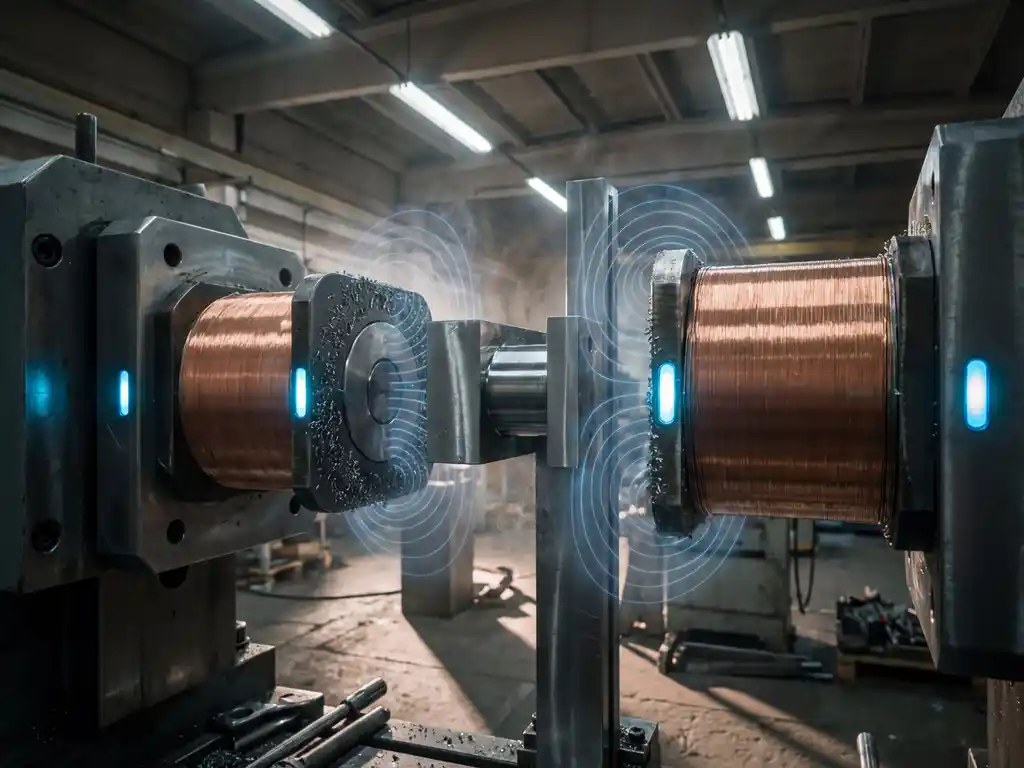
Magnetic clamping systems have revolutionized industrial manufacturing by providing secure, efficient workholding solutions. However, the precision of these systems depends heavily on the stability of their magnetic fields. Understanding how magnetic field variations affect clamping system precision is crucial to maintaining consistent production quality and operational efficiency.
When magnetic fields fluctuate unexpectedly, they can compromise the holding force that keeps workpieces securely positioned during manufacturing processes. This directly affects dimensional accuracy, surface finish quality, and overall production reliability in applications ranging from metal stamping to machining operations.
What Are Magnetic Field Variations in Clamping Systems?
Magnetic field variations in clamping systems are fluctuations in the strength, uniformity, or stability of the magnetic force generated by electromagnetic or permanent-magnet workholding devices. These variations can occur gradually over time or suddenly due to external influences, causing inconsistent clamping forces across the workpiece surface.
Several types of magnetic field variations commonly affect clamping systems. Temporal variations involve changes in magnetic strength over time, often caused by temperature fluctuations or power-supply instabilities. Spatial variations create uneven magnetic fields across different areas of the clamping surface, leading to inconsistent holding forces. Directional variations occur when the magnetic field orientation shifts, potentially reducing the effective clamping force perpendicular to the workpiece surface.
These variations can range from minor fluctuations of 1–2% to significant changes exceeding 10% of the nominal field strength. Even small variations can have substantial impacts on precision manufacturing processes where dimensional tolerances are measured in micrometers.
How Do Magnetic Field Variations Affect Clamping Force Consistency?
Magnetic field variations directly reduce clamping force consistency by creating uneven holding pressures across the workpiece surface, leading to workpiece movement, vibration, and dimensional inaccuracies during manufacturing operations. When magnetic field strength fluctuates, the attractive force between the magnet and the ferromagnetic workpiece changes proportionally.
The relationship between magnetic field strength and clamping force is quadratic in many cases. This means that a 10% reduction in magnetic field strength can result in approximately a 20% decrease in holding force. Such variations create several problematic scenarios in precision manufacturing.
Uneven clamping forces cause workpiece distortion, particularly in thin or flexible materials. Areas with weaker magnetic fields may allow slight workpiece lifting or shifting during cutting operations, resulting in dimensional variations across the part. Additionally, inconsistent clamping can lead to chatter or vibration during machining, negatively affecting surface finish quality and tool life.
Temperature-induced magnetic field variations present another challenge. As magnetic materials heat up during operation, their field strength typically decreases, requiring compensation through system design or active monitoring to maintain consistent clamping performance.
What Causes Magnetic Field Instability in Industrial Environments?
Magnetic field instability in industrial environments results from electromagnetic interference, temperature fluctuations, power-supply variations, mechanical wear, and contamination of magnetic surfaces. These factors can act individually or in combination to degrade clamping system performance.
Electromagnetic interference from nearby equipment is a primary cause of field instability. Variable-frequency drives, welding equipment, and large motors generate electromagnetic fields that can interfere with magnetic clamping systems. This interference can cause temporary field fluctuations or, in severe cases, permanent demagnetization of permanent-magnet systems.
Temperature variations significantly affect magnetic field stability. Most magnetic materials experience reduced field strength as temperature increases, with permanent magnets being particularly sensitive to thermal cycling. Industrial environments often subject clamping systems to temperature swings from ambient conditions to elevated operating temperatures, causing predictable but problematic field variations.
Power-supply inconsistencies affect electromagnetic clamping systems directly. Voltage fluctuations, frequency variations, or harmonic distortion in the electrical supply can cause corresponding changes in magnetic field strength. Poor electrical connections or aging components can exacerbate these issues over time.
Mechanical factors also contribute to instability. Wear in moving components, accumulation of ferromagnetic debris on pole faces, or physical damage to magnetic assemblies can create localized field variations that affect overall clamping performance.
How Can You Measure and Monitor Magnetic Field Precision?
Magnetic field precision is measured using gaussmeters, Hall effect sensors, and force-measurement devices that quantify field strength, uniformity, and resulting clamping forces across the magnetic surface. Regular monitoring involves establishing baseline measurements and tracking deviations over time.
Gaussmeters provide direct measurement of magnetic field strength at specific points on the clamping surface. By taking measurements at multiple locations across the magnetic face, operators can identify areas of field variation and assess overall system uniformity. Modern digital gaussmeters offer accuracy within 1% and can detect small changes in field strength that might affect clamping performance.
Hall effect sensors enable continuous monitoring of magnetic field strength during operation. These sensors can be integrated into clamping systems to provide real-time feedback on field stability, allowing for immediate detection of variations that could compromise workpiece security.
Force-measurement techniques involve using calibrated test pieces with known magnetic properties to assess actual clamping forces. Pull-off force measurements using spring scales or load cells provide practical validation of magnetic holding strength under operating conditions.
Establishing a monitoring protocol requires creating baseline measurements for each clamping system, documenting acceptable variation ranges, and implementing regular inspection schedules. Many facilities incorporate magnetic field checks into preventive maintenance routines to identify degradation before it affects production quality.
What Solutions Minimize Magnetic Field Variations in Clamping Systems?
Solutions to minimize magnetic field variations include using temperature-compensated magnetic materials, implementing electromagnetic shielding, installing power-conditioning equipment, and designing systems with redundant magnetic circuits. These approaches address the root causes of field instability.
Temperature compensation is one of the most effective solutions for thermally related variations. Modern magnetic clamping systems incorporate materials with complementary temperature coefficients or active cooling systems to maintain consistent field strength across operating temperature ranges. Some advanced systems use temperature sensors coupled with electronic compensation to adjust magnetic field strength automatically.
Electromagnetic shielding protects sensitive magnetic systems from external interference. Properly designed shields redirect electromagnetic fields from nearby equipment away from clamping systems, maintaining field stability in electrically noisy environments.
Power-conditioning equipment addresses supply-related variations in electromagnetic clamping systems. Voltage regulators, harmonic filters, and uninterruptible power supplies ensure clean, stable electrical power that translates into consistent magnetic field generation.
System design improvements include using multiple smaller magnetic circuits instead of a single large one, implementing feedback control systems that adjust field strength based on measured performance, and selecting magnetic materials with superior stability characteristics.
How EAS Change Systems Helps with Magnetic Field Precision
At EAS Change Systems, we provide advanced quick die change solutions that incorporate precision magnetic clamping technology designed to minimize field variations and maintain consistent holding forces throughout production cycles. Our products address the critical need for reliable workholding in demanding metal-stamping environments.
Our quick die change systems offer several key advantages for maintaining magnetic field precision:
- Temperature-compensated magnetic assemblies that maintain consistent clamping forces across operating temperature ranges
- Integrated monitoring systems that detect field variations before they affect production quality
- Robust electromagnetic shielding to protect against interference from press operations and auxiliary equipment
- Precision-engineered pole faces that ensure uniform field distribution across die surfaces
- Comprehensive service and maintenance programs to maintain optimal magnetic performance over time
Contact EAS Change Systems today to learn how our proven quick die change solutions can improve your stamping operation’s precision and efficiency while reducing setup times and manufacturing costs.