

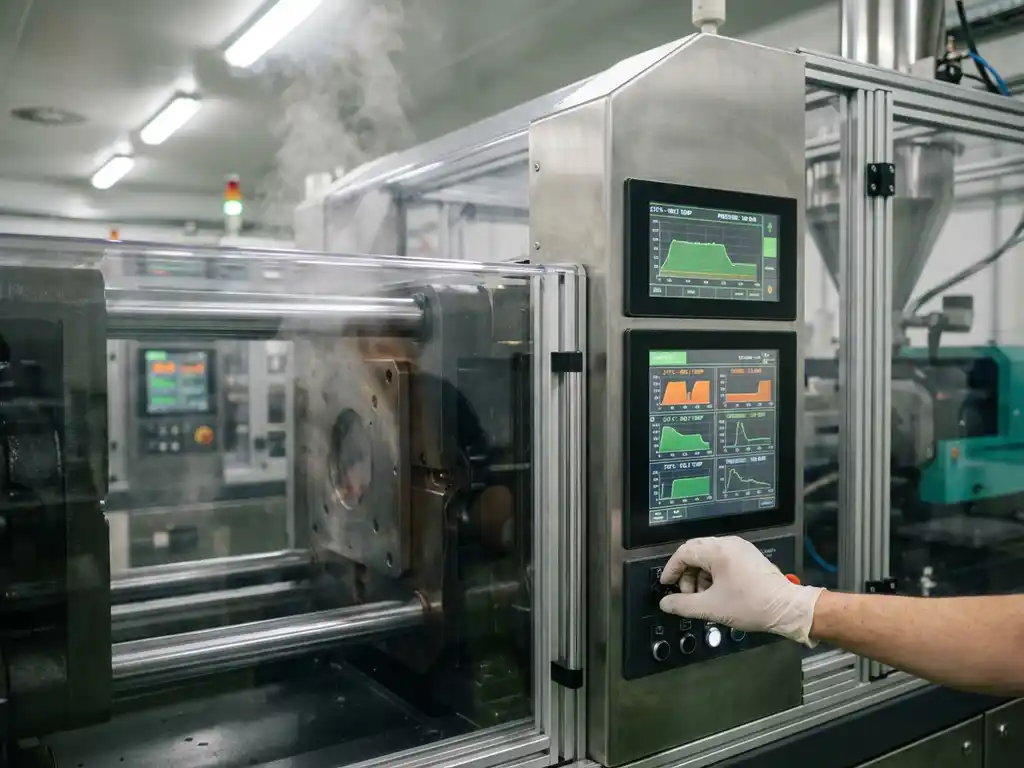
Real-time monitoring for injection molding processes is a technology system that continuously tracks and analyzes critical production parameters during manufacturing operations. These systems collect data from sensors throughout the injection molding equipment, providing instant feedback on temperature, pressure, cycle times, and material flow. Real-time monitoring enables manufacturers to detect issues immediately, maintain consistent quality, and optimize production efficiency without manual intervention or delayed quality checks.
What exactly is real-time monitoring in injection molding, and why is it essential?
Real-time monitoring in injection molding involves continuous data collection from sensors placed throughout the molding equipment to track production parameters as they occur. This technology captures information about every aspect of the molding process, from material temperature to cavity pressure, providing instant visibility into production quality and equipment performance.
The system works by connecting sensors to a central monitoring platform that processes data continuously. Unlike traditional quality control methods that rely on periodic sampling, real-time monitoring evaluates every single cycle, ensuring that no defective parts escape detection. This comprehensive oversight is essential as modern manufacturing demands higher quality standards while reducing waste and production costs.
For injection molding operations, real-time monitoring serves as the foundation for consistent quality control. It directly supports efficiency improvements by identifying optimal processing windows and maintaining them automatically. When parameters drift outside acceptable ranges, the system can alert operators or even adjust settings automatically, preventing the production of defective parts before they occur.
How does real-time monitoring detect problems before they become costly defects?
Real-time monitoring systems detect problems through sensor technologies that measure critical parameters continuously and compare them against predetermined thresholds. When measurements approach or exceed acceptable limits, automated alert systems notify operators immediately, often before visible defects appear in finished parts.
The sensor network typically includes temperature probes, pressure transducers, flow meters, and position sensors strategically placed throughout the injection molding machine. These sensors feed data to processing units that analyze trends and patterns in real time. Advanced systems use predictive algorithms to identify subtle changes that indicate developing problems, such as gradual temperature increases that suggest heating element degradation.
Common issues detected early include material degradation from overheating, incomplete filling due to pressure drops, and dimensional variations from inconsistent cooling. The system’s predictive capabilities prevent scrap and rework by catching these problems in their initial stages. Rather than discovering issues after producing hundreds of defective parts, operators receive immediate warnings that allow for quick corrections.
What specific parameters does real-time monitoring track during injection molding?
Real-time monitoring tracks comprehensive variables, including temperature profiles throughout the barrel and mold, injection and holding pressures, material flow rates, cycle times, and cooling parameters. Each parameter directly affects product quality, and the system monitors their relationships to maintain optimal processing conditions.
Temperature monitoring covers multiple zones, from the material hopper through the barrel to the mold cavity. Pressure measurements include injection pressure, holding pressure, and cavity pressure, which determine how completely the mold fills and how well the part consolidates. Flow-rate monitoring ensures consistent material delivery, while cycle-time tracking identifies efficiency opportunities.
Material properties such as melt viscosity and moisture content also fall within the monitoring scope when appropriate sensors are available. The relationship between different measurements provides crucial insights—for example, higher-than-normal injection pressure combined with longer fill times might indicate material degradation or blockages. Understanding these parameter interactions enables operators to maintain optimal injection molding optimization across all production variables.
How do manufacturers implement real-time monitoring without disrupting existing operations?
Manufacturers implement real-time monitoring through a step-by-step approach that begins with an assessment of existing equipment capabilities and the identification of sensor installation points. The process prioritizes minimal production disruption by scheduling installations during planned maintenance windows and implementing systems gradually across different production lines.
Retrofitting existing equipment requires careful consideration of sensor placement and wiring routes that do not interfere with normal operation. Modern monitoring systems often use wireless sensors where possible, reducing installation complexity. The implementation strategy typically starts with one or two critical parameters and then expands to comprehensive monitoring as operators become familiar with the system.
Staff training focuses on interpreting alerts and understanding parameter relationships rather than on complex technical operation. Most systems provide intuitive dashboards that highlight important information clearly. Gradual implementation phases allow operators to build confidence with the technology while maintaining normal production schedules. This approach ensures a smooth transition from traditional quality control methods to continuous real-time monitoring.
What are the measurable benefits of real-time monitoring for injection molding operations?
Real-time monitoring delivers quantifiable improvements in quality consistency by maintaining parameters within optimal ranges continuously. Operations typically experience significant reductions in waste and scrap rates because defects are prevented rather than detected after production. Enhanced production efficiency results from optimized cycle times and reduced setup variations.
Faster troubleshooting capabilities emerge from immediate problem identification, with clear data about what changed and when. Instead of investigating quality issues after discovering defective parts, operators can address problems as they develop. This responsiveness dramatically reduces the time between problem occurrence and resolution.
Long-term cost savings accumulate through optimized processes that reduce material waste, energy consumption, and equipment wear. Real-time monitoring extends equipment longevity by preventing operation outside safe parameters and identifying maintenance needs before failures occur. Just as quick die change systems reduce setup times in stamping operations, real-time monitoring reduces quality-related downtime in injection molding through predictive maintenance and immediate problem resolution.
How EAS Change Systems Enhances Real-Time Monitoring Implementation
EAS Change Systems provides comprehensive solutions for implementing effective real-time monitoring systems in injection molding operations. Our expertise extends beyond traditional quick changeover solutions to encompass complete production optimization strategies that integrate seamlessly with existing manufacturing processes. We help manufacturers achieve superior quality control through:
- Custom sensor integration and placement strategies tailored to specific equipment configurations
- Comprehensive training programs that ensure operators can maximize system benefits immediately
- Ongoing support and optimization services that adapt monitoring systems as production requirements evolve
- Integration with existing changeover systems to create unified efficiency improvements
The implementation of real-time monitoring transforms injection molding from reactive quality control to proactive process optimization. This technology provides the foundation for consistent production quality while reducing costs and improving efficiency. Manufacturers that embrace real-time monitoring position themselves for a competitive advantage through superior quality control and operational excellence. Contact EAS Change Systems today to discover how our integrated approach to production optimization can transform your injection molding operations through advanced real-time monitoring solutions.