
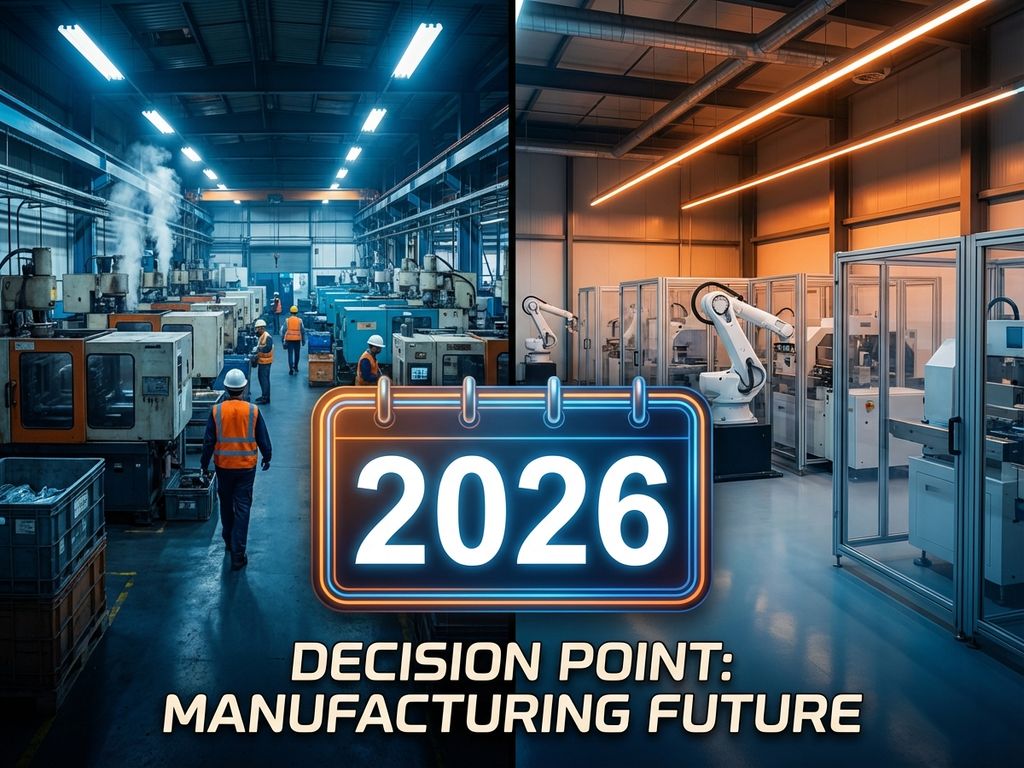
Outsourcing injection molding in 2026 depends on your production volume, setup time requirements, and cost structure. Many manufacturers benefit from outsourcing low-volume runs or specialized parts while keeping high-volume production in-house. The decision requires evaluating partner capabilities, hidden costs, and whether internal efficiency improvements could eliminate outsourcing needs entirely.
What are the main reasons to consider outsourcing injection molding in 2026?
Cost reduction, access to specialized expertise, and capacity flexibility are the primary drivers for outsourcing injection molding. External partners often provide economies of scale for smaller production runs and eliminate the need for substantial capital investment in equipment and tooling.
Manufacturers typically consider outsourcing when facing irregular production schedules, limited floor space, or the need for specialized materials and processes. External molding partners bring established quality systems, regulatory compliance expertise, and often faster time-to-market capabilities.
The technology landscape in 2026 also favors outsourcing for companies requiring advanced manufacturing techniques like micro-molding, multi-material injection, or complex geometries. These specialized processes often require significant investment in equipment and training that may not justify the cost for occasional use.
How do you evaluate potential injection molding partners for quality and reliability?
Assess potential partners through facility audits, quality certifications, and production capability demonstrations. Look for ISO 9001 certification, industry-specific standards compliance, and documented quality control processes that align with your requirements.
Key evaluation criteria include:
- Equipment age, maintenance records, and technology capabilities
- Quality management systems and statistical process control implementation
- Supply chain stability and material sourcing practices
- Communication protocols and project management capabilities
- Financial stability and business continuity planning
Request samples from similar projects and verify their ability to meet your tolerances, surface finish requirements, and production volumes. Evaluate their capacity planning methods and backup procedures for equipment failures or supply disruptions.
What are the hidden costs and risks of outsourcing injection molding?
Transportation costs, quality control overhead, and communication delays often exceed initial cost projections. Tooling ownership disputes, intellectual property concerns, and supply chain vulnerabilities can create significant long-term expenses and operational risks.
Common hidden costs include:
- Frequent quality inspections and reject handling procedures
- Extended lead times requiring higher inventory levels
- Tooling modifications and maintenance coordination
- Additional packaging and logistics requirements
- Contract renegotiation and supplier management overhead
Risk factors encompass supplier dependency, reduced production control, and potential quality inconsistencies. Geographic separation can complicate problem resolution and limit your ability to implement rapid design changes or process improvements.
When does keeping injection molding in-house make more financial sense?
In-house production becomes cost-effective for high-volume, consistent production runs where setup time optimization and quality control justify equipment investment. Companies with predictable demand patterns and sufficient production volume typically achieve better unit costs through internal manufacturing.
Financial advantages of in-house production include:
- Direct control over production scheduling and priority setting
- Elimination of supplier margins and transportation costs
- Faster response to design changes and quality issues
- Better integration with lean manufacturing principles
- Long-term cost predictability and capacity utilization
The break-even point typically occurs when annual production volumes exceed the threshold where equipment depreciation, labor, and overhead costs fall below outsourced pricing. This calculation must include setup time costs, which can significantly impact small-batch economics.
How can quick mold change systems reduce the need for outsourcing?
Quick mold change systems dramatically reduce setup times from hours to minutes, making small-batch production economically viable in-house. These systems enable flexible manufacturing that eliminates the primary cost advantage of outsourcing low-volume or varied production runs.
Benefits of implementing quick change systems include:
- Reduced setup labor costs and production downtime
- Improved capacity utilization through faster changeovers
- Enhanced ability to respond to customer demand variations
- Better quality control through consistent setup procedures
- Increased competitiveness for small and medium batch sizes
Modern quick change technology incorporates automated clamping systems, standardized connections, and pre-positioned tooling that minimize manual intervention. This automation reduces setup errors while enabling single-operator changeovers that previously required multiple technicians.
How EAS change systems help with injection molding efficiency optimization
We provide comprehensive quick mold change solutions that transform setup operations from time-consuming manual processes into efficient, automated procedures. Our systems enable manufacturers to achieve setup times under 10 minutes while maintaining consistent quality and safety standards.
Our injection molding optimization solutions include:
- Adaptive clamping systems for secure, repeatable mold positioning
- Automated ejector couplers eliminating manual connections
- Integrated mold change tables and transportation vehicles
- Complete project management from design through installation
- ROI calculations demonstrating payback periods and cost savings
- Ongoing service and maintenance support for optimal performance
Our engineering team works directly with manufacturers to design custom solutions that integrate seamlessly with existing production lines while maximizing efficiency gains. These manufacturing applications span across various industries, helping companies reduce their outsourcing requirements and improve manufacturing competitiveness. Contact us today to discuss how our quick change systems can transform your injection molding operations.