
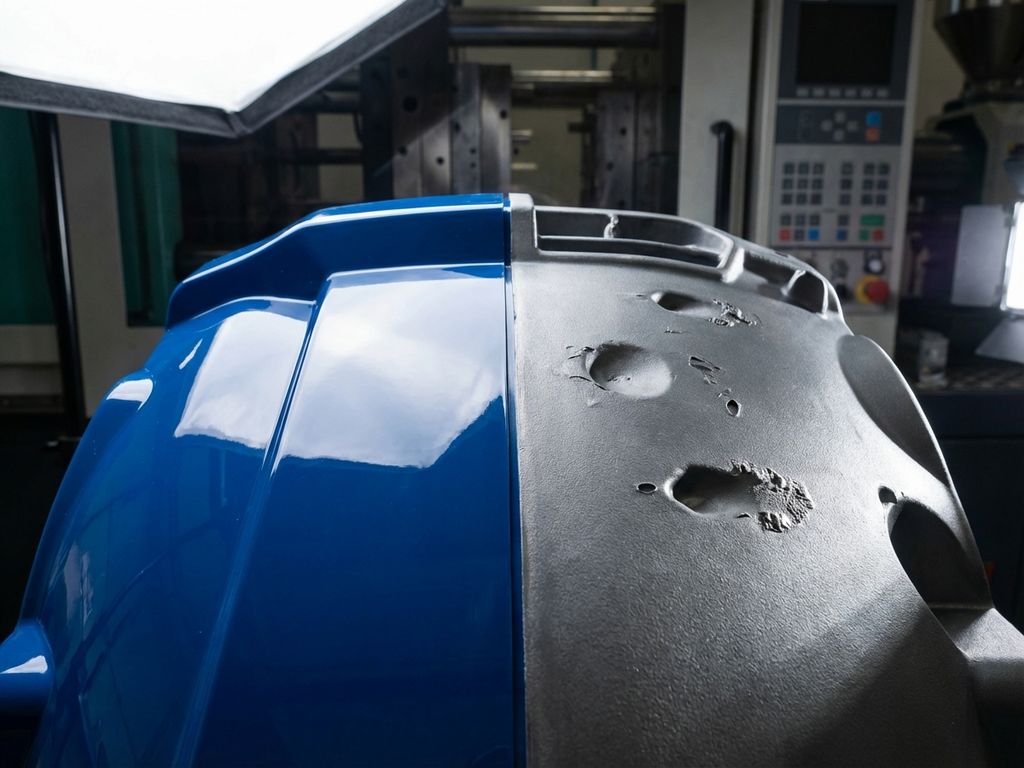
Sink marks are surface depressions that appear on injection-moulded parts when material shrinks unevenly during cooling. These defects occur when thicker sections cool more slowly than surrounding areas, creating visible indentations. Proper mould design, parameter optimisation, and quick changeover systems can effectively eliminate sink marks whilst maintaining production efficiency.
What are sink marks and why do they occur in injection moulding?
Sink marks are surface depressions or indentations that form on injection-moulded parts during the cooling process. These defects appear as visible dimples or recessed areas on the part surface, typically occurring opposite thick sections, ribs, or bosses within the moulded component.
The formation of sink marks stems from the fundamental physics of plastic cooling and shrinkage. When molten plastic is injected into a mould cavity, different sections cool at varying rates. Thicker areas retain heat longer and continue shrinking after thinner sections have solidified. This differential cooling creates internal stress and causes the material to pull inward, forming the characteristic depression on the opposite surface.
Material thickness variations are the primary contributor to sink mark formation. Areas where the wall thickness changes dramatically create hot spots that cool more slowly. As these thick sections continue to shrink whilst connected to already solidified thin sections, the material draws inward, creating the visible defect. The severity of sink marks depends on material properties, cooling rates, and the degree of thickness variation within the part.
What causes sink marks to form during the moulding process?
Inadequate packing pressure is the most common cause of sink mark formation. Insufficient pressure during the packing phase fails to compensate for material shrinkage, allowing voids to form beneath thick sections. This creates the conditions for surface depressions to develop as the part cools.
Insufficient cooling time compounds the problem by allowing thick sections to remain molten whilst thinner areas solidify. This creates differential shrinkage patterns that pull material inward. Improper gate location can restrict material flow to thick sections, preventing adequate packing and compensation for shrinkage.
Wall thickness variations exceeding recommended ratios inevitably create sink marks. Material selection also plays a crucial role, as high-shrinkage materials like polypropylene are more susceptible to sink mark formation than low-shrinkage alternatives. Mould temperature problems, whether too high or too low, disrupt the controlled cooling necessary for uniform shrinkage patterns.
How can you prevent sink marks through proper mould design?
Uniform wall thickness principles form the foundation of sink mark prevention. Maintaining consistent thickness throughout the part eliminates differential cooling rates that cause surface depressions. Where thickness transitions are necessary, gradual changes over longer distances prevent sharp variations that create hot spots.
Strategic gate placement ensures adequate material flow to all sections of the part. Gates positioned near thick sections allow proper packing pressure to reach areas most susceptible to sink marks. Multiple gates may be necessary for complex geometries to maintain uniform filling and packing.
Proper cooling channel layout promotes even temperature distribution throughout the mould. Channels positioned closer to thick sections help extract heat more efficiently, reducing cooling time differences. Rib and boss design considerations include reducing thickness where possible and incorporating gradual transitions to surrounding walls. Mould surface treatments can improve heat transfer and cooling uniformity.
What injection moulding parameters help eliminate sink marks?
Packing pressure adjustments provide the most direct method for eliminating sink marks. Increased pressure during the packing phase compensates for material shrinkage by forcing additional material into areas that would otherwise form depressions. The pressure must be sufficient to overcome shrinkage forces without causing flash or other defects.
Extended hold times ensure adequate pressure is maintained until thick sections have sufficiently solidified. This prevents material from flowing back out of packed areas as cooling progresses. Cooling time optimisation balances cycle efficiency with complete solidification, particularly in thick sections prone to sink marks.
Injection speed control affects filling patterns and material distribution. Slower speeds can improve packing in difficult-to-fill areas, whilst faster speeds may be necessary to prevent premature cooling. Melt temperature settings influence material flow and shrinkage characteristics, with optimal temperatures promoting uniform cooling. Mould temperature management maintains consistent thermal conditions that support even shrinkage patterns throughout the part.
How EAS change systems help with sink mark elimination
EAS change systems provide comprehensive solutions for injection moulding optimisation by enabling rapid mould adjustments and parameter testing. Our quick mould change technology allows manufacturers to efficiently iterate through design modifications and process optimisations without lengthy downtime periods.
Our systems support sink mark elimination through:
- Rapid mould changeover for testing different cooling channel configurations
- Quick adjustment capabilities for optimising gate locations and sizes
- Efficient temperature control systems that maintain consistent mould conditions
- Fast setup changes that allow parameter optimisation without production delays
- Integrated monitoring systems that track cooling performance and identify improvement opportunities
The ability to change moulds in minutes rather than hours enables continuous improvement processes essential for eliminating sink marks. This rapid changeover capability supports both design iterations and process optimisation, ensuring manufacturers can achieve defect-free production whilst maintaining efficiency. Our engineering expertise and technical support team can help you implement quick mould change solutions that eliminate sink marks in your production process.