

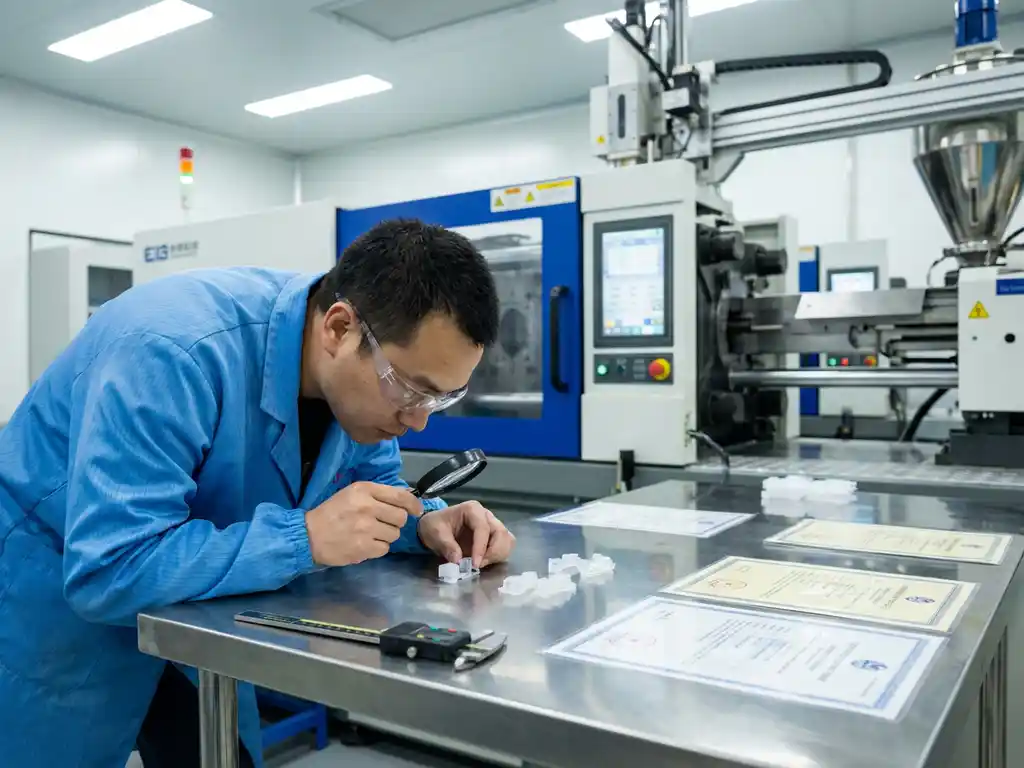
Maintaining injection molding quality certifications requires systematic documentation, regular audits, and consistent process control throughout your manufacturing operations. Quality certifications such as ISO 9001, IATF 16949, and ISO 13485 demand ongoing compliance through proper record-keeping, employee training, and equipment validation. Success depends on understanding specific certification requirements and implementing robust quality management systems that support continuous improvement.
What quality certifications are essential for injection molding operations?
The most critical quality certifications for injection molding include ISO 9001 for general quality management, IATF 16949 for automotive applications, and ISO 13485 for medical devices. ISO 9001 provides the foundation for quality systems across all industries, while IATF 16949 adds automotive-specific requirements for supply chain management and defect prevention.
Medical device manufacturers must obtain ISO 13485 certification, which emphasizes risk management and regulatory compliance throughout the product lifecycle. Aerospace suppliers often require AS9100 certification, which builds on ISO 9001 with additional requirements for configuration management and product safety.
Your certification priorities should align with your customer base and target markets. Automotive suppliers benefit most from IATF 16949, while general industrial manufacturers typically start with ISO 9001. Many facilities pursue multiple certifications to serve diverse markets, though this requires careful planning to manage overlapping requirements effectively.
How do you prepare for quality certification audits in injection molding?
Audit preparation begins with comprehensive internal assessments conducted three to six months before scheduled external audits. Review all quality documentation, verify that process controls are functioning properly, and ensure employee training records are current and complete.
Organize documentation systematically, including process control charts, calibration certificates, corrective action logs, and supplier qualification records. Conduct mock audits with cross-functional teams to identify potential gaps and verify that employees understand their roles in quality processes.
Focus preparation on common audit areas, including document control, management review processes, internal audit effectiveness, and corrective action implementation. Ensure production records demonstrate consistent process control and that any deviations are properly documented with appropriate corrective measures.
Train key personnel on audit procedures and responses, emphasizing factual answers and proper documentation references. Prepare evidence of continuous improvement activities and management commitment to quality objectives throughout the organization.
What documentation is required to maintain injection molding quality certifications?
Essential quality documentation includes process control records, calibration certificates, training records, supplier qualification documents, and detailed corrective action logs. Process control records must demonstrate consistent monitoring of critical parameters such as temperature, pressure, and cycle times.
Calibration certificates for all measuring equipment require regular updates according to scheduled intervals, typically annually or as specified by equipment manufacturers. Training records must document initial qualification and ongoing competency assessments for all personnel who affect product quality.
Supplier qualification documents should include approved vendor lists, incoming inspection records, and supplier performance evaluations. Corrective action logs must demonstrate systematic problem-solving approaches with root cause analysis and effectiveness verification.
Document control procedures ensure all quality documents remain current, accessible, and properly approved. Retention requirements vary by certification standard, but most require keeping quality records for minimum periods ranging from three to ten years, depending on product applications.
How does equipment changeover time affect quality certification compliance?
Equipment changeover procedures directly impact quality traceability and process validation requirements under most certification standards. Quick mold change systems must maintain consistent setup procedures and verification protocols to ensure product quality remains stable across production runs.
Certification standards require documented validation procedures for equipment changes, including verification of critical parameters after each changeover. Quick die change systems can improve compliance by standardizing changeover procedures and reducing human error during setup processes.
Faster changeovers enable better lot traceability and reduce the risk of product mixing between different specifications. This supports certification requirements for product identification and segregation, which is particularly important in automotive and medical device manufacturing.
Validation procedures must verify that critical process parameters remain within specification after equipment changes. This includes confirming proper mold installation, verifying process settings, and conducting first-article inspections to ensure quality standards are maintained throughout production transitions.
What are the most common quality certification challenges in injection molding?
The most frequent compliance issues include incomplete documentation, inadequate corrective action follow-through, and inconsistent process control monitoring. Many facilities struggle to maintain current training records and ensure that all personnel understand their quality responsibilities.
Documentation gaps often occur in areas such as supplier management, where facilities fail to maintain adequate qualification records or performance evaluations. Process control deviations frequently result from insufficient monitoring of critical parameters or delayed responses to out-of-specification conditions.
Corrective action systems commonly fail due to inadequate root cause analysis or a lack of effectiveness verification. Many organizations implement solutions without properly validating their effectiveness or ensuring sustainable implementation across all affected processes.
Supplier management problems arise when facilities lack systematic approaches to vendor qualification, incoming inspection, or performance monitoring. These challenges require structured approaches to supplier development and ongoing performance evaluation to maintain certification compliance while supporting efficient production operations.
How EAS Change Systems Helps with Quality Certification Compliance
EAS Change Systems provides comprehensive solutions that directly support quality certification maintenance through standardized changeover processes and enhanced documentation capabilities. Our quick mold change systems help manufacturers meet certification requirements by:
• Establishing consistent, repeatable changeover procedures that reduce human error and improve process validation
• Providing detailed documentation systems that support audit requirements and traceability standards
• Implementing standardized setup protocols that ensure critical parameters remain within specification after equipment changes
• Reducing changeover time while maintaining the rigorous quality controls required by ISO, IATF, and medical device certifications
Contact EAS Change Systems today to learn how our proven solutions can streamline your certification compliance while improving operational efficiency and reducing changeover-related quality risks.