

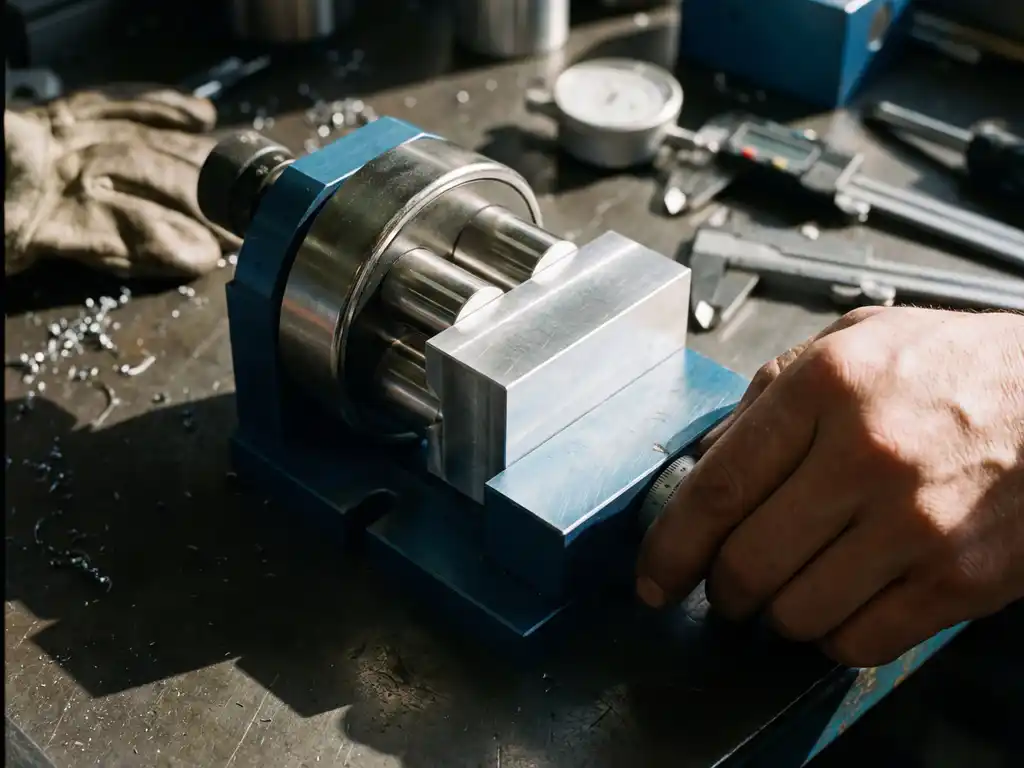
Metal stamping operations face unique challenges when working with non-ferrous materials such as aluminum, copper, brass, and titanium. These materials do not respond to magnetic forces the same way steel does, creating complications for traditional magnetic clamping systems. Understanding how to effectively secure non-ferrous dies and workpieces is crucial to maintaining efficient production workflows and ensuring workplace safety.
The question of whether magnetic clamping systems can handle non-ferrous materials effectively touches on fundamental principles of magnetism and practical engineering solutions. While standard magnetic clamps cannot directly grip non-ferrous materials, innovative approaches and alternative technologies can bridge this gap, allowing manufacturers to maintain consistent clamping performance across diverse material types.
What Are Non-Ferrous Materials and Why Do They Matter in Metal Stamping?
Non-ferrous materials are metals that contain little to no iron, making them non-magnetic and not attracted by standard magnetic forces. Common non-ferrous materials in metal stamping include aluminum, copper, brass, bronze, titanium, zinc, and various alloys of these metals.
These materials play a critical role in modern manufacturing due to their unique properties. Aluminum offers an excellent strength-to-weight ratio and corrosion resistance, making it ideal for automotive and aerospace applications. Copper provides superior electrical conductivity for electronic components, while brass combines corrosion resistance with machinability for decorative and functional parts. Titanium delivers exceptional strength and biocompatibility for medical devices and other high-performance applications.
The challenge for stamping operations is that traditional magnetic workholding systems cannot directly secure dies or workpieces made from these materials. This limitation affects setup times, requires alternative clamping strategies, and can impact overall production efficiency if not properly addressed.
How Do Magnetic Clamping Systems Actually Work?
Magnetic clamping systems work by generating strong magnetic fields that attract ferrous materials, creating a secure holding force without mechanical fasteners. The magnetic field passes through ferrous materials such as steel, creating attraction between the magnet and the workpiece or die.
These systems typically use either permanent magnets or electromagnets to generate the required holding force. Permanent magnetic systems provide constant holding power and require no electrical connection, while electromagnetic systems offer the advantage of being switchable on and off via electrical control. The magnetic field strength determines the clamping force, which must be sufficient to resist the forces generated during stamping operations.
The effectiveness of magnetic clamping depends on several factors, including magnetic field strength, the ferrous content of the material, the contact surface area, and the air gap between the magnet and the workpiece. Any non-ferrous material in this magnetic circuit significantly reduces or eliminates the holding force, which is why standard magnetic systems struggle with non-ferrous applications.
Can Standard Magnetic Clamps Hold Non-Ferrous Materials Directly?
Standard magnetic clamps cannot hold non-ferrous materials directly because these materials are not attracted to magnetic fields. Non-ferrous metals such as aluminum, copper, and brass lack the iron content necessary to interact with magnetic forces, making traditional magnetic workholding ineffective.
The fundamental physics behind this limitation is straightforward: magnetic attraction requires ferromagnetic materials that can be magnetized or attracted by external magnetic fields. Non-ferrous materials are either diamagnetic (slightly repelled by magnets) or paramagnetic (very weakly attracted), but neither property provides sufficient force for reliable clamping in industrial applications.
This limitation creates significant challenges in stamping operations where mixed material types are processed. Switching between ferrous and non-ferrous materials often requires a complete changeover of workholding systems, increasing setup times and complexity. Some manufacturers attempt to use magnetic systems with non-ferrous materials by incorporating ferrous backing plates or adapters, but this approach adds complexity and may not be suitable for all applications.
What Alternative Clamping Solutions Work Best for Non-Ferrous Dies?
Mechanical clamping systems provide the most reliable solution for non-ferrous dies, using physical contact and mechanical advantage to generate holding forces independent of a material’s magnetic properties. These systems include hydraulic clamps, pneumatic cylinders, toggle clamps, and screw-type mechanical fasteners.
Hydraulic clamping systems offer high force capacity and precise control, making them ideal for heavy non-ferrous dies that require substantial holding power. Hydraulic pressure can be adjusted to match specific application requirements, and these systems can be integrated with quick-connect couplers for faster die changes. Pneumatic systems provide faster actuation speeds and are well suited for lighter dies or applications where rapid cycling is important.
Vacuum clamping is another effective alternative, particularly for thin non-ferrous materials or applications where surface marking must be minimized. Vacuum systems can provide uniform clamping pressure across large surface areas and work effectively with materials that have a good surface finish and minimal porosity.
Combination systems that integrate multiple clamping technologies offer the greatest flexibility. These might combine mechanical base clamping with pneumatic side clamps or integrate vacuum holding with mechanical backup systems for redundant security.
How Can You Adapt Magnetic Systems for Non-Ferrous Material Handling?
Magnetic systems can be adapted for non-ferrous materials by incorporating ferrous interface plates, magnetic pot assemblies, or hybrid clamping designs that combine magnetic and mechanical elements. The key is to create a magnetic circuit that includes ferrous components while still effectively securing the non-ferrous workpiece.
Ferrous backing plates or adapters can be attached to non-ferrous dies, allowing magnetic clamping systems to engage with the ferrous interface rather than the die material directly. This approach maintains the speed and convenience of magnetic clamping while accommodating non-ferrous tooling. The backing plates must be securely attached to the die and designed to withstand the full stamping forces without failure.
Magnetic pot assemblies combine permanent magnets with mechanical clamping elements, providing both magnetic attraction to ferrous components and mechanical gripping for non-ferrous materials. These hybrid systems can automatically adapt to different material types, reducing changeover complexity.
Another adaptation involves using magnetic systems for positioning and alignment while relying on secondary mechanical systems for final clamping. This approach leverages the speed and precision of magnetic positioning while ensuring reliable holding force through mechanical means.
How EAS Change Systems Helps with Non-Ferrous Material Clamping
We provide comprehensive quick die change solutions specifically designed to address the challenges of non-ferrous material clamping in metal stamping operations. Our adaptive clamping systems combine multiple technologies to ensure reliable, fast, and safe die changes regardless of material type.
Our solutions for non-ferrous material handling include:
- Hydraulic and pneumatic clamping systems with quick-connect couplers for rapid die changes
- Multi-coupler systems that integrate mechanical, hydraulic, and electrical connections
- Adaptive clamping technologies that automatically adjust to different die configurations
- Die-handling equipment, including lifters and transport vehicles, for safe non-ferrous die movement
- Complete turnkey systems with project management and installation support
Ready to optimize your non-ferrous material stamping operations? Contact us today to discuss how our quick die change solutions can reduce setup times and improve production efficiency, regardless of your material requirements.