

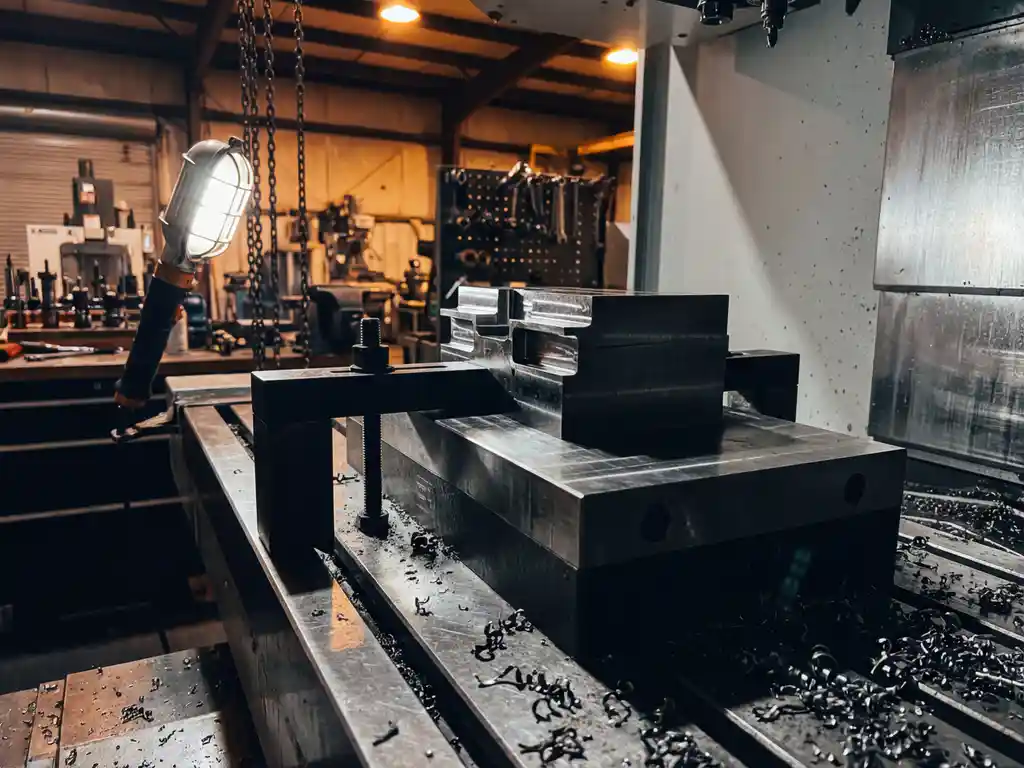
Manufacturing myths can be costly misconceptions that hold back production efficiency and profitability. In the world of workholding systems, magnetic workholding has been surrounded by persistent myths that prevent many manufacturers from realizing significant productivity gains. These outdated beliefs often stem from experiences with older technology or an incomplete understanding of modern magnetic clamping capabilities.
Understanding the truth behind these magnetic workholding myths is crucial for production supervisors and plant managers looking to optimize their manufacturing processes. Modern magnetic chuck systems offer remarkable versatility and reliability that can transform your production floor—but only when you separate fact from fiction in your workholding decisions.
Why Magnetic Workholding Myths Cost You Money
Believing outdated information about magnetic workholding systems directly impacts your bottom line through missed opportunities and inefficient processes. When production teams avoid magnetic clamping based on misconceptions, they often stick with slower, more labor-intensive mechanical workholding methods that increase setup times and reduce overall equipment effectiveness.
These myths create a ripple effect throughout your operation. Extended setup times mean fewer parts per shift, higher labor costs per piece, and reduced machine utilization. Additionally, the increased handling required by traditional clamping methods raises the risk of part damage and workplace injuries, further driving up operational costs.
1: Magnetic Chucks Damage Precision Parts
The belief that magnetic fields will damage precision components is one of the most persistent workholding myths in manufacturing. Modern magnetic chuck systems generate highly controlled, localized magnetic fields that have no impact on the metallurgical properties or dimensional accuracy of workpieces. The magnetic force acts purely as a mechanical clamping mechanism without altering the material structure.
In fact, magnetic workholding often provides superior surface-finish protection compared to mechanical clamps. Traditional clamps create point-contact stress that can mark or deform thin-walled parts, while magnetic chucks distribute clamping force evenly across the entire contact surface. This uniform pressure distribution eliminates the surface damage commonly associated with over-tightened mechanical clamps.
2: Only Ferrous Materials Work With Magnets
While permanent magnetic chucks work directly with ferrous materials, this limitation has been overcome through innovative workholding solutions. Magnetic systems can effectively hold non-ferrous materials like aluminum, brass, and plastics by using ferrous adapter plates, pole extensions, or magnetic transfer blocks that bridge the gap between the chuck and non-magnetic workpieces.
Electromagnetic workholding systems offer even greater versatility through specialized pole configurations and auxiliary fixtures. These systems can accommodate complex part geometries and mixed-material assemblies that would be challenging or impossible to secure with traditional mechanical clamps, expanding magnetic workholding applications far beyond basic ferrous materials.
3: Magnetic Systems Are Too Weak for Heavy Cuts
Modern magnetic workholding systems generate tremendous clamping forces that can easily handle heavy machining operations. High-performance permanent magnetic chucks can produce holding forces exceeding 1,000 pounds per square inch, while electromagnetic systems can generate even higher forces when needed. These holding forces are more than adequate for most production machining operations, including heavy roughing cuts.
The key advantage of magnetic clamping lies in its ability to distribute this force evenly across the entire workpiece contact area. This uniform pressure distribution often provides more secure workholding than mechanical clamps, which create stress concentrations at contact points that can actually reduce effective holding power under dynamic cutting forces.
4: Setup Time Is Longer Than Mechanical Clamps
Magnetic workholding dramatically reduces setup times compared to traditional mechanical clamping methods. Loading a part onto a magnetic chuck requires only proper positioning and activation of the magnetic field, typically accomplished in seconds rather than the minutes required for mechanical clamp adjustment and tightening. This speed advantage becomes even more pronounced when handling multiple parts or complex fixtures.
The elimination of clamp interference also simplifies machining operations and reduces programming complexity. Without protruding clamps to avoid, cutting tools can access more of the workpiece surface in a single setup, often eliminating secondary operations and additional setups entirely.
5: Magnetic Fields Interfere With Machine Tools
Well-designed magnetic workholding systems are engineered to contain their magnetic fields within the chuck assembly, preventing interference with machine tool components or electronic systems. Modern magnetic chucks use carefully calculated pole configurations and shielding to direct magnetic flux through the workpiece while minimizing stray fields that could affect nearby equipment.
CNC machine tools routinely operate with magnetic workholding systems without experiencing any performance issues or electronic interference. The magnetic fields generated by workholding chucks are significantly weaker than those produced by the machine’s own spindle motors and servo drives, making interference concerns largely theoretical rather than practical.
6: Power Failures Make Parts Fall Off
Permanent magnetic chucks maintain their holding power indefinitely without any electrical connection, making them completely immune to power failures. These systems use rare-earth magnets or other permanent magnetic materials that provide constant clamping force regardless of facility power status, ensuring workpiece security even during unexpected outages.
Electromagnetic systems, while requiring power to operate, typically include fail-safe features such as battery backup systems or mechanical locks that engage automatically during power loss. Many modern electromagnetic chucks also incorporate permanent magnetic elements that provide residual holding force even when power is removed, preventing catastrophic part release during electrical interruptions.
7: Thin Parts Cannot Be Held Magnetically
Magnetic workholding excels at securing thin parts that would be difficult or impossible to clamp mechanically without distortion. The distributed clamping force of magnetic systems prevents the buckling and warping that often occurs when thin materials are compressed by mechanical clamps. This makes magnetic chucks ideal for sheet metal work, thin-walled castings, and delicate precision components.
For extremely thin materials that might not provide sufficient magnetic circuit completion, specialized techniques such as magnetic backing plates or flux concentrators can enhance holding power. These accessories allow magnetic workholding to secure materials as thin as a few thousandths of an inch while maintaining flatness and preventing distortion.
8: Magnetic Workholding Is Too Expensive
While magnetic workholding systems may have higher initial costs than basic mechanical clamps, the total cost of ownership typically favors magnetic solutions due to reduced setup times, improved productivity, and lower labor costs. The time savings from faster part loading and unloading often pays for the magnetic system investment within months of implementation.
Additionally, magnetic workholding eliminates many hidden costs associated with mechanical clamping, such as clamp interference requiring longer cutting tools, secondary setups due to clamp access limitations, and part damage from over-tightening. When these factors are considered in a comprehensive cost analysis, magnetic systems frequently provide a superior return on investment.
9: Round Parts Slip on Magnetic Chucks
Round parts can be held securely on magnetic chucks using proper techniques and accessories designed for cylindrical workpieces. V-groove magnetic chucks, magnetic vises with angled jaws, and specialized round-part adapters provide positive location and secure holding for cylindrical components. These accessories ensure that rotational forces cannot overcome the magnetic holding power.
The key to successful round-part workholding lies in maximizing the contact area between the workpiece and the magnetic chuck surface. Fixtures that create flat contact areas or multiple contact points distribute the magnetic force effectively, preventing rotation while maintaining the speed and convenience advantages of magnetic clamping.
10: Coolant Ruins Magnetic Chuck Performance
Modern magnetic workholding systems are designed to operate effectively in wet machining environments with proper coolant management. Sealed magnetic chuck designs prevent coolant infiltration while maintaining full holding power, and many systems actually benefit from the improved heat dissipation that coolant provides during heavy machining operations.
Coolant between the workpiece and chuck surface does reduce magnetic holding power, but this effect is easily managed through proper chuck design and maintenance procedures. Grooved chuck surfaces, coolant drainage channels, and regular cleaning protocols ensure that magnetic workholding maintains its effectiveness even in high-volume production environments with flood-coolant systems.
11: Magnetic Systems Require Constant Maintenance
Magnetic workholding systems are among the most reliable and low-maintenance workholding solutions available. Permanent magnetic chucks have no moving parts, electrical connections, or consumable components, requiring only periodic cleaning to maintain peak performance. This simplicity translates to years of trouble-free operation with minimal maintenance overhead.
Even electromagnetic systems require relatively little maintenance beyond basic electrical connections and occasional cleaning. The absence of mechanical wear points, hydraulic seals, or pneumatic components eliminates most common maintenance issues associated with other workholding methods, resulting in higher uptime and lower maintenance costs over the system’s operational life.
Boost Production With Evidence-Based Workholding
Separating fact from fiction in workholding technology decisions enables manufacturers to implement solutions that genuinely improve productivity and profitability. Modern magnetic workholding systems offer proven advantages in setup time reduction, part quality improvement, and operational flexibility when properly applied to suitable applications.
The key to successful magnetic workholding implementation lies in understanding your specific production requirements and matching them with the appropriate magnetic technology. By moving beyond outdated myths and focusing on documented performance capabilities, production managers can make informed decisions that deliver measurable improvements in manufacturing efficiency and cost-effectiveness.
How EAS Change Systems Helps With Workholding Efficiency
While we specialize in quick die change systems for metal stamping operations, we understand the critical importance of efficient workholding throughout the manufacturing process. Our expertise in rapid changeover solutions translates directly to workholding optimization, helping manufacturers reduce setup times and improve production flexibility across their operations.
Our quick die change products address workholding challenges by:
- Reducing die changeover times from hours to minutes through standardized clamping systems
- Eliminating manual handling that increases setup time and safety risks
- Providing precise, repeatable positioning that improves part quality and reduces scrap
- Integrating with existing press equipment without major modifications
Contact EAS Change Systems today to discover how our proven SMED methodology and quick die change solutions can transform your stamping operation’s efficiency and profitability.