

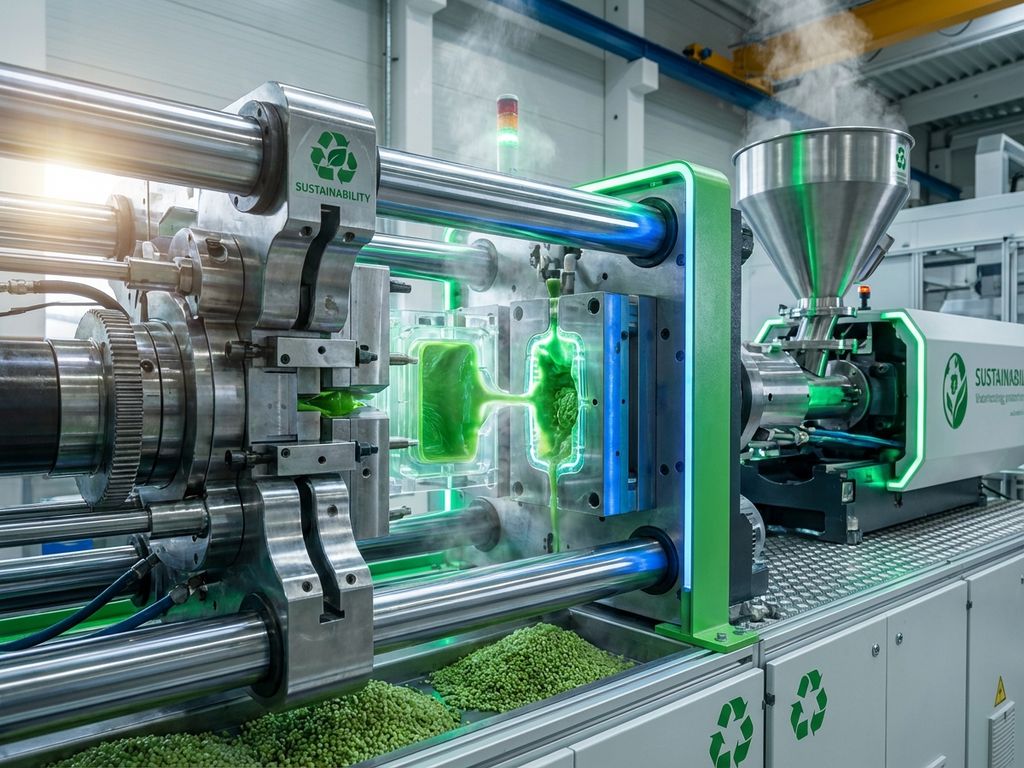
Sustainable injection molding combines environmental responsibility with efficient manufacturing processes to reduce waste, energy consumption, and environmental impact. It involves using eco-friendly materials, optimizing production methods, and implementing technologies that minimize resource usage while maintaining product quality. This approach helps manufacturers meet environmental goals while reducing operational costs and improving long-term competitiveness.
What is sustainable injection molding and why does it matter?
Sustainable injection molding is a manufacturing approach that prioritizes environmental responsibility throughout the production process. It focuses on reducing material waste, energy consumption, and carbon emissions while maintaining product quality and production efficiency.
This approach matters because manufacturing industries face increasing pressure to reduce their environmental footprint. Traditional injection molding processes often generate significant waste through material scraps, energy-intensive heating cycles, and inefficient changeover procedures. Sustainable practices address these concerns by implementing circular economy principles that maximize resource utilization.
The business benefits extend beyond environmental compliance. Companies adopting sustainable injection molding typically experience reduced material costs, improved operational efficiency, and enhanced brand reputation. These practices also future-proof operations against increasingly stringent environmental regulations and growing consumer demand for eco-friendly products.
How does sustainable injection molding reduce environmental impact?
Sustainable injection molding reduces environmental impact through multiple mechanisms that target waste reduction, energy efficiency, and resource optimization. The primary benefits include lower carbon emissions, reduced material waste, and decreased energy consumption throughout the manufacturing process.
Energy reduction occurs through optimized heating systems, efficient machine operation, and reduced setup times. Modern injection molding equipment uses advanced temperature control systems that maintain precise heating with minimal energy waste. Additionally, quick changeover systems reduce the time machines spend in energy-intensive warm-up cycles between production runs.
Material waste reduction happens through improved process control, recycling programs, and design optimization. Precise injection control minimizes material overflow and defective parts. Recycling systems capture and reprocess material scraps, reducing the need for virgin materials. Design improvements also reduce material usage without compromising product integrity.
Water conservation represents another significant environmental benefit. Closed-loop cooling systems recirculate water rather than using single-pass cooling, dramatically reducing water consumption and thermal pollution.
What materials and processes make injection molding more sustainable?
Sustainable injection molding relies on eco-friendly materials and optimized processes that minimize environmental impact. Key materials include recycled plastics, biodegradable polymers, and bio-based resins that reduce dependency on fossil fuels while maintaining performance standards.
Material choices significantly impact sustainability outcomes:
- Recycled-content plastics reduce virgin material demand and divert waste from landfills
- Biodegradable polymers break down naturally, reducing long-term environmental impact
- Bio-based resins derived from renewable sources lower carbon footprint
- Lightweight materials reduce transportation emissions and resource consumption
Process improvements focus on efficiency optimization and waste reduction. Advanced process control systems maintain consistent quality while minimizing material usage. Precision injection systems reduce overpacking and material waste. Hot runner systems eliminate waste from runner systems and reduce cycle times.
Energy-efficient processes include optimized heating profiles, reduced cycle times, and improved machine utilization. These approaches lower energy consumption per part while maintaining production quality and throughput.
How do you implement sustainable practices in injection molding operations?
Implementing sustainable practices requires a systematic approach that addresses equipment, processes, materials, and operational procedures. Success depends on comprehensive planning, employee training, and continuous monitoring of environmental performance metrics.
Equipment upgrades form the foundation of sustainable operations. Modern injection molding machines offer improved energy efficiency, precise control systems, and reduced maintenance requirements. Upgrading to servo-driven machines can reduce energy consumption by 20–50% compared to hydraulic systems.
Process optimization involves several key areas:
- Implementing preventive maintenance schedules to maintain equipment efficiency
- Optimizing cycle times to reduce energy consumption per part
- Installing quick changeover systems to minimize setup waste
- Establishing material recycling programs for production scraps
- Training operators in sustainable practices and efficiency techniques
Monitoring and measurement systems track progress towards sustainability goals. Key performance indicators include energy consumption per part, material waste percentages, and overall equipment effectiveness. Regular audits identify opportunities for further improvement.
What challenges do manufacturers face when adopting sustainable injection molding?
Manufacturers encounter several challenges when transitioning to sustainable injection molding, including initial investment costs, technical complexity, supply chain limitations, and performance concerns. These obstacles require careful planning and strategic approaches to overcome successfully.
Financial challenges often represent the primary barrier. Sustainable materials typically cost more than conventional alternatives, and equipment upgrades require significant capital investment. However, operational savings through reduced energy consumption and waste disposal costs often offset these initial expenses over time.
Technical challenges include material compatibility issues, process optimization complexity, and quality control requirements. Sustainable materials may behave differently during processing, requiring adjustments to temperature profiles, injection speeds, and cooling cycles. Process validation becomes crucial to ensure consistent quality outcomes.
Supply chain limitations can restrict access to sustainable materials and technologies. Limited supplier networks for eco-friendly materials may impact availability and pricing. Additionally, recycled materials may have inconsistent properties that require careful quality control procedures.
Performance concerns focus on whether sustainable alternatives can match the durability, appearance, and functionality of traditional materials. Thorough testing and validation help address these concerns while building confidence in sustainable solutions.
How EAS change systems supports sustainable injection molding
EAS change systems directly supports sustainable injection molding through advanced quick mold change solutions that dramatically reduce setup times, material waste, and energy consumption during production transitions. Our products enable manufacturers to implement more sustainable practices while improving operational efficiency.
Our comprehensive solutions contribute to sustainability in several key ways:
- Quick mold change systems reduce setup times from hours to minutes, minimizing energy waste during changeovers
- Adaptive clamping systems ensure precise mold positioning, reducing material waste from startup defects
- Automated coupling systems eliminate manual handling, improving safety and consistency
- Integrated transportation and handling equipment optimizes workflow efficiency
- Professional installation and maintenance services ensure optimal system performance
By reducing changeover times, our systems enable manufacturers to run smaller batch sizes economically, supporting just-in-time production and reducing inventory waste. The improved efficiency also allows for better utilization of sustainable materials that may require more frequent quality checks or process adjustments.
Ready to improve your injection molding sustainability while reducing operational costs? Contact us today to discuss how our quick change solutions can transform your manufacturing operations and support your environmental goals. Learn more about EAS and our commitment to innovative manufacturing solutions.