

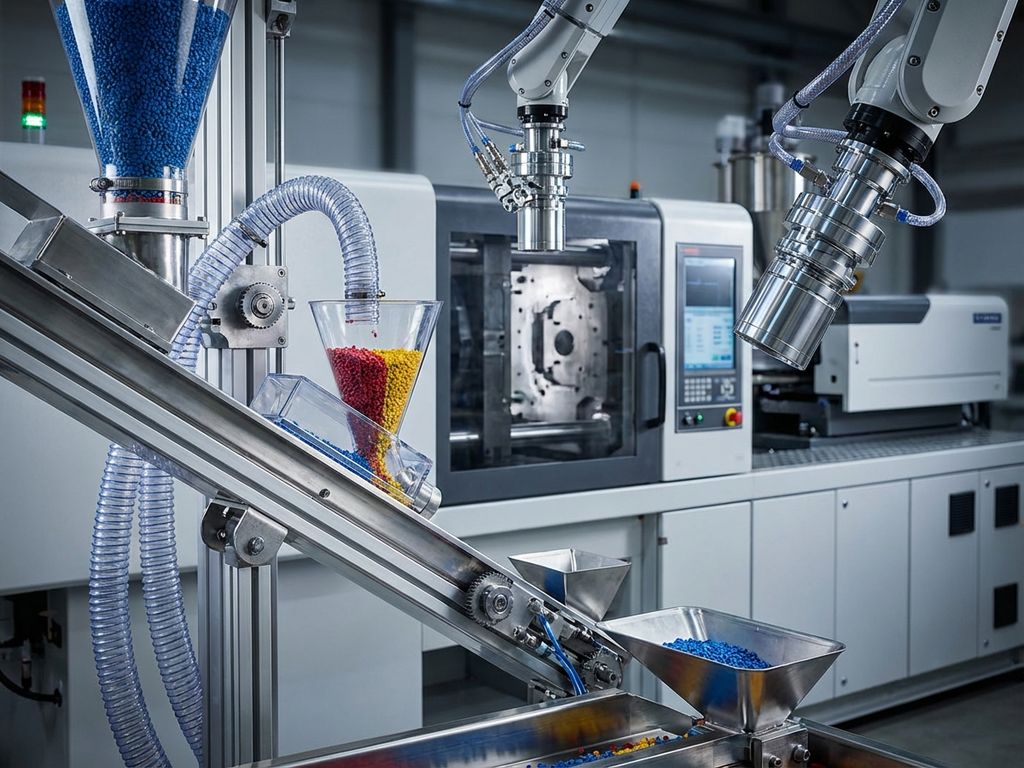
Injection molding material handling systems are automated or semi-automated equipment designed to transport, position, and manage raw materials, finished parts, and tooling throughout the injection molding process. These systems streamline production by reducing manual labor, minimizing contamination risks, and ensuring consistent material flow. They encompass everything from resin conveying systems to automated part removal and mold handling equipment.
What are injection molding material handling systems and why are they essential?
Injection molding material handling systems comprise integrated equipment that manages the movement of materials, parts, and tooling throughout the manufacturing process. These systems include resin conveying equipment, automated part removal systems, mold handling machinery, and quality control stations that work together to create efficient production workflows.
Material handling systems are essential because they eliminate production bottlenecks and reduce labor costs while maintaining consistent quality standards. Modern injection molding facilities require precise timing and coordination between multiple processes, making manual handling impractical for high-volume production.
The systems prevent contamination by maintaining closed-loop material transport, reducing waste from dropped or damaged parts. They also improve workplace safety by minimizing manual lifting of heavy molds and reducing worker exposure to hot materials and machinery.
Efficiency gains from proper material handling include reduced cycle times, consistent part quality, and the ability to operate with minimal supervision during extended production runs.
How do automated material handling systems improve injection molding operations?
Automated material handling systems improve injection molding operations by eliminating manual material transport, reducing cycle times, and maintaining consistent production flow. These systems coordinate multiple processes simultaneously, allowing continuous operation without human intervention for material movement, part removal, and basic quality checks.
The primary improvement comes from reduced setup times between different production runs. Automated systems can quickly switch between material types, adjust conveying parameters, and reconfigure part handling sequences without stopping production for manual adjustments.
Quality consistency improves significantly because automated systems follow programmed parameters exactly, eliminating human error in material handling. Parts are handled with consistent force and positioning, reducing damage and maintaining dimensional accuracy.
Production scheduling becomes more predictable with automated systems providing real-time data on material consumption, cycle times, and part counts. This information enables better planning and reduces unexpected downtime from material shortages or handling delays.
Labor allocation shifts from repetitive material handling tasks to higher-value activities like quality control, maintenance, and process optimization, improving overall facility productivity.
What types of material handling equipment are used in injection molding?
Injection molding facilities use several types of material handling equipment, including pneumatic conveying systems for raw materials, robotic part removal systems, automated mold change equipment, and integrated quality control stations. Each type serves specific functions within the overall production workflow.
Pneumatic conveying systems transport plastic resin from storage silos to individual machines, maintaining material purity and consistent flow rates. These systems include vacuum loaders, blowers, and distribution networks that deliver precise amounts of material on demand.
Robotic part removal systems extract finished parts from molds using programmed sequences that ensure consistent handling without damage. These robots often include vision systems for quality inspection and can sort parts into different categories based on predetermined criteria.
Mold handling equipment includes cranes, carts, and automated change systems that position heavy tooling quickly and safely. Quick mold change systems reduce setup times from hours to minutes by standardizing clamping and connection procedures.
Conveyor systems transport finished parts through cooling stations, quality control checkpoints, and packaging areas. These systems can include sorting mechanisms, reject stations, and automated counting systems.
Material drying and blending equipment prepare raw materials to specification before injection, ensuring consistent part quality and reducing defects from moisture or incorrect material ratios.
How do you choose the right material handling system for your injection molding facility?
Choosing the right material handling system requires evaluating your production volume, part complexity, facility layout, and integration requirements with existing equipment. The system must match your current needs while providing scalability for future growth and different product lines.
Production volume determines the level of automation required. High-volume facilities benefit from fully automated systems with minimal human intervention, while smaller operations may prefer semi-automated solutions that balance efficiency with flexibility.
Part characteristics influence handling requirements significantly. Delicate parts need gentle handling systems with precise positioning, while robust parts allow for faster, more aggressive handling methods. Part size and weight affect conveyor specifications and robotic payload requirements.
Facility layout constraints determine system configuration options. Existing building structures, ceiling heights, and floor space limitations affect conveyor routing, equipment placement, and expansion possibilities.
Integration capabilities with current machinery influence system selection. The material handling system must communicate effectively with injection molding machines, quality control equipment, and facility management systems.
Consider maintenance requirements and local service availability when selecting equipment suppliers. Systems requiring specialized maintenance or hard-to-source components can create unexpected downtime and increased operating costs.
Budget considerations should include initial equipment costs, installation expenses, training requirements, and ongoing operational costs, including energy consumption and maintenance.
What maintenance and troubleshooting do material handling systems require?
Material handling systems require regular preventive maintenance, including lubrication, filter changes, sensor calibration, and wear component replacement. Most systems need daily inspections, weekly cleaning cycles, and monthly comprehensive maintenance checks to maintain optimal performance and prevent unexpected failures.
Pneumatic conveying systems need regular filter replacement and line cleaning to prevent material contamination and maintain proper flow rates. Vacuum pumps require oil changes and seal inspections, while blower systems need belt tension checks and bearing lubrication.
Robotic systems require regular calibration to maintain positioning accuracy and programming updates to accommodate product changes. Servo motors, sensors, and end-effectors need periodic inspection and replacement based on usage cycles.
Common troubleshooting issues include material flow problems, positioning errors, and communication failures between system components. Many problems stem from sensor contamination, worn mechanical components, or programming conflicts.
Conveyor systems need belt tension adjustments, roller bearing maintenance, and motor inspections. Drive components require regular lubrication and alignment checks to prevent premature wear and unexpected breakdowns.
Establishing maintenance schedules based on manufacturer recommendations and actual usage patterns helps prevent costly downtime. Keeping spare parts inventory for critical components ensures quick repairs when problems occur.
Training operators to recognize early warning signs of system problems enables proactive maintenance and reduces the severity of equipment failures.
How EAS change systems enhance material handling efficiency
We enhance material handling efficiency through our advanced quick mold change and quick die change solutions that dramatically reduce setup times and improve overall production flow. Our systems integrate seamlessly with existing material handling equipment to create comprehensive automation solutions.
Our solutions provide specific benefits for material handling operations:
- Quick mold change systems reduce changeover times from hours to minutes, minimizing material waste during transitions
- Standardized clamping and coupling systems ensure consistent mold positioning for automated handling equipment
- Integrated ejector couplers and multi-coupler systems streamline connections between molds and handling systems
- Mold transportation vehicles and change tables coordinate with facility material handling workflows
- Pre-engineered solutions reduce installation time and integration complexity
Our global experience across three continents ensures we understand diverse facility requirements and can adapt our solutions to existing material handling infrastructure. We provide comprehensive support, including application engineering, installation, and ongoing maintenance services.
Contact us today to discuss how our quick change solutions can enhance your material handling efficiency and reduce overall production costs.