

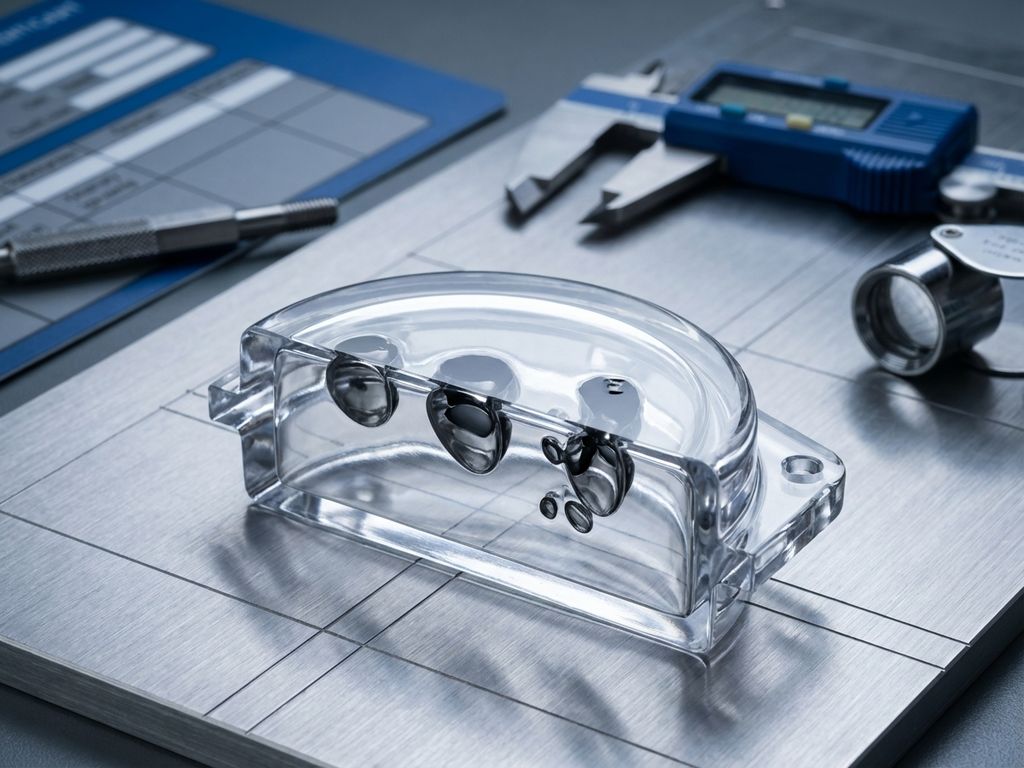
Voids in injection molding appear as hollow spaces or air pockets within molded parts, typically caused by trapped air, inadequate material flow, or improper processing conditions. These defects weaken part strength and compromise quality. Eliminating voids requires understanding their root causes and implementing proper molding techniques, parameter adjustments, and design optimizations.
What causes voids to form in injection-molded parts?
Voids form when air becomes trapped during the injection process or when material shrinks without adequate compensation. Inadequate venting prevents air from escaping the mold cavity, while insufficient injection pressure fails to pack material properly into all areas.
Material-related factors contribute significantly to void formation. High moisture content in hygroscopic plastics creates steam during processing, forming bubbles within the part. Contaminated or degraded materials can produce gases that become trapped as voids.
Processing conditions play a crucial role in void development. Low injection speeds may allow air to remain trapped, while excessive speeds can create turbulence and air entrapment. Inadequate holding pressure fails to compensate for material shrinkage as the part cools.
Mold design issues frequently cause void formation. Poor gate placement creates uneven filling patterns, leaving areas where air cannot escape. Thick sections without proper cooling channels experience non-uniform shrinkage, creating internal voids as material contracts.
How can you identify different types of voids in molded parts?
Visual inspection reveals surface voids as dimples, sink marks, or visible holes on the part exterior. Internal voids require destructive testing through cross-sectioning or non-destructive methods such as ultrasonic testing or X-ray imaging to detect hidden defects.
Sink marks appear as depressions on the surface, typically opposite thick sections where material has shrunk inward. These indicate insufficient packing pressure or inadequate cooling time for proper material solidification.
Gas voids appear as spherical or elongated bubbles within the part structure. These result from trapped air, moisture vaporization, or material degradation during processing. They often concentrate near gates or in areas with complex geometry.
Weld line voids occur where two flow fronts meet but fail to bond properly. These create weak points and visible lines on the surface, often accompanied by small air pockets at the junction points.
What injection molding parameters should you adjust to prevent voids?
Increase injection pressure and holding pressure to ensure complete cavity filling and adequate material packing. Proper pressure settings compensate for material shrinkage and force air out through venting systems, significantly reducing void formation.
Optimize injection speed for your specific part geometry and material. Moderate speeds allow proper air evacuation while avoiding turbulence that traps air. Very thick sections may require slower filling to prevent air entrapment.
Adjust melt temperature within the recommended range for your material. Higher temperatures improve flow and reduce viscosity, helping material reach all cavity areas. However, excessive temperatures can cause material degradation and gas formation.
Extend holding time to ensure adequate pressure maintenance during cooling. This compensates for material shrinkage and prevents void formation in thick sections. Monitor cycle time to balance quality with productivity requirements.
Control cooling parameters to achieve uniform solidification. Uneven cooling creates differential shrinkage that leads to void formation. Proper cooling channel design and temperature control prevent these issues.
How does proper mold design help eliminate void formation?
Strategic vent placement allows trapped air to escape during injection, preventing void formation. Adequate venting systems include parting line vents, ejector pin clearances, and dedicated vent channels positioned at air trap locations.
Gate design and placement significantly impact filling patterns and air evacuation. Multiple gates can eliminate weld lines and ensure uniform filling, while proper gate sizing maintains adequate pressure throughout the cavity.
Cooling channel design ensures uniform temperature distribution and controlled shrinkage. Conformal cooling channels follow part geometry closely, providing consistent cooling rates that prevent differential shrinkage and void formation.
Wall thickness optimization reduces shrinkage-related voids. Uniform wall thickness prevents differential cooling rates, while avoiding excessive thickness eliminates areas prone to sink marks and internal voids.
Runner and sprue design influence material flow and pressure transmission. Properly sized runners maintain pressure and temperature, ensuring complete cavity filling without premature solidification that traps air.
How EAS change systems help with void reduction in injection molding
We provide advanced quick mold change solutions that enable injection molding optimization through faster mold transitions and improved setup consistency. Our products reduce changeover times from hours to minutes, allowing manufacturers to maintain optimal processing conditions between production runs.
Our comprehensive solutions support void reduction through:
- Adaptive clamping systems that ensure consistent mold alignment and pressure distribution
- Precision coupling systems that maintain proper cooling and heating connections
- Quick-change tooling that preserves calibrated settings between mold changes
- Automated positioning systems that eliminate setup variations affecting part quality
With manufacturing locations across three continents and over 35 years of expertise in injection molding optimization, we help manufacturers achieve consistent quality while reducing setup times and production costs. Our specialized applications team works with manufacturers to identify the optimal quick mold change solutions for their specific void reduction challenges. Contact our application engineering team to discover how our quick mold change solutions can improve your injection molding processes and eliminate void-related quality issues.