

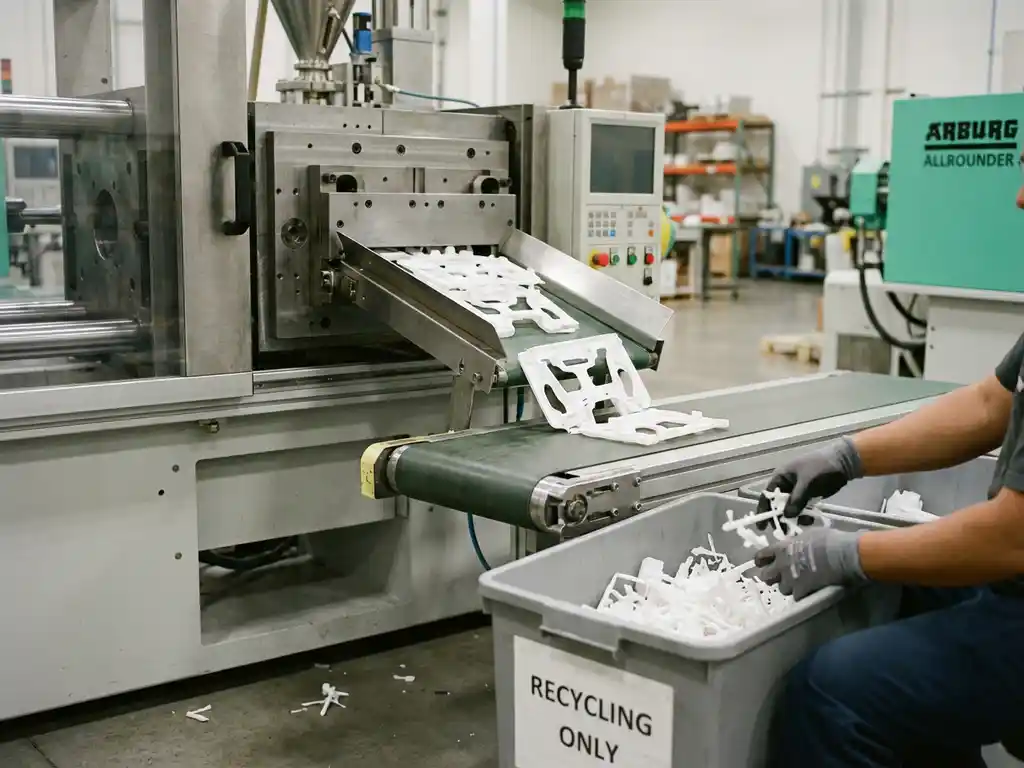
Plastic waste reduction in injection molding refers to systematic strategies and processes designed to minimize material waste during production. This approach reduces environmental impact, lowers manufacturing costs, and improves operational efficiency. Understanding the sources of waste and implementing targeted reduction techniques help manufacturers achieve both sustainability goals and improved profitability.
What is plastic waste reduction in injection molding, and why does it matter?
Plastic waste reduction in injection molding involves implementing strategies to minimize material waste throughout the production process. This includes reducing sprues, runners, flash, rejected parts, and other forms of waste generated during manufacturing operations. The goal is to maximize material utilization while maintaining product quality and production efficiency.
The importance of waste reduction extends beyond environmental considerations. Material costs typically represent 60–80% of total production expenses in injection molding operations. Every gram of plastic waste directly impacts profitability and competitiveness. Additionally, injection molding optimization through waste reduction helps manufacturers comply with increasingly strict environmental regulations and corporate sustainability commitments.
Environmental drivers include growing pressure to reduce plastic consumption and improve recycling rates. Regulatory frameworks worldwide are implementing stricter waste management requirements, making waste reduction a business necessity rather than merely an environmental preference. Companies that proactively address waste reduction position themselves advantageously for future regulatory changes and customer expectations.
What are the main sources of plastic waste in injection molding operations?
Primary waste sources in injection molding include material spillage during handling, purging waste during color or material changes, start-up and shutdown scrap, defective parts, packaging waste, and tooling-related waste. Each source contributes differently to overall waste generation, with some being more controllable than others through proper planning and execution.
Material spillage occurs during raw material handling, storage, and feeding processes. Poor handling procedures, inadequate storage systems, and equipment malfunctions contribute to this waste stream. Purging waste represents material used to clean injection systems between different colors or materials, often requiring significant quantities to ensure clean transitions.
Start-up and shutdown scrap includes parts produced during machine set-up and shutdown that do not meet quality standards. This waste is particularly significant during frequent changeovers or short production runs. Defective parts result from process variations, equipment issues, or quality-control failures, representing both material waste and lost production time.
Tooling-related waste encompasses material lost due to mold maintenance, modifications, or failures. This includes parts produced during mold trials, adjustments, and repairs. Packaging waste includes protective materials and containers used for raw material delivery and finished product storage.
How can manufacturers reduce plastic waste during the injection molding process?
Manufacturers can reduce plastic waste through design optimization, improved material selection, process-parameter optimization, enhanced quality control, and preventive maintenance programs. These strategies work together to minimize waste generation at the source while maintaining or improving product quality and production efficiency.
Design optimization focuses on reducing material usage through part redesign, runner-system optimization, and improved gate placement. Efficient runner systems minimize material waste while ensuring proper part filling. Hot runner systems eliminate runner waste entirely for high-volume applications, though they require a higher initial investment.
Process-parameter optimization involves fine-tuning injection speed, pressure, temperature, and cooling time to reduce defect rates. Proper parameter settings minimize flash formation, reduce part warpage, and improve dimensional consistency. Statistical process control helps identify and correct parameter drift before it causes quality issues.
Material selection improvements include choosing grades with better processability, integrating recycled content where appropriate, and partnering with suppliers to reduce waste. Quality-control enhancements involve implementing real-time monitoring systems, improving inspection procedures, and establishing clear quality standards that prevent defective parts from progressing through production.
What role does quick mold change technology play in plastic waste reduction?
Quick mold change technology significantly reduces plastic waste by minimizing material consumption during set-up and changeover processes. These systems reduce purging requirements, start-up scrap, and material waste caused by extended changeover times. Faster tool changes mean less material is wasted during transitions between different products or production runs.
Traditional mold changes can take several hours, during which machines remain heated and may require periodic material purging to prevent degradation. Quick-change systems reduce changeover times to minutes, eliminating most of this waste. The reduced set-up time also means fewer start-up parts are needed to achieve stable production conditions.
The efficiency gains from quick mold change technology enable manufacturers to produce smaller batch sizes economically, reducing the need for overproduction and associated waste. This flexibility supports just-in-time manufacturing principles and allows for better demand matching without excess inventory.
These systems also improve overall equipment effectiveness by reducing downtime and increasing productive capacity. The combination of reduced waste and increased productivity creates a compelling business case for quick change system implementation. The environmental benefits complement the economic advantages, supporting comprehensive sustainability initiatives while improving operational performance.
How EAS Change Systems helps with plastic waste reduction
EAS Change Systems provides comprehensive quick mold change solutions that directly address plastic waste reduction challenges in injection molding operations. Our advanced changeover systems help manufacturers achieve significant waste reduction through:
• Reducing changeover times from hours to minutes, eliminating material waste during extended transitions
• Minimizing purging requirements between production runs
• Decreasing start-up scrap through faster achievement of stable production conditions
• Enabling smaller batch sizes to reduce overproduction waste
• Improving overall equipment effectiveness and productivity
Ready to reduce your plastic waste and improve your bottom line? Contact EAS Change Systems today to learn how our quick mold change technology can transform your injection molding operations and support your sustainability goals.