

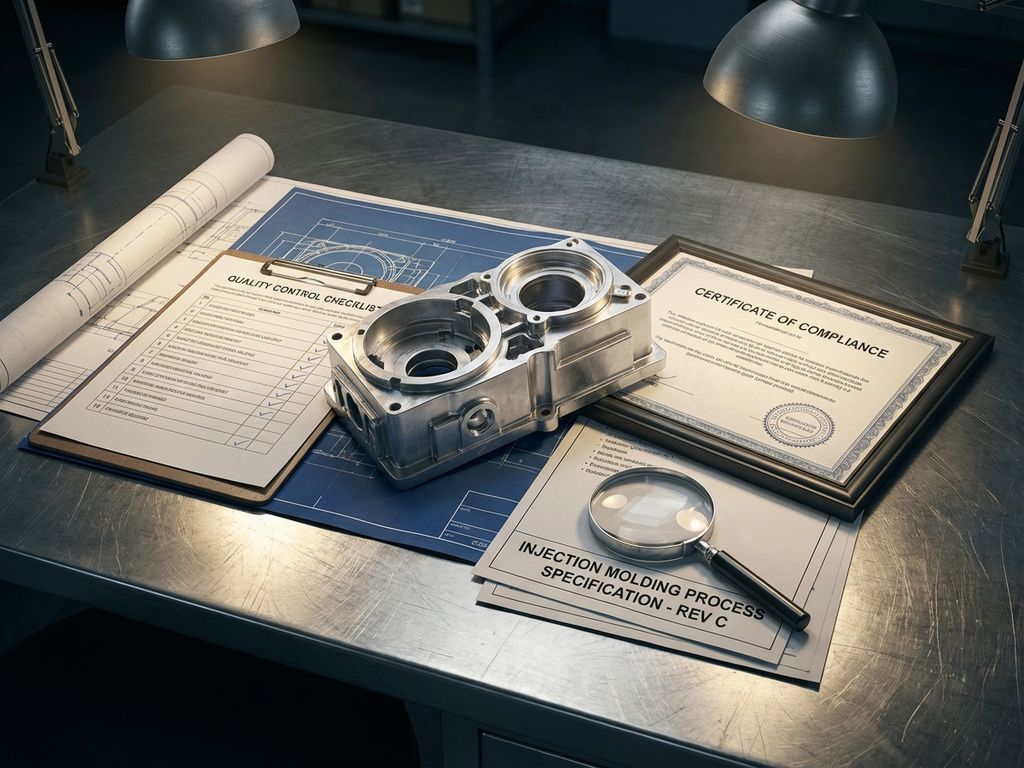
Injection molding documentation requirements encompass regulatory compliance records, process parameter logs, quality control documentation, and mold change tracking systems. Manufacturing facilities must maintain detailed records covering safety protocols, material specifications, production parameters, and equipment maintenance to meet industry standards and ensure operational efficiency.
What documentation is legally required for injection molding operations?
Injection molding facilities must maintain comprehensive safety documentation, environmental compliance records, and material traceability logs to meet legal requirements. These mandatory documents include workplace safety protocols, hazardous material handling procedures, waste disposal records, and employee training certifications.
Safety documentation forms the foundation of legal compliance in injection molding operations. Facilities must document all safety procedures, emergency response plans, and personal protective equipment protocols. Material Safety Data Sheets (MSDS) for all chemicals and resins used in production must be readily accessible to employees and regulatory inspectors.
Environmental compliance documentation includes air quality monitoring records, waste disposal certificates, and emissions tracking logs. Many jurisdictions require regular reporting of volatile organic compound emissions and plastic waste management practices. These records demonstrate adherence to environmental regulations and support permit renewals.
Employee training and certification records are equally important for legal compliance. Documentation must show that operators have received proper training on equipment operation, safety procedures, and emergency protocols. Regular refresher training records help demonstrate an ongoing commitment to workplace safety.
How do you document injection molding process parameters effectively?
Effective process parameter documentation involves recording temperature settings, pressure readings, cycle times, and material specifications for each production run. Digital data logging systems provide real-time monitoring and automatic record-keeping, ensuring the accuracy and completeness of process documentation.
Temperature documentation requires monitoring at multiple points throughout the injection molding process. Barrel temperatures, mold temperatures, and cooling system temperatures must be recorded at regular intervals. These records help identify trends that could affect product quality and enable quick troubleshooting when issues arise.
Pressure and timing parameters need careful documentation to maintain consistent product quality. Injection pressure, holding pressure, and cycle times directly impact part dimensions and material properties. Recording these parameters allows operators to identify optimal settings and maintain consistency across production runs.
Material documentation includes batch numbers, moisture content readings, and colorant ratios used in each production run. This traceability becomes crucial when quality issues arise, allowing manufacturers to identify affected products quickly and implement corrective actions.
What quality control records should injection molding companies maintain?
Quality control records must include dimensional inspection data, visual inspection reports, material testing results, and non-conformance documentation. These records provide traceability throughout the production process and support continuous improvement efforts while meeting customer quality requirements.
Dimensional inspection records document whether produced parts meet specified tolerances and geometric requirements. Statistical process control charts help track dimensional trends over time, enabling proactive adjustments before parts fall outside acceptable limits. Regular calibration records for measuring equipment ensure measurement accuracy.
Material testing documentation includes melt flow index readings, tensile strength measurements, and color matching verification. These tests confirm that incoming materials meet specifications and that finished products maintain required material properties throughout the production process.
Non-conformance records track any products that fail to meet quality standards, including root cause analysis and corrective actions taken. This documentation helps prevent recurring issues and demonstrates a commitment to quality improvement. Customer complaint records and resolution actions also form part of comprehensive quality documentation.
Why is mold change documentation critical for manufacturing efficiency?
Mold change documentation tracks setup times, changeover procedures, and equipment settings to optimize production efficiency and reduce downtime. Proper documentation enables standardized procedures that minimize changeover time, reduce setup errors, and ensure consistent quality across different production runs.
Setup time documentation helps identify bottlenecks in the changeover process and opportunities for improvement. Recording the time required for each step of mold changes allows manufacturers to establish realistic scheduling and identify areas where efficiency gains are possible through specialized equipment solutions.
Equipment setting documentation ensures that molds are installed correctly and consistently every time. Recording hydraulic pressures, alignment specifications, and connection procedures prevents setup errors that could damage expensive tooling or compromise product quality.
Changeover procedure documentation standardizes the process across different operators and shifts. Step-by-step procedures with safety checkpoints ensure that mold changes are performed safely and efficiently, regardless of which team member performs the operation.
How EAS change systems streamline injection molding documentation
We provide integrated documentation solutions that automatically record mold change parameters, setup times, and system performance data. Our quick mold change systems include built-in monitoring capabilities that eliminate manual record-keeping while ensuring comprehensive documentation of changeover operations across various manufacturing applications.
Our documentation solutions offer several key benefits:
- Automated data logging for all changeover parameters and timing
- Digital record-keeping that eliminates paper-based documentation errors
- Real-time monitoring of hydraulic pressures and system performance
- Integration with existing quality management systems
- Standardized reporting formats for regulatory compliance
The comprehensive documentation capabilities built into our systems help manufacturers maintain detailed records while reducing administrative burden. This approach ensures compliance requirements are met without compromising operational efficiency. Contact our engineering team to discover how our documentation solutions can streamline your injection molding operations and improve record-keeping accuracy.