

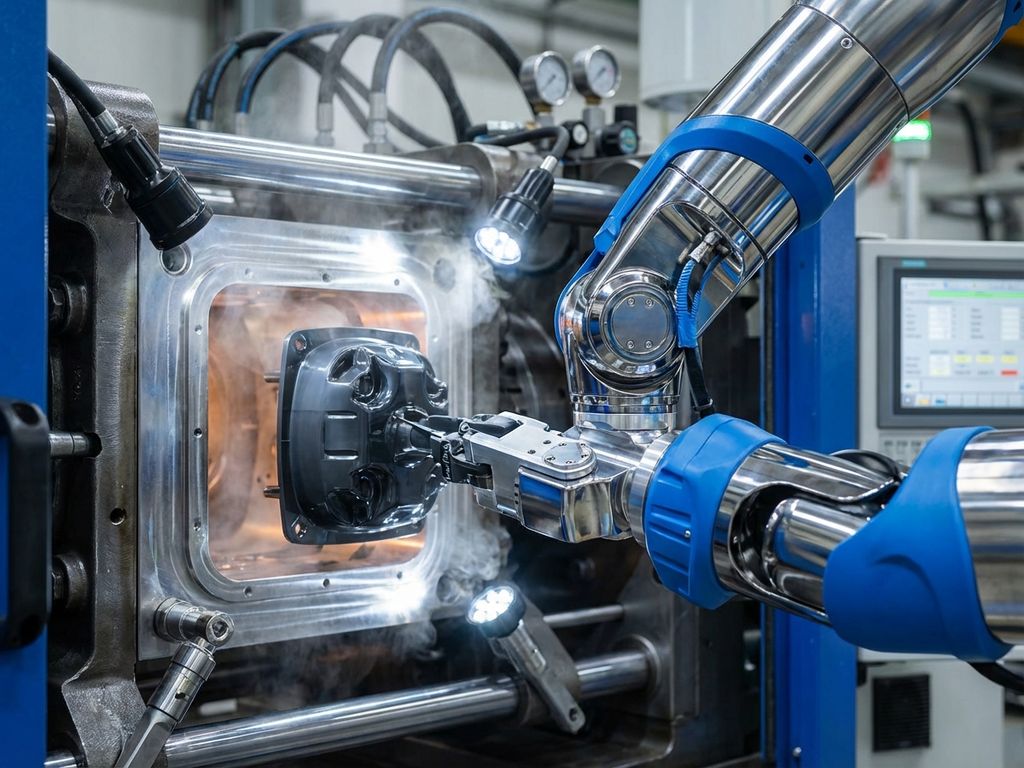
Robotic injection molding combines automated machinery with traditional injection molding processes to produce plastic parts with minimal human intervention. Robots handle material loading, part removal, quality inspection, and secondary operations while maintaining consistent precision and speed. This automation approach transforms manufacturing efficiency and product quality across various industries.
What is robotic injection molding and how does it differ from traditional methods?
Robotic injection molding integrates programmable robots into the plastic manufacturing process to automate tasks that operators have traditionally performed manually. The robots work alongside injection molding machines to handle repetitive operations with consistent precision and timing.
Traditional injection molding relies heavily on human operators to load materials, remove finished parts, perform quality checks, and manage secondary operations such as trimming or assembly. This manual approach can create bottlenecks, introduce variability, and limit production speed during high-volume runs.
The robotic approach transforms this process by programming machines to execute these tasks automatically. Robotic systems can operate continuously without breaks, maintain exact positioning accuracy, and perform multiple operations simultaneously. They integrate sensors and vision systems to adapt to variations in part placement or quality requirements.
Key differences include improved cycle time consistency, reduced labor dependency, enhanced workplace safety, and the ability to handle complex part geometries that might challenge manual operations. Robots also collect production data automatically, enabling better process monitoring and quality control.
How do robots actually handle the injection molding process step by step?
Robots manage injection molding through a coordinated sequence of automated operations that mirror and enhance traditional manufacturing steps. The process begins with material preparation and continues through part finishing with minimal human intervention.
The cycle starts when robots load raw plastic materials into hoppers or directly into the injection molding machine. Advanced systems can blend different materials or additives automatically based on recipe requirements. Meanwhile, the robot positions itself for the next operation while the injection cycle runs.
During the molding phase, robots monitor cycle timing and prepare for part removal. When the mold opens, robotic arms extract parts using specialized grippers designed for specific part geometries. The robots can handle delicate components without damage while maintaining consistent grip pressure.
Quality inspection follows immediately, with robots positioning parts under vision systems or measurement devices. They can sort acceptable parts from rejects automatically, routing each category to appropriate collection areas. For parts requiring secondary operations, robots transfer components to trimming stations, assembly areas, or packaging systems.
Throughout this process, robots communicate with the injection molding machine’s control system, adjusting timing and operations based on cycle variations or quality feedback. This integration ensures optimal coordination between all manufacturing elements.
What are the main benefits of using robotic systems in injection molding?
Robotic injection molding delivers significant advantages in production consistency, operational efficiency, and manufacturing flexibility. The primary benefits include reduced cycle times, improved part quality, enhanced safety, and lower long-term operational costs.
Production consistency represents the most immediate advantage. Robots perform identical operations with precise timing and positioning, eliminating human variability that can affect part quality or cycle efficiency. This consistency reduces scrap rates and ensures uniform product characteristics across large production runs.
Operational efficiency improves through continuous operation capabilities and optimized cycle timing. Robots work without breaks, shift changes, or productivity fluctuations that affect manual operations. They can also perform multiple tasks simultaneously, such as removing parts while preparing materials for the next cycle.
Enhanced safety benefits emerge from removing operators from potentially hazardous areas around hot machinery and moving parts. Robots handle repetitive motions that might cause strain injuries and can work in environments with fumes or elevated temperatures that challenge human workers.
Cost advantages develop over time through reduced labor requirements, lower scrap rates, and improved equipment utilization. While the initial investment is substantial, robotic systems typically demonstrate positive returns through increased throughput and reduced operational expenses.
Manufacturing flexibility allows quick changeovers between different products by reprogramming robot operations rather than retraining personnel. This adaptability supports smaller batch sizes and more diverse product offerings.
What challenges do manufacturers face when implementing robotic injection molding?
Implementation challenges include substantial upfront investment, technical complexity, workforce adaptation requirements, and integration difficulties with existing manufacturing systems. These obstacles require careful planning and phased implementation approaches to overcome successfully.
Initial capital investment represents the most significant barrier for many manufacturers. Robotic systems require substantial financial commitment for equipment purchase, installation, programming, and facility modifications. The return on investment timeline can extend over several years, particularly for smaller production volumes.
Technical complexity challenges emerge during system integration and programming phases. Robots must coordinate precisely with injection molding machines, quality systems, and material handling equipment. This integration requires specialized expertise that many manufacturers lack internally.
Workforce adaptation presents both technical and cultural challenges. Existing personnel need training on robotic system operation, maintenance, and troubleshooting. Some employees may resist automation changes, requiring careful change management and retraining programs.
Production flexibility can initially decrease during implementation phases. While robots offer long-term flexibility advantages, initial programming and setup for new products often take longer than manual changeovers. This learning curve can temporarily impact production schedules.
Maintenance requirements become more sophisticated with robotic systems. Manufacturers need personnel capable of maintaining both injection molding equipment and robotic systems, or must rely on external service providers for specialized support.
How EAS change systems enhance robotic injection molding efficiency
We provide advanced quick mold change solutions that dramatically improve robotic injection molding efficiency by reducing changeover times from hours to minutes. Our products integrate seamlessly with robotic operations to maximize automation benefits across diverse production requirements.
Our comprehensive solutions enhance robotic injection molding through:
- Adaptive clamping systems that enable robots to perform mold changes automatically without manual intervention
- Multi-coupler systems that connect all mold utilities simultaneously, eliminating individual connection steps
- Automated mold change tables that work with robotic systems to position and transport molds efficiently
- Integrated inspection units that verify proper mold installation before production begins
- Smart control systems that communicate with robotic controllers for coordinated operations
These integrated solutions enable manufacturers to achieve true lights-out production capabilities while maintaining the flexibility to switch between products quickly. Our systems reduce the complexity that often challenges robotic injection molding implementations, making automation more accessible and profitable across various applications.
Ready to enhance your robotic injection molding efficiency? Contact our application engineering team to discuss how our quick mold change solutions can integrate with your robotic systems and deliver measurable productivity improvements.