
Flexible manufacturing in injection molding refers to production systems that can quickly adapt to different products, batch sizes, and market demands with minimal setup time and cost. This approach enables manufacturers to produce diverse products efficiently while maintaining high quality standards. Modern flexible manufacturing relies heavily on quick mold change technology and automated systems to achieve rapid transitions between production runs.
What is flexible manufacturing, and why does it matter in injection molding?
Flexible manufacturing is a production approach that allows injection molding facilities to rapidly switch between different products, molds, and production specifications with minimal downtime. This system combines advanced automation, quick changeover technologies, and streamlined processes to create adaptable production environments that respond efficiently to varying customer demands and market conditions.
The importance of flexible manufacturing in injection molding stems from today’s market requirements for shorter product life cycles, customized products, and just-in-time delivery. Traditional manufacturing approaches often involve lengthy setup times when changing between products, making small-batch production economically unfeasible. Flexible manufacturing systems eliminate this barrier by reducing changeover times from hours to minutes, enabling profitable production of smaller quantities while maintaining competitive pricing.
This manufacturing philosophy transforms how injection molding operations approach production planning. Rather than committing to long production runs of single products, facilities can respond quickly to customer orders, market trends, and seasonal demand. The ability to switch efficiently between different molds and products creates opportunities for increased revenue through diverse product offerings and improved customer satisfaction through faster delivery times.
How does quick mold change technology enable manufacturing flexibility?
Quick mold change systems are the cornerstone of flexible injection molding manufacturing, using automated clamping mechanisms, standardized connections, and precision handling equipment to dramatically reduce mold changeover times. These systems replace manual processes with automated solutions that ensure consistent, safe, and rapid transitions between production setups.
The technology centers on automated clamping systems that secure molds using hydraulic or magnetic mechanisms rather than traditional manual bolting. These systems provide uniform clamping force across the entire mold surface, ensuring proper sealing and consistent part quality. Coupled with quick-disconnect utilities for cooling lines, electrical connections, and material feeds, operators can complete entire mold changes in minutes rather than hours.
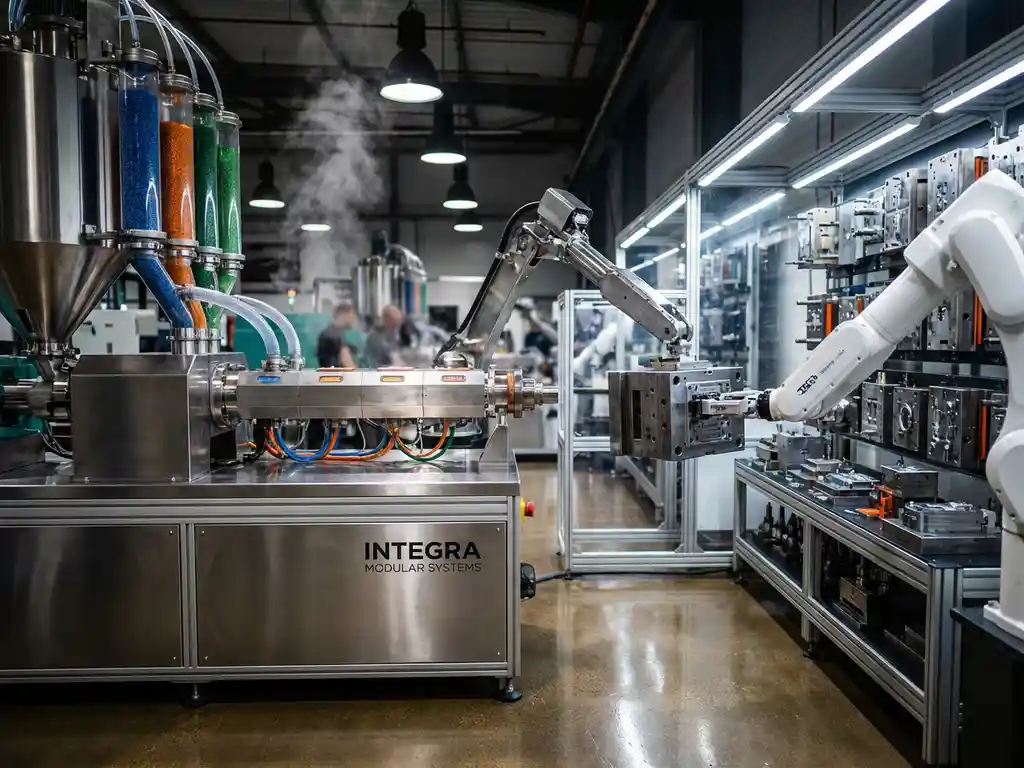
Mold handling equipment, including automated trolleys, lifting systems, and positioning devices, further enhances the changeover process. These systems safely transport heavy molds between storage areas and injection molding machines while maintaining precise alignment for proper installation. The integration of these technologies creates a seamless workflow that minimizes physical labor, reduces safety risks, and maintains production momentum during transitions.
The impact on injection molding optimization becomes evident through improved overall equipment effectiveness and increased production capacity. Facilities can schedule multiple product runs within single shifts, respond to urgent orders without disrupting planned production, and maintain higher machine utilization rates throughout operational periods.
What are the key benefits of implementing flexible manufacturing in injection molding operations?
Implementing flexible manufacturing in injection molding delivers significant operational advantages, including reduced inventory costs, improved customer responsiveness, enhanced production efficiency, and increased profitability through optimized resource utilization. These benefits compound over time, creating competitive advantages that strengthen market position and business sustainability.
Reduced setup times represent the most immediate benefit, allowing facilities to schedule multiple products within single shifts and respond rapidly to customer demands. This capability eliminates the need for large inventory buffers, freeing up capital while reducing storage costs and obsolescence risks. Production efficiency improvements result from higher machine utilization rates and the ability to maintain continuous operation with minimal downtime between product changeovers.
Enhanced product variety capabilities enable manufacturers to serve diverse market segments and customer requirements without significant capital investment in additional equipment. This flexibility supports business growth through expanded service offerings and the ability to pursue niche markets that require smaller production volumes but offer higher margins.
Customer satisfaction improves through faster delivery times and the ability to accommodate special requests or modifications without lengthy lead times. This responsiveness strengthens customer relationships and creates opportunities for premium pricing based on service excellence rather than just product features.
How do manufacturers overcome common challenges when implementing flexible manufacturing systems?
Manufacturers successfully implement flexible manufacturing by addressing integration challenges through phased approaches, comprehensive staff training, standardized processes, and careful ROI planning. The key lies in treating implementation as a systematic transformation rather than a simple equipment upgrade, ensuring all aspects of the operation align with flexible manufacturing principles.
Equipment integration challenges require careful planning to ensure new quick changeover systems work seamlessly with existing injection molding machines and facility infrastructure. This involves standardizing connections, updating control systems, and establishing clear protocols for equipment operation and maintenance. Phased implementation approaches allow facilities to test and refine processes on selected machines before expanding throughout the entire operation.
Operator training represents a critical success factor, as flexible manufacturing requires different skills and approaches compared to traditional production methods. Training programs should cover equipment operation, safety procedures, quality standards, and troubleshooting techniques. Creating internal champions who understand both traditional and flexible manufacturing approaches helps facilitate smooth transitions and ongoing improvement efforts.
Process standardization ensures consistent results across different products and operators. This includes developing standard operating procedures for mold changes, quality checks, and equipment maintenance. Documentation and visual aids support consistent execution while enabling continuous improvement through systematic feedback and refinement.
Initial investment concerns can be addressed through careful ROI calculations that consider both direct cost savings from reduced setup times and indirect benefits such as improved customer satisfaction, increased market opportunities, and enhanced competitive positioning. EAS Change Systems provides comprehensive support for these assessments, helping manufacturers understand the full value proposition of flexible manufacturing implementation.
Successful flexible manufacturing implementation transforms injection molding operations from rigid, high-volume production systems into adaptable, responsive manufacturing environments. This transformation requires commitment to change management, investment in appropriate technology, and a focus on continuous improvement to realize the full potential of flexible manufacturing capabilities.
How EAS Change Systems Enhances Flexible Manufacturing
EAS Change Systems provides comprehensive solutions that transform traditional injection molding operations into highly flexible manufacturing environments through advanced quick mold change technology and expert implementation support. Our integrated approach addresses every aspect of flexible manufacturing implementation, ensuring manufacturers achieve maximum return on investment while minimizing operational disruption.
Our solutions deliver measurable improvements across key operational metrics:
- Reduce mold changeover times from hours to under 10 minutes with automated clamping and handling systems
- Increase overall equipment effectiveness by up to 30% through improved machine utilization
- Enable profitable small-batch production with standardized quick-connect utility systems
- Enhance operator safety with ergonomic mold handling equipment and automated processes
- Provide comprehensive training and ongoing support to ensure successful implementation
Ready to transform your injection molding operation with flexible manufacturing capabilities? Contact EAS Change Systems today to schedule a consultation and discover how our proven solutions can enhance your production flexibility, reduce costs, and improve customer responsiveness.