

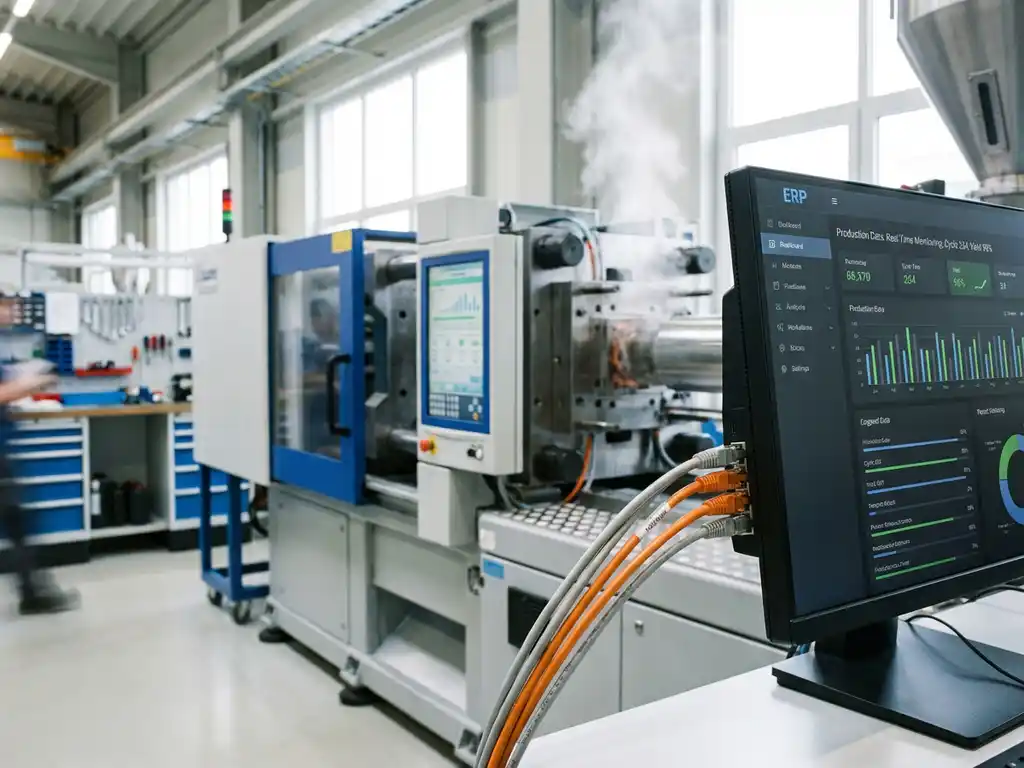
Injection molding integrates with ERP systems through direct machine connectivity and automated data exchange protocols. This integration enables real-time production monitoring, automated inventory tracking, and seamless workflow coordination between manufacturing operations and enterprise planning systems. The connection transforms manual processes into automated data flows that improve efficiency and decision-making.
What is ERP integration in injection molding, and why does it matter?
ERP integration in injection molding creates a direct connection between production equipment and enterprise resource planning software, enabling automated data sharing and coordinated operations. This integration eliminates manual data entry while providing real-time visibility into production performance, material consumption, and quality metrics across the entire manufacturing process.
The integration matters because it transforms isolated manufacturing operations into a connected ecosystem. When injection molding machines communicate directly with ERP systems, production data flows automatically into inventory management, scheduling, and quality control modules. This connectivity enables better decision-making through accurate, up-to-date information about production status, material requirements, and equipment performance.
Modern injection molding facilities rely on this integration to maintain a competitive advantage. The connection between the production floor and planning systems reduces delays, minimizes errors, and improves resource allocation. Manufacturers can respond quickly to production issues, adjust schedules based on real-time capacity, and maintain optimal inventory levels without manual intervention.
How does real-time data exchange work between injection molding machines and ERP systems?
Real-time data exchange operates through standardized communication protocols such as OPC UA, EtherNet/IP, and MQTT, which connect injection molding machines directly to ERP databases. These protocols enable continuous transmission of production metrics, including cycle times, shot counts, temperature readings, and quality parameters, without manual data collection or entry.
The technical architecture involves machine controllers equipped with communication modules that capture operational data and transmit it to middleware systems. These middleware platforms translate machine-specific data formats into standardized information that ERP systems can process. The exchange happens continuously during production, creating a live feed of manufacturing performance data.
Key data points transmitted include material usage per cycle, actual versus planned production quantities, machine utilization rates, and quality measurements. Temperature profiles, pressure readings, and cycle completion times flow directly into ERP modules for analysis and reporting. This automated capture eliminates timing delays and transcription errors associated with manual data recording.
The communication works bidirectionally, allowing ERP systems to send production schedules, recipe parameters, and quality specifications back to injection molding machines. This two-way exchange ensures machines operate with current specifications while providing accurate feedback on actual performance against planned targets.
What are the key benefits of integrating injection molding operations with ERP software?
Integration delivers significant operational improvements through automated inventory optimization, enhanced production planning accuracy, and real-time cost-tracking capabilities. Manufacturers experience reduced manual data entry, improved quality control, and better decision-making through immediate access to accurate production information across all operational levels.
Inventory management becomes more precise when ERP systems receive actual material consumption data directly from injection molding machines. The system automatically adjusts raw material requirements based on real production rates rather than theoretical calculations. This accuracy reduces waste, prevents shortages, and optimizes working capital through better inventory turnover.
Production planning improves dramatically with real-time machine performance data. Schedulers can see actual cycle times, equipment availability, and production rates to create more accurate delivery commitments. The integration enables dynamic rescheduling based on current conditions rather than static assumptions about machine capabilities.
Cost-tracking benefits include automatic calculation of actual production costs per part, including material usage, energy consumption, and labor allocation. Quality control is enhanced through automated recording of process parameters and immediate alerts when specifications drift outside acceptable ranges. These capabilities enable proactive quality management rather than reactive problem-solving.
How do quick mold change systems affect ERP integration in injection molding?
Quick mold change systems significantly enhance ERP integration by providing automated documentation of tool changeovers, accurate setup time tracking, and improved production scheduling capabilities. These systems generate precise data about changeover duration, tool identification, and setup parameters that integrate directly with enterprise planning systems for better operational visibility.
Advanced quick mold change technologies capture detailed information about each tool change event, including start and end times, operator identification, and setup verification steps. This data flows automatically into ERP systems, providing accurate records for production costing, efficiency analysis, and maintenance scheduling. The integration eliminates manual logging while ensuring complete traceability of tool changes.
The impact on production scheduling becomes substantial when ERP systems receive actual changeover times rather than estimated durations. Quick die change systems that reduce setup times from hours to minutes create new scheduling possibilities that ERP systems can leverage for improved capacity utilization and delivery performance.
Setup time reduction directly affects ERP planning algorithms by enabling smaller batch sizes and more frequent product changes. When changeover times decrease significantly, the economic lot-size calculations within ERP systems favor shorter runs and increased flexibility. This capability supports just-in-time production strategies and improved customer responsiveness.
Automated tool change documentation provides valuable data for maintenance planning, tool-life tracking, and performance analysis. ERP systems can schedule preventive maintenance based on actual tool usage patterns rather than calendar intervals. The integration creates a complete digital record of production activities that supports continuous improvement initiatives and operational excellence programs.
Understanding injection molding optimization through ERP integration opens up opportunities for improved manufacturing efficiency and competitive advantage. The combination of automated data exchange, quick changeover capabilities, and integrated planning systems creates a foundation for responsive, efficient production operations that can adapt quickly to changing market demands.
How EAS Change Systems enhances ERP integration in injection molding
EAS Change Systems provides advanced quick die change solutions that seamlessly integrate with your ERP systems to maximize manufacturing efficiency and data accuracy. Our automated changeover systems deliver comprehensive integration benefits that transform your injection molding operations:
- Automated changeover time tracking with direct ERP data feeds
- Real-time tool identification and setup verification
- Integrated maintenance scheduling based on actual usage patterns
- Comprehensive production documentation for complete traceability
- Dynamic scheduling optimization through accurate setup time data
Ready to transform your injection molding operations with integrated quick die change technology? Contact EAS Change Systems today to discover how our solutions can enhance your ERP integration and deliver measurable improvements in efficiency, scheduling accuracy, and operational visibility.