

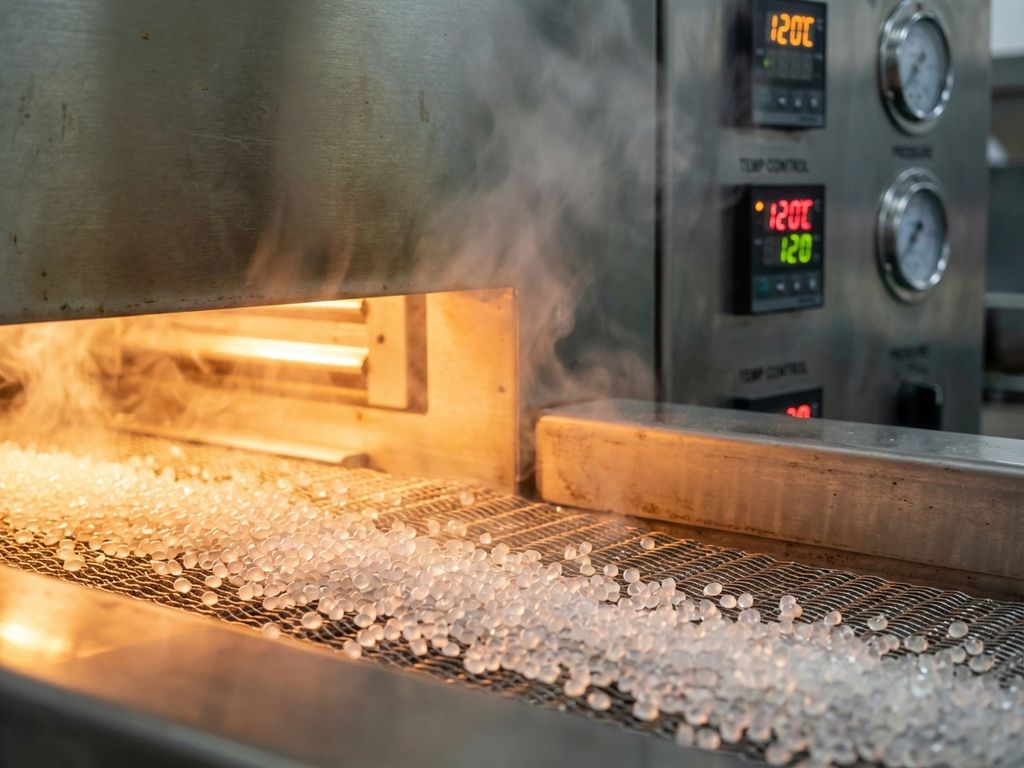
Injection molding material drying is the process of removing moisture from plastic resins before they enter the injection molding machine. This critical pre-processing step prevents defects such as surface blemishes, weak weld lines, and dimensional instability that occur when wet materials are heated and injected into molds. Proper drying ensures consistent part quality, reduces waste, and maintains the structural integrity of finished products.
What is injection molding material drying and why is it essential?
Material drying removes absorbed moisture from plastic pellets or granules before they are melted and formed into parts. Most thermoplastic materials are hygroscopic, meaning they naturally absorb water from the surrounding air during storage and handling.
When wet materials are heated rapidly in the injection molding process, trapped moisture instantly converts to steam. This creates bubbles, voids, and surface imperfections in the final part. The steam can also cause chemical degradation of the polymer chains, weakening the material’s mechanical properties.
Beyond quality issues, inadequate drying leads to increased scrap rates, longer cycle times, and potential damage to expensive molds. The process becomes even more critical for engineering plastics used in automotive, medical, and aerospace applications where part failure is not acceptable.
Which plastic materials require drying before injection molding?
Engineering plastics such as nylon, polycarbonate, ABS, and PET require thorough drying due to their high moisture absorption rates. These materials can absorb 0.2% to 8% of their weight in water depending on humidity and storage conditions.
Common materials requiring drying include:
- Nylon (PA) – extremely hygroscopic, requires drying to below 0.1% moisture
- Polycarbonate (PC) – needs drying to prevent stress cracking
- ABS – requires drying to avoid surface defects and poor gloss
- PET and PBT – must be dried to prevent hydrolysis during processing
- Acetal (POM) – needs moisture removal for dimensional stability
- TPU and other polyurethanes – sensitive to moisture-induced degradation
Commodity plastics such as polyethylene and polypropylene are less hygroscopic but may still benefit from drying in high-humidity environments or when stored improperly.
How does the material drying process actually work?
Material drying uses heated air circulation to remove moisture through evaporation. The process involves three key elements: temperature, time, and airflow. Hot, dry air passes through the plastic pellets, absorbing moisture and carrying it away from the material.
Most industrial drying systems use desiccant dryers that remove moisture from the circulating air. The dried air is heated to the optimal temperature for each material type, then blown through the pellet bed. As moisture evaporates from the plastic surface, more moisture migrates from the pellet core to replace it.
The process continues until equilibrium is reached between the pellet moisture content and the surrounding dry air. Proper airflow ensures even heating and moisture removal throughout the entire batch. Temperature control prevents material degradation while maintaining efficient drying rates.
Drying times typically range from 2–8 hours depending on material type, pellet size, and initial moisture content. Thicker pellets and higher moisture levels require longer drying cycles.
What happens when plastic materials are not properly dried?
Inadequately dried materials produce parts with visible defects including silver streaking, bubbles, rough surfaces, and poor transparency in clear plastics. These cosmetic defects often render parts unusable, especially in consumer products where appearance matters.
More serious issues include:
- Reduced mechanical strength due to polymer chain degradation
- Dimensional instability causing warping or shrinkage variations
- Poor weld line strength where material flows meet
- Increased internal stress leading to premature part failure
- Color variations and inconsistent surface finish
Processing problems also occur, including inconsistent melt flow, pressure variations, and difficulty maintaining stable cycle times. These issues increase scrap rates, reduce productivity, and can damage expensive injection molding equipment over time.
In critical applications such as medical devices or automotive safety components, moisture-related defects can compromise part performance and create safety risks.
How do you determine the right drying parameters for different materials?
Drying parameters depend on the specific plastic type, with each material having optimal temperature and time requirements. Material suppliers provide processing guidelines that specify recommended drying conditions based on extensive testing and experience.
Key factors to consider include:
- Material type and grade – different formulations may have varying requirements
- Initial moisture content – wetter materials need longer drying times
- Pellet size and shape – larger pellets require more time for moisture migration
- Ambient humidity – higher humidity environments demand more aggressive drying
- Part quality requirements – critical applications may need lower moisture targets
Temperature settings must balance drying efficiency with material preservation. Temperatures that are too low slow the process, while excessive heat can degrade the polymer or cause pellets to stick together. Most materials dry effectively at temperatures 10–20°C below their glass transition temperature.
Moisture analyzers help verify drying effectiveness by measuring actual moisture content rather than relying solely on time and temperature parameters.
How EAS change systems help with injection molding efficiency
We enhance injection molding productivity through advanced quick mold change solutions that complement proper material preparation processes. Our systems reduce changeover times from hours to minutes, allowing manufacturers to process different materials more efficiently while maintaining quality standards.
Our comprehensive approach includes:
- Quick mold change systems that enable rapid transitions between different material types
- Adaptive clamping technology that ensures consistent mold positioning for optimal part quality
- Automated coupling systems that streamline material flow and reduce contamination risks
- Mold transportation and handling equipment that protects tooling during changeovers
- Engineering support to optimize your entire production workflow
By minimizing downtime between production runs, our solutions help you maximize the benefits of proper material drying and preparation. Contact our application engineering team to discover how our quick change systems can improve your injection molding efficiency and reduce overall production costs.