

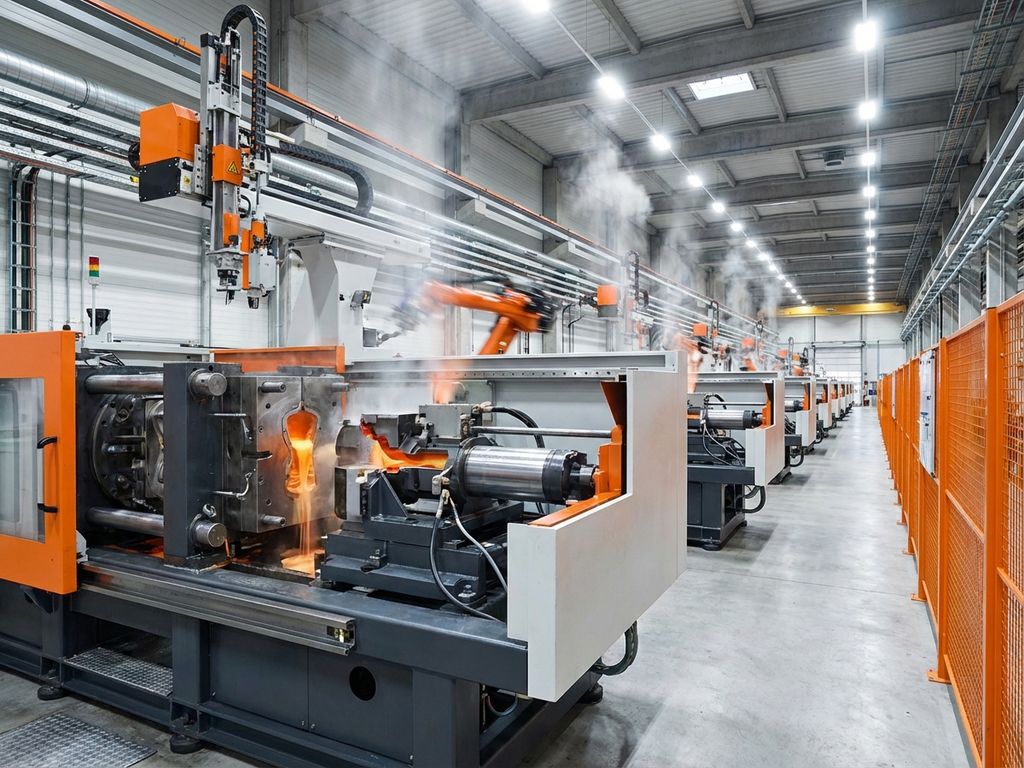
Scaling injection molding production means increasing manufacturing output, efficiency, and capacity to meet growing demand while maintaining quality standards. This involves optimising existing processes, reducing setup times, implementing automation, and maximising equipment utilisation. Successful scaling requires addressing bottlenecks, improving workflow efficiency, and often integrating advanced technologies that enable faster changeovers and higher throughput without necessarily purchasing additional machinery.
What does it mean to scale injection molding production?
Scaling injection molding production refers to systematically increasing your manufacturing capacity and output while maintaining or improving quality standards and cost efficiency. This involves optimising existing equipment performance, reducing non-productive time, and implementing processes that allow for higher throughput.
The scaling process encompasses several key areas. Equipment optimisation focuses on maximising machine utilisation rates and reducing downtime. Process improvements target cycle time reduction, better material flow, and enhanced quality control systems. Workflow optimisation addresses bottlenecks in material handling, mold changes, and part removal processes.
Successful scaling also involves workforce development, ensuring operators have the skills to manage increased production volumes effectively. Many manufacturers discover that scaling is not just about producing more parts, but producing them more efficiently while reducing waste and maintaining consistent quality standards across higher volumes.
What are the biggest bottlenecks when scaling injection molding operations?
The primary bottlenecks in scaling injection molding operations are lengthy mold changeover times, inefficient material handling systems, and inadequate quality control processes. These issues create production delays, reduce machine utilisation, and limit overall throughput capacity.
Mold changeover times represent the most significant bottleneck for most operations. Traditional changeovers can take several hours, during which expensive machinery sits idle. This becomes particularly problematic when scaling requires more frequent product changes or smaller batch sizes.
Material handling inefficiencies create secondary bottlenecks. Poor material flow systems, inadequate storage solutions, and manual handling processes slow production and increase labour costs. Quality control bottlenecks emerge when inspection processes cannot keep pace with increased production volumes, leading to batch delays or quality issues.
Maintenance scheduling also becomes critical during scaling. Unplanned downtime has greater impact on higher-volume operations, making predictive maintenance and rapid repair capabilities essential for sustained production growth.
How do you increase injection molding capacity without buying more machines?
Increasing injection molding capacity without additional machines focuses on maximising existing equipment utilisation through reduced setup times, optimised cycle times, and improved operational efficiency. The most effective approach targets non-productive time elimination and process optimisation.
Quick changeover systems provide the most dramatic capacity improvements. Reducing mold change times from hours to minutes significantly increases productive machine hours. This allows for more flexible scheduling and higher overall equipment effectiveness.
Cycle time optimisation offers substantial gains. Analysing injection, cooling, and ejection phases often reveals opportunities for time reduction without compromising quality. Improved cooling system design, optimised injection parameters, and enhanced mold design all contribute to faster cycles.
Automation integration eliminates manual handling bottlenecks. Automated part removal, material handling systems, and quality inspection processes reduce labour requirements while increasing throughput. Preventive maintenance programmes ensure machines operate at peak efficiency, avoiding unexpected downtime that reduces effective capacity.
What automation technologies help scale injection molding production?
Key automation technologies for scaling injection molding production include quick mold change systems, robotic part handling, automated material delivery, and integrated quality control systems. These technologies reduce manual intervention, minimise changeover times, and enable consistent high-volume production.
Quick mold change systems represent the most impactful automation investment. Automated clamping and coupling systems reduce changeover times from hours to minutes, dramatically increasing machine availability. These systems ensure consistent, repeatable setups that improve both efficiency and quality.
Robotic automation handles repetitive tasks like part removal, inspection, and packaging. Industrial robots work continuously without fatigue, maintaining consistent cycle times and reducing labour costs. They also improve workplace safety by handling hot parts and repetitive motions.
Automated material handling systems ensure consistent material supply without manual intervention. These include conveying systems, automatic feeders, and material drying equipment that maintains optimal processing conditions. Integration with production planning systems enables just-in-time material delivery that supports scaled operations.
How do you maintain quality while scaling injection molding production?
Maintaining quality during production scaling requires implementing robust process control systems, standardised procedures, and real-time monitoring capabilities. The key is establishing consistent, repeatable processes that perform reliably at higher volumes while maintaining the same quality standards.
Process standardisation becomes critical at scale. Documented procedures for setup, operation, and changeover ensure consistent results regardless of operator or shift. Standardised mold change procedures, injection parameters, and quality checkpoints prevent variation that could compromise product quality.
Real-time monitoring systems track critical parameters continuously. Temperature, pressure, cycle time, and dimensional measurements provide immediate feedback on process stability. Automated alerts enable rapid response to deviations before they affect product quality or create waste.
Statistical process control methods help identify trends and potential issues before they become problems. Regular sampling, measurement, and analysis ensure processes remain within specification limits. Training programmes ensure all operators understand quality requirements and their role in maintaining standards during scaled production.
How EAS change systems help with scaling injection molding production
We provide comprehensive quick mold change solutions that directly address the primary bottleneck in scaling injection molding production. Our systems reduce changeover times from hours to minutes, dramatically increasing machine utilisation and production capacity without requiring additional equipment investment.
Our scaling solutions include:
- Advanced clamping systems that enable rapid, consistent mold changes
- Automated coupling systems for utilities and ejectors
- Mold transportation and handling equipment
- Complete turnkey quick change systems
- ROI calculations and project management support
With over 35 years of experience and installations across three continents, we understand the challenges manufacturers face when scaling production. Our engineering team provides application-specific solutions that integrate seamlessly with existing operations while delivering measurable improvements in capacity and efficiency.
Contact us today to discuss how our quick mold change solutions can help scale your injection molding production while maintaining quality standards and reducing operational costs.