

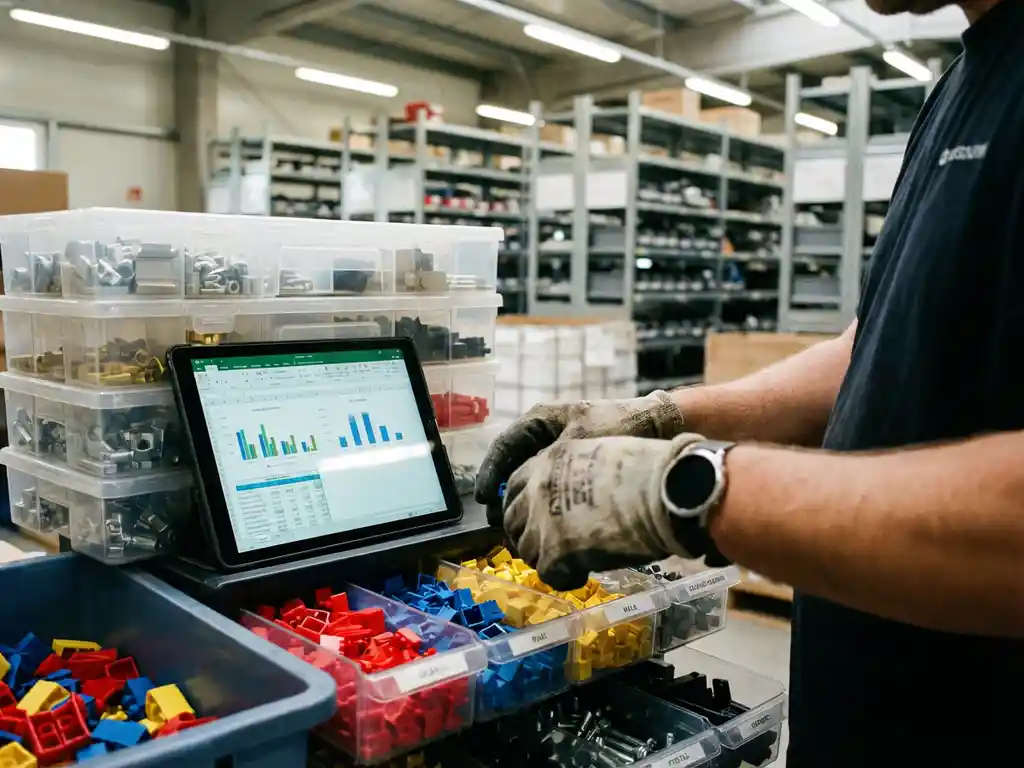
Injection molding inventory optimization involves strategically managing raw materials, finished goods, tooling, and work-in-process inventory to minimize costs while maintaining production efficiency. It balances holding costs against stockout risks, ensuring materials are available when needed without excessive storage expenses. Effective optimization reduces waste, improves cash flow, and enhances overall manufacturing performance through careful planning and control systems.
What does injection molding inventory optimization actually mean?
Injection molding inventory optimization is a systematic approach to managing all inventory components within plastic manufacturing operations to achieve maximum efficiency at minimum cost. This includes coordinating raw materials such as resins and additives, finished products awaiting shipment, tooling and molds, and work-in-process items moving through production stages.
The optimization process focuses on balancing competing priorities between holding costs and service levels. Raw materials must be available to prevent production delays, yet excess inventory ties up capital and risks degradation. Finished goods require sufficient stock to meet customer demand while avoiding overproduction that creates storage challenges.
Tooling inventory presents unique considerations, as molds are expensive assets that require proper storage conditions and scheduled maintenance. Work-in-process inventory must flow smoothly between production stages to maintain cycle efficiency without creating bottlenecks or excessive buffer stocks.
Manufacturing efficiency improves when inventory levels align with actual demand patterns, production capabilities, and supplier lead times. This coordination reduces waste, minimizes storage costs, and ensures production continuity without unnecessary capital investment in excess stock.
Why is inventory management so challenging in injection molding operations?
Injection molding inventory management involves unique complexities due to material degradation risks, extensive mold storage requirements, substantial setup-time costs, and highly variable demand patterns across multiple product lines with different cycle times and material specifications.
Material degradation creates time-sensitive inventory challenges. Many plastic resins have a limited shelf life and require specific storage conditions to maintain quality. Temperature and humidity control become critical, while contamination risks mean materials cannot be stored indefinitely without quality deterioration.
Mold storage demands significant space and specialized handling equipment. Large molds require proper support systems to prevent warping, climate-controlled environments to avoid corrosion, and organized storage that allows efficient retrieval without damage. These requirements substantially increase storage costs compared to standard inventory.
Setup-time costs complicate inventory decisions because frequent changeovers reduce productive capacity. Long setup times encourage larger batch production, increasing work-in-process and finished goods inventory. Conversely, smaller batches improve flexibility but reduce overall equipment efficiency.
Demand variability across product lines creates forecasting difficulties. Different products have varying cycle times, material requirements, and seasonal patterns. Managing inventory for multiple products simultaneously while maintaining service levels requires sophisticated planning systems and substantial safety stock investments.
How do you calculate optimal inventory levels for injection molding?
Optimal inventory levels for injection molding combine safety stock formulas, economic order quantities, lead-time analysis, and demand forecasting techniques adapted to plastic manufacturing’s specific requirements, including material degradation, setup costs, and production scheduling constraints.
Safety stock calculations must account for demand variability and supply uncertainty. The basic formula considers lead-time demand variation and desired service levels, but injection molding operations must also factor in material degradation risks and mold availability. Higher safety stocks may be justified for critical materials with long lead times or quality-sensitive applications.
Economic order quantity (EOQ) calculations balance ordering costs against holding costs, but setup-time costs significantly affect the equation. Extended changeover times effectively increase ordering costs, pushing optimal batch sizes higher. However, this must be balanced against storage costs and material degradation risks.
Lead-time considerations include supplier delivery schedules, customs processing for imported materials, and internal processing time from receipt to production readiness. Injection molding often requires material drying or conditioning before use, extending effective lead times beyond supplier delivery.
Demand forecasting techniques should incorporate seasonal patterns, customer order history, and market trends specific to each product line. Statistical methods work well for established products, while newer products may require market-based forecasting approaches combined with higher safety stock levels to manage uncertainty.
What role does quick mold change technology play in inventory optimization?
Quick mold change technology dramatically reduces setup times from hours to minutes, enabling smaller batch production, improving production flexibility, and substantially reducing inventory holding costs while maintaining high production efficiency through faster changeovers and improved equipment utilization.
Reduced setup times enable smaller economic batch sizes, directly lowering work-in-process and finished goods inventory levels. When changeovers take minutes instead of hours, manufacturers can produce closer to actual demand without sacrificing efficiency. This just-in-time approach reduces storage requirements and improves cash flow.
Production flexibility improves significantly with quick changeover capabilities. Manufacturers can respond rapidly to customer demand changes, seasonal variations, or urgent orders without maintaining large inventory buffers. This responsiveness reduces the need for safety stock while improving customer service levels.
Quick mold change systems reduce the total cost of inventory management by enabling more frequent production runs of different products. Instead of producing large batches to justify setup costs, manufacturers can optimize batch sizes based on actual demand patterns and storage capabilities.
Equipment utilization improves when changeover times decrease, as more production time is available for value-adding activities rather than setup tasks. This efficiency gain allows manufacturers to meet demand with lower inventory levels while maintaining delivery performance and production capacity.
How can you reduce inventory costs without compromising production efficiency?
Reducing inventory costs without compromising efficiency requires implementing lean inventory principles, including just-in-time delivery arrangements, vendor-managed inventory programs, improved demand planning systems, and optimized production scheduling that coordinates material flow with actual production requirements.
Just-in-time delivery reduces raw material inventory by coordinating supplier deliveries with production schedules. This approach requires reliable suppliers and accurate demand forecasting but significantly reduces storage costs and material degradation risks. Backup suppliers and emergency stock procedures ensure production continuity.
Vendor-managed inventory programs transfer inventory responsibility to suppliers while maintaining material availability. Suppliers monitor usage patterns and maintain stock levels based on agreed service levels. This approach reduces internal inventory investment while ensuring material availability when needed.
Improved demand planning combines historical data analysis, market intelligence, and customer communication to create more accurate forecasts. Better forecasting reduces safety stock requirements while maintaining service levels. Regular forecast updates and collaborative planning with key customers further improve accuracy.
Production scheduling optimization coordinates material requirements with production capacity and customer delivery dates. Advanced planning systems consider setup times, material availability, and capacity constraints to create schedules that minimize inventory while meeting delivery commitments. This coordination reduces rush orders and emergency stock purchases.
How EAS Change Systems helps with inventory optimization
EAS Change Systems provides comprehensive quick mold change solutions that directly address injection molding inventory challenges by dramatically reducing changeover times and enabling lean manufacturing practices. Our advanced systems help manufacturers optimize inventory levels while maintaining production efficiency through:
- Rapid changeover technology that reduces setup times from hours to minutes, enabling smaller batch production and just-in-time manufacturing
- Automated mold handling systems that improve safety, reduce changeover labor costs, and minimize mold damage during storage and handling
- Integrated inventory tracking that monitors mold usage patterns and helps optimize storage layouts for maximum efficiency
- Customized solutions tailored to specific production requirements, machine types, and facility constraints
Transform your injection molding operation with proven inventory optimization solutions. Contact EAS Change Systems today to discover how our quick changeover technology can reduce your inventory costs while improving production flexibility and customer responsiveness.