

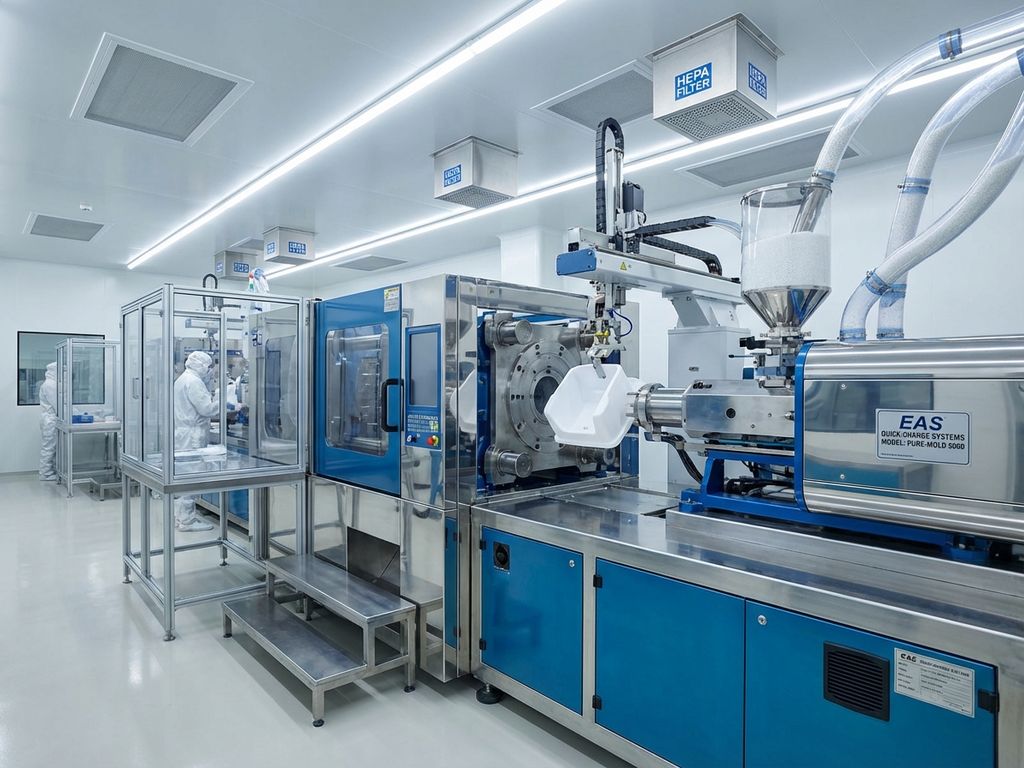
Contamination in injection molding occurs through material impurities, environmental factors, equipment residue, and poor handling practices. Prevention requires comprehensive material handling procedures, regular mold maintenance, environmental controls, and systematic quality checks. Effective contamination prevention minimizes defects, reduces waste, and maintains consistent product quality throughout production runs.
What are the main sources of contamination in injection molding?
The primary contamination sources in injection molding include material degradation, foreign particles, moisture absorption, equipment residue, and environmental pollutants. Material contamination often stems from improper storage, cross-contamination between different plastic types, or degraded material from previous runs remaining in the system.
Raw material storage presents significant contamination risks when pellets absorb moisture from humid environments or collect dust and debris due to inadequate container sealing. Cross-contamination frequently occurs when switching between different materials without proper purging, leaving residual plastic that can create color streaks, weak spots, or surface defects in finished products.
Equipment-related contamination sources include worn screws that generate metal particles, inadequate cleaning between color changes, and oil or grease leaks from machinery components. Hot runner systems can harbor degraded material in dead spots, while temperature fluctuations can cause material breakdown that introduces contaminants into the melt stream.
Environmental factors such as airborne particles, humidity, and static electricity also contribute to contamination. Manufacturing facilities without proper air filtration systems allow dust, lint, and other particles to settle on materials and equipment surfaces, subsequently entering the molding process.
How do you establish proper material handling procedures to prevent contamination?
Proper material handling involves sealed storage systems, controlled drying processes, first-in-first-out inventory rotation, and dedicated handling equipment for different material types. Clean, dry storage containers with tight-fitting lids prevent moisture absorption and particle contamination while maintaining material integrity.
Material drying procedures must follow manufacturer specifications for temperature, time, and airflow requirements. Hygroscopic materials like nylon and polycarbonate require thorough drying before processing to prevent hydrolysis and surface defects. Drying hoppers should be cleaned regularly and equipped with desiccant systems to maintain low moisture levels.
Implementing color-coded handling systems prevents cross-contamination between different material grades and colors. Dedicated scoops, containers, and conveying equipment for each material type eliminate the risk of mixing incompatible plastics that could compromise product quality or cause processing difficulties.
Regular material testing and inspection procedures help identify contamination before it reaches the molding machine. Visual inspections can detect foreign particles, color variations, or material degradation, while moisture analyzers ensure materials meet drying specifications before processing.
What mold maintenance practices prevent contamination buildup?
Effective mold maintenance includes regular cleaning schedules, proper storage procedures, surface treatments, and systematic inspection protocols. Clean molds prevent residue buildup that can transfer contaminants to finished products and cause surface defects or dimensional variations.
Cleaning procedures should address both visible contamination and microscopic residue that accumulates over time. Ultrasonic cleaning effectively removes stubborn deposits from complex geometries, while appropriate solvents dissolve material residue without damaging mold surfaces. Avoid abrasive cleaning methods that can scratch polished surfaces and create contamination traps.
Proper mold storage in controlled environments prevents corrosion and contamination accumulation during idle periods. Protective coatings, moisture control, and covered storage areas maintain mold condition and reduce preparation time for subsequent production runs.
Regular inspection and preventive maintenance identify potential contamination sources before they affect production. Check for worn surfaces, damaged vents, cooling line blockages, and ejector pin wear that can generate particles or create dead spots where material can degrade.
How do environmental controls reduce contamination risks in injection molding?
Environmental controls encompass air filtration systems, humidity management, temperature regulation, and cleanroom protocols that minimize airborne contaminants and maintain stable processing conditions. Proper ventilation systems remove fumes and particles while preventing outside contaminants from entering production areas.
Air filtration systems with appropriate HEPA filters capture particles down to submicron levels, preventing dust and debris from settling on materials, equipment, and finished products. Positive air pressure in molding areas helps exclude outside contaminants, while controlled airflow patterns direct particles away from critical processing zones.
Humidity control prevents moisture-related contamination issues such as material degradation, surface defects, and dimensional instability. Dehumidification systems maintain optimal moisture levels for both material storage and processing environments, which is particularly important for hygroscopic materials across various industrial applications.
Temperature regulation ensures stable processing conditions and prevents condensation that can introduce moisture contamination. Consistent environmental temperatures also help maintain material properties and prevent thermal degradation that can generate contaminants within the processing system.
What quality control measures detect and prevent contamination issues?
Quality control measures include incoming material inspection, in-process monitoring, finished product testing, and systematic documentation protocols. Regular sampling and testing procedures identify contamination sources quickly, enabling prompt corrective actions before widespread quality issues occur.
Incoming material inspection involves visual examination, moisture testing, and melt flow verification to ensure raw materials meet specifications. Contaminated materials should be quarantined immediately to prevent introduction into production systems where they could affect multiple production runs.
In-process monitoring includes regular purging procedures, color consistency checks, and dimensional measurements that can reveal contamination effects. Statistical process control helps identify trends that may indicate developing contamination issues before they result in rejected parts.
Finished product inspection protocols should include visual examination, dimensional verification, and functional testing appropriate to the application. Documentation systems track contamination incidents, root causes, and corrective actions to prevent recurrence and improve overall quality management.
How do EAS change systems help with contamination prevention in injection molding?
We provide quick mold change solutions that significantly reduce contamination risks by minimizing mold handling time and exposure to environmental contaminants. Our systems enable rapid, precise mold changes that maintain cleaner production environments and reduce opportunities for contamination introduction.
Our comprehensive contamination prevention solutions include:
- Enclosed mold transportation systems that protect molds from airborne contaminants during storage and handling
- Automated coupling systems that eliminate manual connections, reducing human contact and potential contamination sources
- Precision alignment mechanisms that ensure proper mold seating without adjustment procedures that can introduce particles
- Sealed storage solutions that maintain mold cleanliness between production runs
- Quick-disconnect systems for utilities that prevent contamination from connection procedures
Ready to improve your contamination prevention protocols with advanced quick mold change technology? Contact our application engineering team to discuss how our solutions can enhance your injection molding quality control and reduce contamination-related defects in your production environment.