

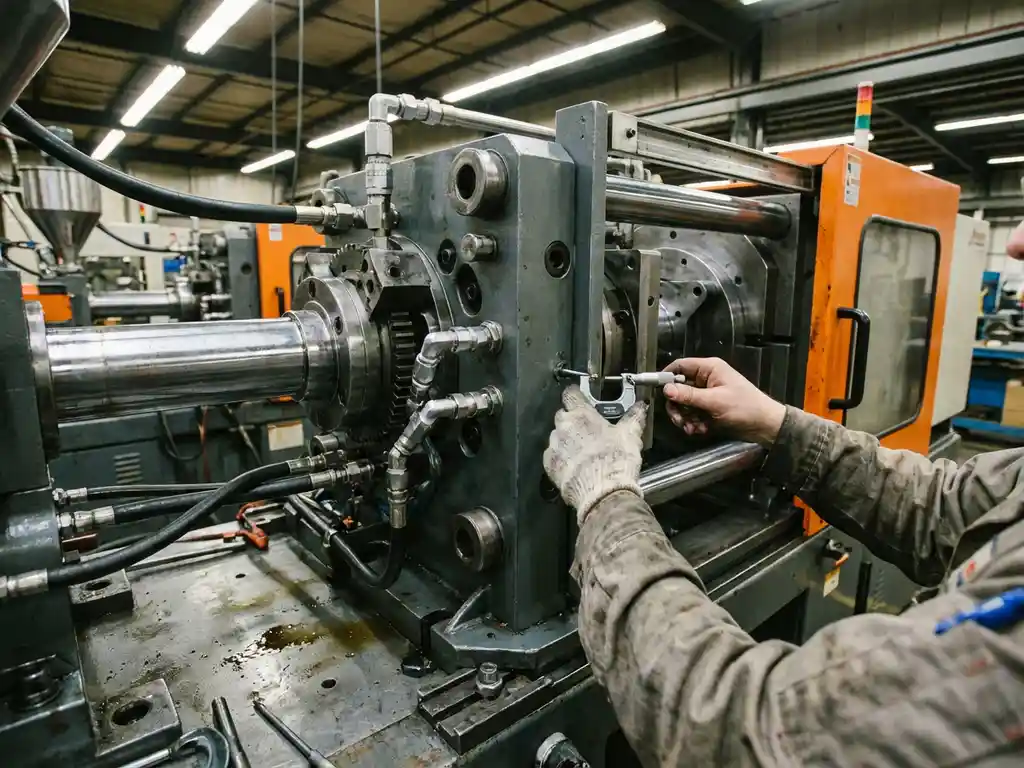
Injection molding equipment requires precise control over multiple variables to produce consistent, high-quality parts. Temperature, pressure, timing, and positioning must all work in perfect harmony to achieve optimal results. However, even the most sophisticated machinery gradually loses accuracy over time, making regular calibration essential to maintaining production quality and avoiding costly downtime.
Understanding why calibration matters and implementing proper maintenance schedules can mean the difference between smooth operations and unexpected production interruptions. Let’s explore the critical aspects of injection molding equipment calibration and how it affects your manufacturing success.
What is injection molding equipment calibration?
Injection molding equipment calibration is the process of adjusting and verifying that all machine components operate within their specified tolerances and accuracy ranges. This systematic procedure ensures that temperature controllers, pressure sensors, position encoders, timing systems, and other critical components provide accurate readings and consistent performance.
The calibration process involves comparing actual machine performance against known standards and making any necessary adjustments to bring all systems back to their optimal operating parameters. This includes checking hydraulic pressure accuracy, verifying temperature sensor readings, confirming injection speed consistency, and validating clamping force measurements.
Professional calibration typically requires specialized equipment and trained technicians who understand the intricate relationships among different machine systems. The process establishes a documented baseline that helps identify when components begin to drift from their intended specifications.
Why does injection molding equipment lose accuracy over time?
Injection molding equipment loses accuracy due to normal wear and tear, environmental factors, and the continuous stress of high-pressure, high-temperature operations. Mechanical components experience gradual degradation, sensors drift from their original calibration points, and hydraulic systems develop minor leaks or pressure variations.
Several factors contribute to this loss of accuracy over time. Temperature fluctuations cause metal expansion and contraction, affecting sensor positioning and mechanical tolerances. Vibration from machine operation gradually loosens connections and shifts component alignment. Contamination from dust, oil, or plastic residue can interfere with sensor readings and mechanical movement.
Additionally, repeated hydraulic cycling creates internal wear that affects pressure consistency. Electrical connections may corrode or develop changes in resistance that affect signal accuracy. Even high-quality components undergo natural aging processes that slowly alter their performance characteristics, making periodic recalibration necessary to maintain precision.
What happens when injection molding equipment isn’t calibrated?
Uncalibrated injection molding equipment produces inconsistent part quality, increases scrap rates, and leads to unexpected production downtime. Parts may have dimensional variations, surface defects, short shots, or structural weaknesses that compromise their functionality and appearance.
The consequences of poor calibration extend beyond quality issues. Inconsistent processing conditions create unpredictable cycle times, making production scheduling difficult and reducing overall equipment effectiveness. Operators spend more time troubleshooting problems and making manual adjustments, which decreases productivity and increases labor costs.
More seriously, uncalibrated equipment can cause catastrophic failures. Incorrect pressure readings might lead to mold damage from excessive clamping force. Temperature inaccuracies can result in material degradation or incomplete melting, potentially damaging heating elements or injection screws. These failures often require emergency repairs and extended downtime that far exceed the cost of preventive calibration.
How often should injection molding equipment be calibrated?
Most injection molding equipment should be calibrated every 6 to 12 months, depending on usage intensity, operating environment, and part quality requirements. High-volume production machines or those operating in harsh conditions may require more frequent calibration, while machines with lighter usage can often extend intervals safely.
The calibration schedule should consider several factors. Critical temperature zones typically need more frequent attention than secondary systems. Machines producing precision parts or medical components require stricter calibration intervals than those making less critical products. Environmental conditions such as temperature swings, humidity, or contamination also influence calibration frequency.
Many manufacturers implement condition-based calibration schedules that continuously monitor key parameters. When measurements drift beyond acceptable tolerances, calibration is triggered regardless of the scheduled interval. This approach prevents quality issues while avoiding unnecessary calibration of systems that remain accurate.
What parts of injection molding equipment need calibration?
Critical components requiring regular calibration include temperature controllers, pressure transducers, position sensors, flow meters, and timing systems. Each of these elements directly affects part quality and must maintain precise accuracy to ensure consistent production results.
Temperature control systems need calibration across all heating zones, including barrel temperatures, nozzle heating, and mold temperature controllers. Pressure sensors throughout the hydraulic system require verification, including injection pressure, back pressure, and clamping force measurements. Position encoders that track screw position, mold opening, and ejector movement must maintain accuracy for proper cycle control.
Additional components include flow-rate sensors for cooling systems, vacuum sensors for material handling, and safety-system sensors that protect operators and equipment. Load cells that measure clamping force and torque sensors that monitor screw rotation also require periodic verification to ensure safe and effective operation.
How EAS Change Systems Helps Reduce Production Downtime
We understand that calibration and maintenance activities can significantly affect your production schedule. Our quick mold change and quick die change solutions minimize the time your equipment spends offline for maintenance and calibration procedures.
Our comprehensive approach to reducing production downtime includes:
- Rapid mold exchange systems that reduce changeover times from hours to minutes
- Adaptive clamping systems that maintain consistent pressure without frequent recalibration
- Automated coupling systems that eliminate manual connections prone to calibration drift
- Integrated monitoring systems that track performance and predict calibration needs
- Expert application engineering to optimize your specific production requirements
Ready to minimize production downtime while maintaining precision? Contact our team today to discuss how our advanced change systems can keep your injection molding operations running smoothly, with longer calibration intervals and faster maintenance procedures.