

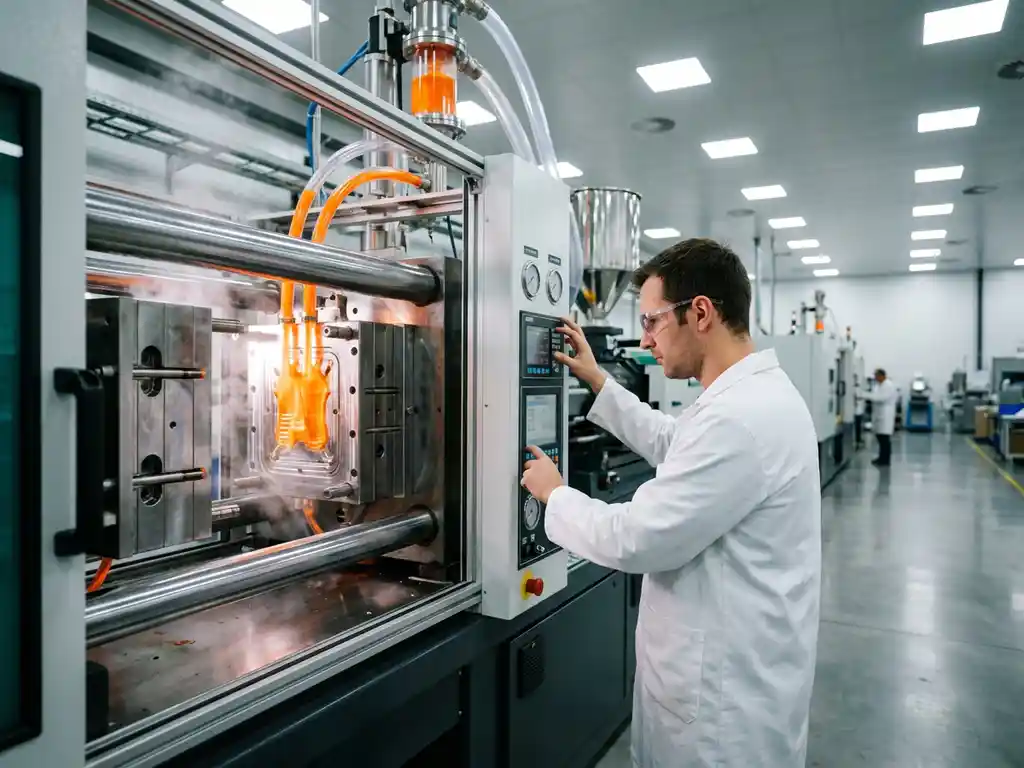
Injection molding plant productivity depends on several interconnected factors, including setup times, equipment efficiency, process optimization, and automation levels. The most significant impacts come from lengthy mold changeovers, unplanned downtime, inconsistent quality control, and manual processes that create bottlenecks. Understanding these productivity drivers helps manufacturers identify improvement opportunities and implement targeted solutions to enhance operational efficiency.
What are the biggest productivity killers in injection molding plants?
The primary productivity killers in injection molding facilities include excessive setup times, unplanned equipment downtime, quality defects requiring rework, material waste, and manual processes that slow production cycles. These factors compound to create significant inefficiencies that reduce overall plant output and profitability.
Excessive setup times represent one of the most substantial productivity drains. Traditional mold changeovers can take several hours, during which production stops completely. This downtime becomes particularly costly when plants need to switch between different products frequently to meet customer demand or maintain lean inventory levels.
Equipment breakdowns and unplanned maintenance create unpredictable disruptions that cascade through production schedules. These interruptions not only halt immediate production but also create ripple effects that affect delivery commitments and require overtime work to recover lost output.
Quality issues compound productivity losses by requiring additional time for inspection, rework, or scrapping defective parts. Poor quality control processes mean defects may not be detected until significant material and time have already been invested in unusable products.
How does mold changeover time impact overall plant productivity?
Mold changeover time creates production bottlenecks that significantly reduce daily output capacity. Traditional changeover processes can consume 2-8 hours per switch, during which expensive injection molding equipment sits idle. The cumulative impact of these delays reduces effective production time and limits manufacturing flexibility.
The relationship between setup time and production efficiency becomes particularly critical in high-mix, low-volume manufacturing environments. Plants that need to produce multiple product variants face frequent changeovers, meaning setup time can represent 30-50% of total available production time.
Extended changeover periods also force manufacturers to run larger batch sizes to justify the setup investment. This approach ties up working capital in inventory and reduces responsiveness to changes in customer demand. The inability to produce smaller batches economically limits market competitiveness and customer service capabilities.
Manual changeover processes introduce variability and safety risks. Different operators may perform setups differently, leading to inconsistent results and potential quality issues. The physical demands of manual mold handling also create ergonomic concerns and potential injury risks that can further affect productivity through workers’ compensation claims and the need to train replacement staff.
What role does equipment automation play in injection molding efficiency?
Equipment automation significantly enhances injection molding efficiency by reducing manual labor dependency, improving process consistency, and enabling faster production cycles. Automated systems including quick mold change solutions, robotic material handling, and integrated quality control create more reliable and predictable production environments.
Quick mold change systems represent a transformative automation technology that reduces changeover times from hours to minutes. These systems use hydraulic or pneumatic clamping mechanisms that eliminate manual bolting and positioning tasks. Automated mold handling equipment can position heavy molds precisely and safely, removing physical strain from operators while ensuring consistent setup procedures.
Robotic material handling systems improve efficiency by maintaining consistent feed rates and reducing contamination risks. Automated material loading and part removal systems enable lights-out production capabilities, allowing plants to maximize equipment utilization during off-hours without additional labor costs.
Integrated quality control systems provide real-time monitoring and automatic adjustments to maintain process parameters within specification. These systems can detect variations before they produce defective parts, reducing waste and eliminating time spent on inspection and rework activities.
How can manufacturers optimize their injection molding cycle times?
Manufacturers can optimize cycle times through strategic material selection, advanced mold design, precise processing parameter control, efficient cooling systems, and proactive maintenance programs. Cycle time optimization requires a systematic approach that addresses each phase of the injection molding process while maintaining consistent part quality and dimensional accuracy.
Material selection affects cycle time through flow characteristics and cooling requirements. Materials with better flow properties fill molds more quickly and require less injection pressure. Fast-cycling materials with shorter cooling requirements can significantly reduce overall cycle times without compromising part quality.
Mold design optimization focuses on cooling channel placement, gate location, and part geometry. Conformal cooling channels that follow part contours provide more uniform temperature control and faster cooling rates. Strategic gate placement ensures efficient cavity filling while minimizing cycle time and material waste.
Processing parameter optimization involves fine-tuning injection speed, pressure profiles, and temperature settings for each specific application. Advanced process control systems can automatically adjust these parameters in real time to maintain optimal cycle times while ensuring consistent part quality.
Preventive maintenance programs ensure equipment operates at peak efficiency and help avoid unexpected breakdowns that disrupt production schedules. Regular maintenance of heating systems, hydraulics, and mechanical components prevents performance degradation that gradually increases cycle times and reduces overall plant productivity.
How EAS Change Systems Enhances Injection Molding Plant Productivity
EAS Change Systems provides comprehensive quick mold change solutions that directly address the most critical productivity challenges in injection molding plants. Our automated systems transform lengthy changeover processes into efficient operations that maximize production uptime and operational flexibility. Key benefits include:
• Reduction of changeover times from hours to minutes through hydraulic clamping technology
• Elimination of manual mold handling that creates safety risks and process variability
• Improved setup consistency that ensures reliable quality and reduces startup waste
• Enhanced manufacturing flexibility enabling economical small-batch production
• Increased equipment utilization rates that maximize return on capital investment
Ready to transform your injection molding productivity? Contact EAS Change Systems today to discover how our proven quick mold change solutions can eliminate your biggest productivity bottlenecks and deliver measurable improvements to your bottom line.