

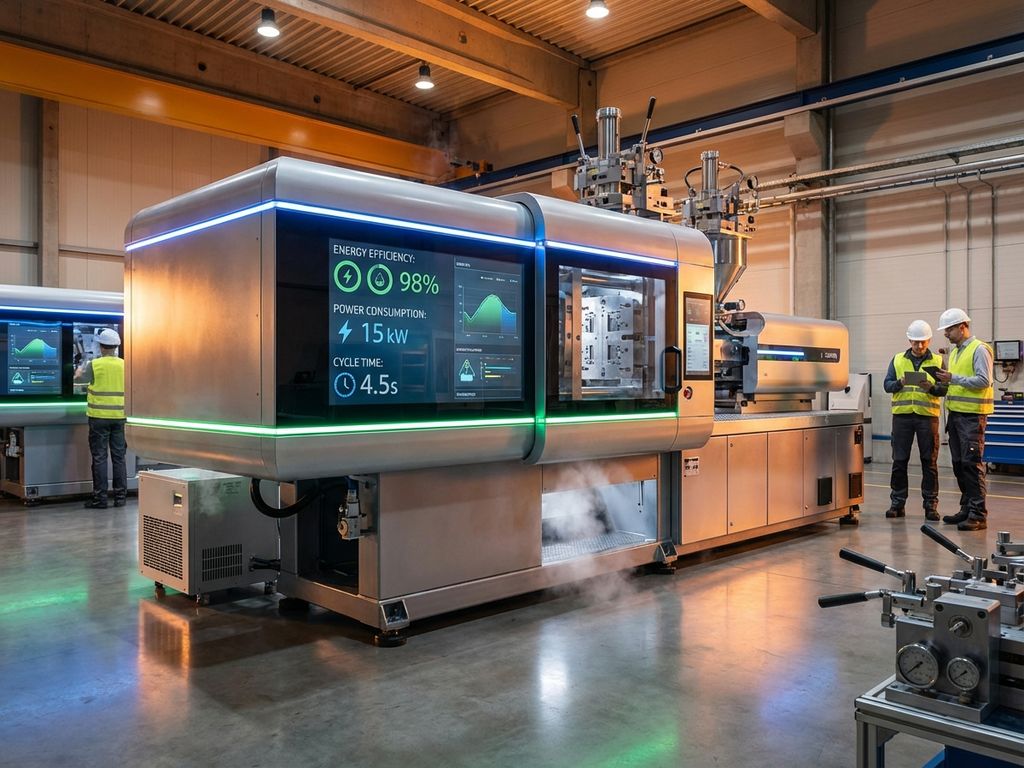
Energy efficiency standards for plastic injection molding machines include ISO 20028 international guidelines, EU energy labelling requirements, and regional regulations that establish minimum performance criteria. These standards measure specific energy consumption (SEC), power usage during production cycles, and overall machine efficiency to help manufacturers reduce costs and environmental impact while maintaining productivity.
What are the current energy efficiency standards for plastic injection molding machines?
The primary energy efficiency standard for plastic injection molding machines is ISO 20028, which provides a standardized method for measuring and reporting energy consumption. This international standard establishes specific energy consumption (SEC) as the key metric, measured in kilowatt-hours per kilogram of processed material.
European Union regulations require energy labelling for industrial machinery above certain power thresholds, including large injection molding machines. The EU’s Ecodesign Directive sets minimum energy performance standards and mandates efficiency disclosures for qualifying equipment. These regulations aim to reduce industrial energy consumption by 20% by 2030.
Regional standards vary by location. North American guidelines focus on ENERGY STAR certification for industrial equipment, while Asian markets increasingly adopt ISO-based standards with local modifications. Many countries also implement carbon pricing mechanisms that indirectly enforce efficiency improvements through economic incentives.
Industry-specific requirements often exceed regulatory minimums. Automotive and medical device manufacturers typically demand higher efficiency standards due to quality requirements and cost pressures. These sectors frequently specify SEC values below 0.8 kWh/kg for standard thermoplastics processing.
How do you measure energy efficiency in plastic injection molding machines?
Specific Energy Consumption (SEC) is the primary measurement method, calculated by dividing total energy consumed by the weight of good parts produced. This metric accounts for all machine systems, including hydraulics, heating, cooling, and controls during actual production cycles.
Power consumption monitoring involves installing meters that track real-time energy usage across different machine systems. Modern machines include built-in monitoring that separates consumption by function: barrel heating, hydraulic pumps, cooling systems, and auxiliary equipment. This data helps identify the biggest energy consumers.
Cycle time analysis measures energy usage throughout complete molding cycles, from mold closing through part ejection. Shorter cycles generally improve efficiency by reducing heating losses and idle time. However, optimal cycle times balance speed with part quality and energy consumption.
Standardized testing procedures require machines to operate under controlled conditions with specified materials and part geometries. Testing protocols define ambient temperatures, material moisture content, and production parameters to ensure consistent measurements across different machines and facilities.
What factors affect energy consumption in plastic injection molding operations?
Machine size significantly impacts energy consumption, with larger machines requiring more power for hydraulic systems and heating. However, production efficiency matters more than absolute size. A properly sized machine running at optimal capacity typically consumes less energy per part than an oversized machine running below capacity.
Hydraulic versus electric drive systems show substantial differences in energy usage. Electric machines typically consume 30–50% less energy than hydraulic equivalents due to better power control and reduced heat generation. Hybrid systems offer compromise solutions with electric injection and hydraulic clamping.
Heating requirements vary based on material properties and processing temperatures. High-temperature materials like PEEK require significantly more energy than standard thermoplastics. Barrel heating systems, hot runner operation, and mold temperature control all contribute to thermal energy consumption.
Cooling system efficiency affects both energy usage and cycle times. Efficient cooling reduces cycle times while consuming less energy for temperature control. Proper water flow rates, temperature differentials, and cooling channel design optimize this balance for injection molding operations.
Operational parameters, including injection speeds, pressures, and hold times, influence energy consumption. Higher pressures require more hydraulic power, while longer cycles increase heating losses. Optimizing these parameters reduces energy usage without compromising part quality.
Why are energy efficiency standards becoming more important in plastic manufacturing?
Rising energy costs directly impact manufacturing profitability, with energy representing 5–15% of total production costs in plastic manufacturing. Energy price volatility makes efficiency improvements essential for predictable operating costs and competitive pricing in global markets.
Environmental regulations increasingly target industrial energy consumption through carbon pricing, emissions limits, and mandatory efficiency reporting. The EU’s Carbon Border Adjustment Mechanism will impose costs on energy-intensive imports, making efficiency a competitive necessity for global trade.
Corporate sustainability commitments drive demand for energy-efficient equipment. Major manufacturers set science-based targets for carbon reduction, requiring suppliers to demonstrate measurable efficiency improvements. These requirements often exceed regulatory minimums and influence purchasing decisions.
Competitive advantages emerge from lower operating costs and improved sustainability credentials. Efficient operations enable competitive pricing while meeting customer sustainability requirements. Many procurement processes now include energy efficiency criteria alongside traditional factors like price and quality.
Long-term sustainability requirements reflect growing awareness of resource constraints and climate impacts. Manufacturers invest in efficiency improvements to future-proof operations against rising energy costs and tightening regulations while supporting corporate environmental goals.
How can manufacturers improve energy efficiency in their injection molding operations?
Machine upgrades to electric or hybrid drive systems provide immediate efficiency improvements. Modern electric machines consume 30–50% less energy than older hydraulic systems while offering better process control and repeatability. Upgrading heating systems to advanced barrel heaters and hot runner controls also reduces energy consumption.
Process improvements focus on optimizing cycle times, temperatures, and pressures for each application. Reducing barrel temperatures by 10°C can decrease energy consumption by 5–8% without affecting part quality for many materials. Shorter cooling times through improved mold design reduce cycle energy requirements.
Maintenance practices significantly impact efficiency through proper system calibration and component condition. Regular hydraulic system maintenance, heating element inspection, and cooling system cleaning maintain optimal performance. Preventive maintenance schedules should include energy consumption monitoring to identify degrading efficiency.
Operator training ensures consistent application of energy-efficient practices. Training programs should cover optimal parameter selection, proper startup and shutdown procedures, and interpretation of energy monitoring data. Well-trained operators can identify and correct efficiency issues before they impact production costs.
Technology solutions include energy monitoring systems, process optimization software, and automated parameter adjustment. These tools provide real-time feedback on energy consumption and suggest improvements for injection molding applications based on production data analysis.
How EAS change systems help with energy efficiency in plastic injection molding
EAS change systems significantly reduce energy consumption in injection molding operations through faster mold changeovers and optimized heating cycles. Our quick mold change solutions minimize the energy waste associated with extended downtime and repeated heating cycles during traditional changeover processes.
Our systems deliver energy efficiency improvements through:
- Reduced changeover times from hours to minutes, eliminating extended heating periods during mold changes
- Maintained barrel temperatures during quick changes, avoiding energy-intensive reheating cycles
- Optimized production scheduling through faster changeovers, improving overall equipment efficiency
- Reduced downtime that typically requires keeping systems at standby temperatures
- Improved overall equipment effectiveness that maximizes productive energy usage
Quick mold change technology enables manufacturers to maintain energy-efficient production schedules while increasing flexibility for smaller batch sizes. This combination supports both operational efficiency and sustainability goals in modern plastic manufacturing through specialized applications tailored to specific industry requirements.
Contact our application engineering team to calculate the specific energy savings potential for your injection molding operations and discover how our quick mold change solutions can improve your facility’s overall energy efficiency.
