

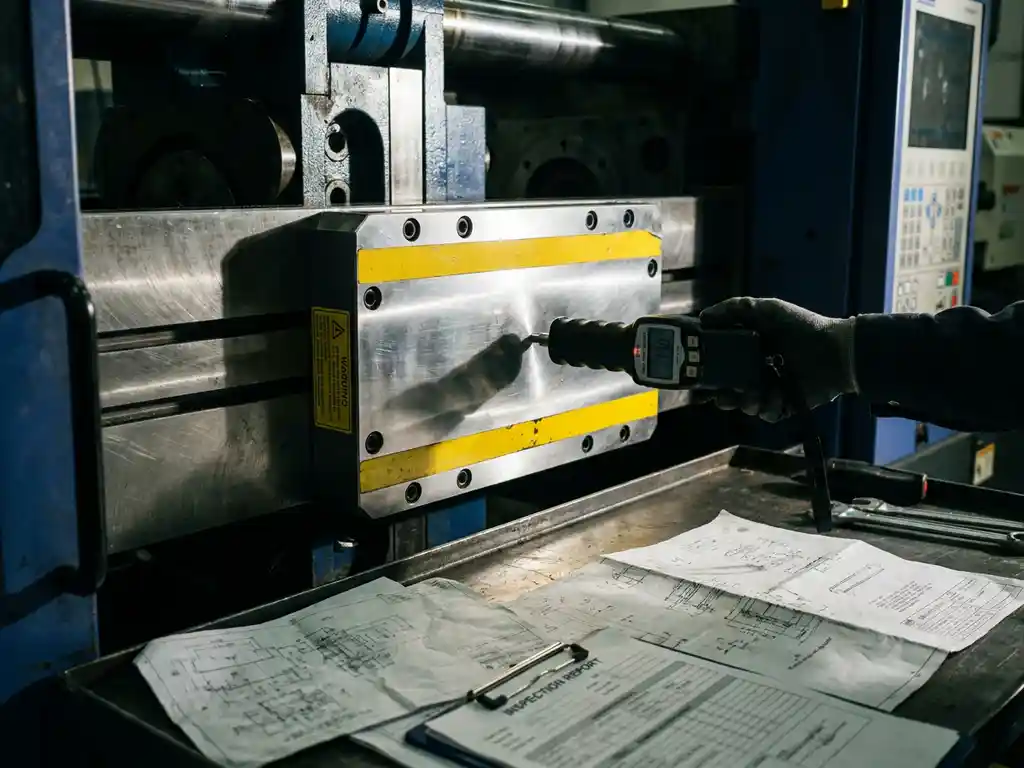
To verify magnetic clamping system compliance with CE safety requirements, check that the system carries a valid CE marking, is accompanied by an EU Declaration of Conformity, and has a complete technical file compiled by the manufacturer. These documents confirm the system has been assessed against the relevant EU directives and harmonised standards. The sections below explain exactly what those requirements involve and how to validate each one.
What CE directives apply to magnetic clamping systems?
Magnetic clamping systems used in industrial machinery fall primarily under the EU Machinery Directive (2006/42/EC), which governs the safety of machinery and machinery components placed on the European market. Where the system incorporates electrical components, the Low Voltage Directive (2014/35/EU) and the Electromagnetic Compatibility Directive (2014/30/EU) may also apply, depending on the design and voltage range.
The Machinery Directive is the cornerstone requirement for magnetic clamping. It sets essential health and safety requirements (EHSRs) covering everything from mechanical strength and control systems to emergency stop functions and protection against unexpected start-up. Any magnetic clamping system sold or operated within the EU must demonstrate conformity with these EHSRs before it can legally carry the CE mark.
If the clamping system is supplied as a safety component intended to protect persons, it may also be classified as a safety component under Annex V of the Machinery Directive, which triggers additional scrutiny, including potential third-party assessment by a notified body.
What safety standards must a magnetic clamping system meet?
A magnetic clamping system must meet the harmonised standards referenced under the Machinery Directive, with EN 14010 (safety of machinery for rubber and plastics processing) and ISO 12100 (risk assessment and risk reduction) being particularly relevant. For magnetic workholding specifically, EN 13155 covers non-fixed load lifting attachments, which applies when the magnet is used to hold or move loads.
Beyond these, the following standards frequently apply depending on the application:
- IEC 60204-1: Electrical equipment of machines, covering control circuits, emergency stops, and power disconnection
- EN ISO 13849-1: Safety-related parts of control systems, used to evaluate the performance level (PL) of the safety function that holds the mold or die in place
- EN 60947: Relevant for low-voltage switchgear and controlgear used within the clamping unit
The specific combination of standards that applies depends on how the magnetic clamping system is integrated into the press or injection molding machine, and whether it is supplied as a standalone component or as part of a complete system.
How is a magnetic clamping system tested for CE compliance?
CE compliance for a magnetic clamping system is verified through a conformity assessment process, which typically begins with a risk assessment under ISO 12100 and progresses through design review, testing, and documentation. Most magnetic clamping systems qualify for self-certification by the manufacturer, meaning no third-party notified body is required unless the system falls into a high-risk category.
The testing process generally covers the following areas:
- Magnetic holding force verification: The clamping force must be measured and confirmed to meet the rated capacity under defined test conditions, including any reduction factors for surface finish or temperature
- Control system safety assessment: The safety function that maintains clamping must be evaluated for its Performance Level (PL) under EN ISO 13849-1
- Electrical safety testing: Insulation resistance, protective bonding, and control circuit integrity are tested in line with IEC 60204-1
- Failure mode analysis: The system must demonstrate safe behaviour under foreseeable fault conditions, including power loss
- Temperature and environmental testing: Relevant where the system operates in demanding thermal or chemical environments
Once testing is complete and all EHSRs are satisfied, the manufacturer issues the EU Declaration of Conformity and affixes the CE mark to the product.
What does the technical file for a magnetic clamp CE declaration include?
The technical file is the complete body of documentation that supports the CE marking of a magnetic clamping system. It must be compiled by the manufacturer and retained for at least ten years after the last unit is placed on the market. It does not need to be submitted to any authority proactively, but it must be made available to market surveillance authorities on request.
A compliant technical file for a magnetic clamping system typically includes:
- A general description of the product and its intended use
- Overall and detailed drawings, including control circuit diagrams
- The risk assessment conducted under ISO 12100
- A list of the harmonised standards applied and how conformity was demonstrated
- Test reports and measurement data (e.g. holding force tests, PL calculations)
- Instructions for installation, use, and maintenance
- The EU Declaration of Conformity itself
The quality of the technical file is a strong indicator of how seriously a manufacturer treats compliance. A thin or incomplete file suggests the conformity assessment was superficial, which is a meaningful red flag when evaluating suppliers.
What happens if a magnetic clamping system loses power during operation?
A well-designed magnetic clamping system must maintain its holding force in the event of a power failure. Permanent magnet systems achieve this inherently, because the magnetic field does not depend on electrical power. Electro-permanent systems combine permanent and electromagnets so that power is only needed to change the magnetic state, not to maintain it. Purely electromagnetic systems, by contrast, lose holding force immediately when power is cut, which creates a safety hazard.
CE compliance requires that the risk of unexpected release during a power interruption is addressed in the risk assessment. The chosen solution must either eliminate the hazard (through permanent or electro-permanent design) or reduce it to an acceptable level through additional safeguards such as mechanical locking devices or safety-rated monitoring systems.
When evaluating a magnetic clamping system, always confirm in the technical documentation which magnetic technology is used and how the manufacturer has addressed the power-loss scenario. This is one of the most safety-critical questions to ask, and the answer must be backed by a documented safety function with a verified Performance Level.
How do you verify a supplier’s CE compliance claims for magnetic clamps?
To verify CE compliance claims, request the EU Declaration of Conformity and review it carefully. A valid declaration must identify the product, list the directives and harmonised standards applied, name the manufacturer, be signed by an authorised person, and be dated. If any of these elements are missing or vague, the declaration may not be legally valid.
Beyond the declaration, take these verification steps:
- Request the technical file index: You are entitled to ask for a summary or index of the technical file. A reputable manufacturer will have no hesitation sharing this
- Check the instructions for use: CE-compliant machinery must be supplied with instructions in the language of the country of use. Missing instructions, or instructions provided only in translation, are a warning sign
- Verify the CE mark format: The CE marking must conform to the prescribed dimensions and proportions. Incorrectly formatted marks suggest a superficial approach to compliance
- Ask about the risk assessment: Request confirmation that a risk assessment was conducted under ISO 12100 and ask which standards were used to address the key risks
- Check for notified body involvement: If the system is classified as a safety component, ask whether a notified body was involved and request the notified body number
Reputable manufacturers in the magnetic clamping space will welcome these questions. Evasive or incomplete responses are a clear signal to look elsewhere.
How EAS Change Systems Supports CE-Compliant Magnetic Clamping
We at EAS Change Systems have been engineering quick mold change and quick die change solutions since 1985, and CE compliance is built into our product development process from day one. Our magnetic clamping solutions, including the Pressmag LP and SP series, are designed and documented to meet the requirements of the EU Machinery Directive and the relevant harmonised standards, giving you confidence from the moment of installation.
When you work with us, you benefit from:
- Full EU Declarations of Conformity backed by complete technical files
- Electro-permanent magnetic technology that maintains holding force without continuous power, directly addressing the power-loss safety requirement
- Application engineering support to ensure the clamping system is correctly specified for your press or injection molding machine
- Installation and commissioning by experienced engineers who understand both the safety requirements and the production environment
- Ongoing service and maintenance to keep your system operating safely and within compliance over its full working life
If you are evaluating magnetic clamping systems and want to be certain the solution you choose is genuinely CE compliant and right for your application, get in touch with our team. We are happy to walk you through our documentation, discuss your specific setup, and help you make an informed decision.