

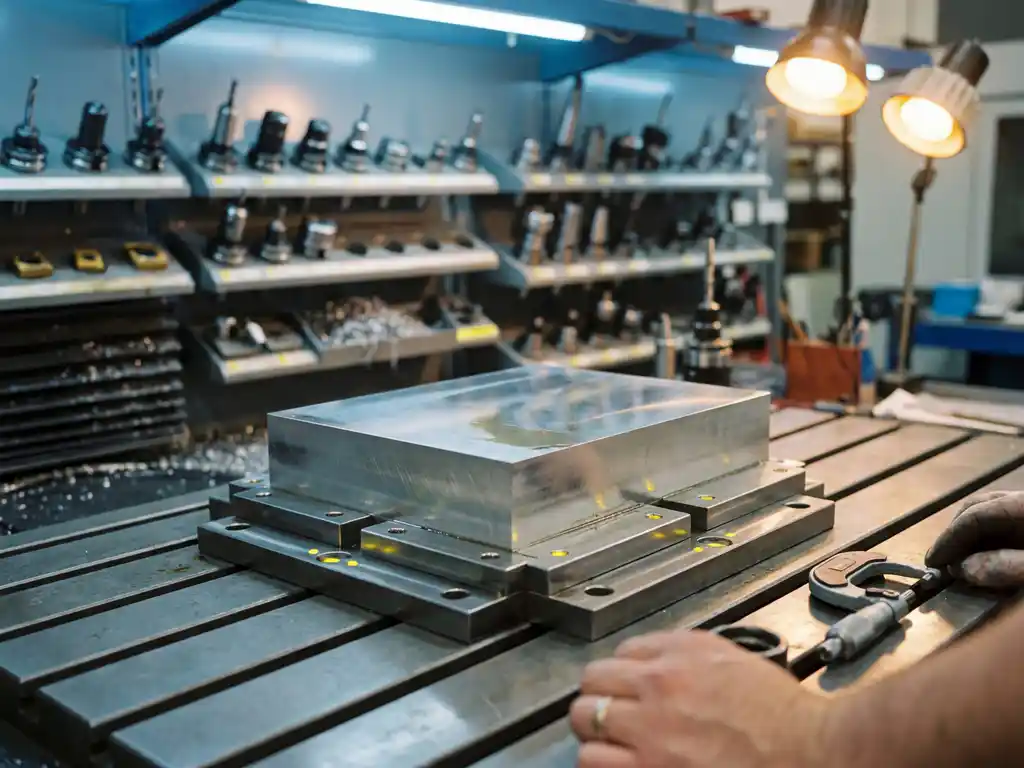
Workpiece distortion during machining remains one of the most challenging issues facing metal fabricators today. Traditional mechanical clamping methods often apply concentrated forces that can deform thin-walled parts, delicate components, or materials with varying thicknesses. Magnetic clamping systems offer an innovative solution by distributing holding forces more evenly across the workpiece surface, significantly reducing the risk of distortion while maintaining secure positioning throughout the machining process.
Understanding how magnetic clamping systems prevent distortion requires examining the fundamental differences in force application compared with conventional methods. This technology has become increasingly valuable in precision manufacturing applications where dimensional accuracy and surface quality are critical.
What Causes Workpiece Distortion During Traditional Clamping?
Traditional mechanical clamping systems can cause workpiece distortion through concentrated point loads and excessive localized pressure that exceeds the material’s elastic limit. These systems typically use vises, clamps, or fixtures that apply force at specific contact points, creating stress concentrations that can permanently deform the workpiece.
The primary distortion mechanisms include bending stress from uneven force distribution, compressive deformation at clamping points, and residual-stress buildup during the clamping process. Thin-walled components are particularly susceptible because they lack the structural rigidity to resist concentrated forces without deflecting.
Material properties also play a crucial role in distortion susceptibility. Softer metals like aluminum and brass deform more easily under clamping pressure, while harder materials may develop microcracks or surface damage. The geometry of the workpiece further influences distortion patterns, with complex shapes and varying wall thicknesses creating unpredictable stress distributions that can lead to warping or dimensional changes.
How Do Magnetic Clamping Systems Distribute Forces Differently?
Magnetic clamping systems distribute holding forces uniformly across the entire contact surface of ferromagnetic workpieces, eliminating the concentrated pressure points that cause distortion in mechanical clamping. The magnetic field creates an even attractive force that pulls the workpiece against the magnetic chuck or table surface without applying localized pressure.
This uniform force distribution occurs because magnetic fields naturally spread across the available ferromagnetic material. Unlike mechanical clamps that focus force at specific contact points, magnetic systems create a continuous holding force that follows the contours of the workpiece. The result is clamping pressure that rarely exceeds the material’s yield strength, preventing permanent deformation.
The magnetic holding force can be precisely controlled and adjusted based on the workpiece material and machining requirements. Modern electromagnetic systems allow operators to fine-tune the holding strength, providing just enough force to secure the part without overclamping. This controllability ensures optimal workholding while minimizing the risk of distortion throughout the entire machining cycle.
What Types of Workpiece Materials Work Best with Magnetic Clamping?
Ferromagnetic materials, including carbon steel, low-alloy steel, cast iron, and certain stainless steel grades, work best with magnetic clamping systems because they provide strong magnetic attraction and uniform force distribution. These materials allow the magnetic field to penetrate effectively, creating reliable holding power without distortion.
Carbon steels and low-alloy steels offer the strongest magnetic response, making them ideal candidates for magnetic workholding. The uniform magnetic attraction across these materials prevents the localized stress concentrations that commonly occur with mechanical clamping methods. Cast iron components also respond well to magnetic clamping, particularly for machining operations that require consistent holding force on irregular surfaces.
Certain austenitic stainless steels with higher iron content can work with magnetic systems, though they typically require stronger magnetic fields to achieve adequate holding force. Non-ferromagnetic materials like aluminum, brass, titanium, and most stainless steel grades cannot be held directly by magnetic systems and require alternative workholding solutions or magnetic-chuck accessories designed for nonferrous materials.
How Does Magnetic Clamping Force Compare to Mechanical Clamping Pressure?
Magnetic clamping force typically ranges from 50 to 200 pounds per square inch of contact area, which is generally lower than mechanical clamping pressure but distributed more evenly across the workpiece surface. This even distribution prevents the stress concentrations that cause distortion while still providing adequate holding power for most machining operations.
Mechanical clamping systems can generate much higher localized pressures, often exceeding 1,000 PSI at contact points, but this concentrated force frequently leads to workpiece deformation. The key advantage of magnetic systems lies not in maximum force capability but in the uniform application of that force across the entire workpiece contact area.
The holding strength of magnetic systems depends on several factors, including magnetic field strength, workpiece material permeability, surface contact area, and surface-finish quality. While mechanical clamps can theoretically provide unlimited holding force, magnetic systems offer predictable and repeatable clamping forces that can be precisely controlled to match the specific requirements of each machining operation.
How EAS Change Systems Helps Prevent Workpiece Distortion
At EAS Change Systems, we provide advanced quick die change solutions that incorporate sophisticated clamping technologies designed to minimize workpiece distortion during metal stamping operations. Our SMED-based systems reduce die changeover times while ensuring consistent, distortion-free part production through precise force control and uniform pressure distribution.
Our comprehensive products include:
- Adaptive clamping systems that automatically adjust holding forces based on workpiece geometry
- Quick die change components that maintain consistent clamping pressure throughout production runs
- Engineering support to optimize clamping configurations for specific applications
- ROI calculations demonstrating cost savings from reduced scrap and improved part quality
Ready to eliminate workpiece distortion and improve your stamping operation efficiency? Contact EAS Change Systems today to discover how our proven quick die change solutions can reduce your manufacturing costs while enhancing part quality and production flexibility.