

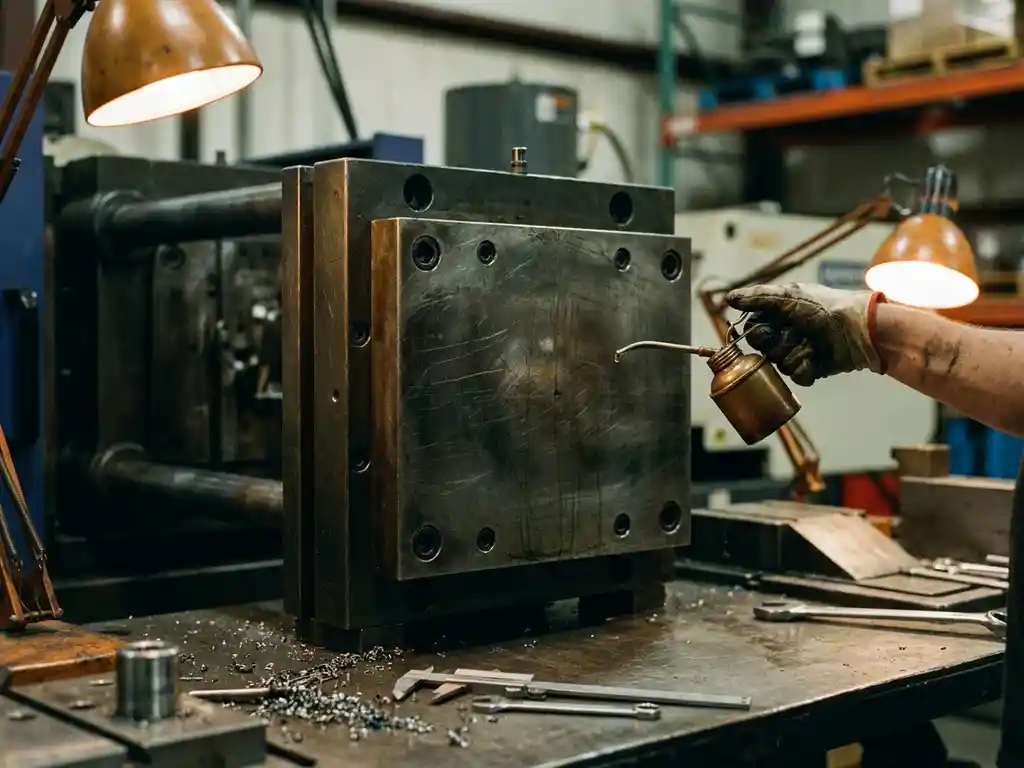
Magnetic clamping systems are a significant investment in production efficiency. When they perform at their best, mold changes that once took hours can be completed in minutes, keeping your lines running and your costs down. But like any precision equipment, these systems reward consistent care and suffer from neglect. The good news is that most premature wear and unexpected failures are entirely preventable. The seven practices below will help you get the most from your magnetic clamping system for years to come.
What shortens magnetic clamping system lifespan
Understanding what causes early deterioration is the first step toward preventing it. Magnetic clamping systems are precision-engineered components, and their performance depends on several factors that are easy to overlook during busy production schedules.
The most common culprits behind shortened service life include metal shavings and coolant contamination on platen surfaces, mechanical misalignment during mold docking, overheating from excessive cycle demands, and skipped maintenance intervals. Electrical connector corrosion and unchecked clamping force drift also contribute to gradual performance loss that often goes unnoticed until a serious problem develops.
Recognizing these risks early allows you to build a maintenance routine that addresses them directly, rather than reacting to costly breakdowns after the fact.
1: Keep magnetic platens clean and contamination-free
Surface cleanliness is the single most impactful factor in magnetic clamping system performance and longevity. The magnetic force generated by the platen depends on full, uninterrupted contact between the platen face and the mold mounting surface. Even a thin layer of oil, metal particles, or molding residue can reduce effective clamping force and accelerate surface wear.
Establish a cleaning routine that runs before every mold change. Use lint-free cloths and appropriate cleaning agents that will not leave residue or damage the platen surface. Pay particular attention to the edges and corners of the platen, where debris tends to accumulate and go unnoticed.
In environments with heavy coolant use or significant airborne metal dust, consider more frequent cleaning cycles and protective measures such as air purges or covers when the system is idle. Keeping contamination off the platen is far easier than recovering from the damage it causes.
2: Inspect mounting surfaces for flatness regularly
A magnetic clamping system can only deliver its rated clamping force when the mold mounting surface is flat and in full contact with the platen. Surface irregularities, even minor ones, create air gaps that dramatically reduce magnetic efficiency and concentrate mechanical stress on specific areas of the platen.
Schedule periodic flatness checks using a precision straight edge or dial indicator across both the platen face and the mold’s back plate. Any deviation beyond the manufacturer’s tolerance should be addressed before the mold is put into production. Grinding or resurfacing a mold back plate is a straightforward intervention that pays for itself quickly in restored clamping performance.
Also inspect for dents, burrs, or raised weld spots that may have developed from rough handling during mold transport or storage. These localized high points can cause uneven loading and damage the platen surface over time.
3: Monitor and control operating temperatures
Heat is a persistent enemy of magnetic clamping systems. Elevated temperatures reduce magnetic flux density, meaning the system generates less clamping force at higher temperatures than it does at its rated operating range. Sustained overheating can also cause permanent demagnetization of the magnetic elements, leading to irreversible performance loss.
Monitor platen surface temperatures during production, particularly in high-cycle applications or when running hot molds. Ensure that mold temperature controllers are functioning correctly and that heat transfer to the platen is within acceptable limits. If your process regularly runs molds above the recommended temperature threshold, discuss thermal shielding options or alternative clamping configurations with your supplier.
Tracking temperature trends over time also helps identify developing issues before they reach a critical point, making temperature monitoring a valuable part of any predictive maintenance strategy.
4: Follow correct mold docking and undocking procedures
The way molds are loaded onto and removed from the platen has a direct impact on both the clamping system and the mold itself. Impacts, lateral dragging, and uncontrolled lowering during docking are among the most common causes of platen surface damage and premature wear on guide components.
Train all operators on the correct docking sequence for your specific system. Molds should approach the platen smoothly and squarely, with lateral movement minimized once contact is made. Use mold change tables, rollers, or guided transport equipment to control the approach and reduce the risk of impact damage.
During undocking, ensure the magnetic field is fully released before any mechanical force is applied to move the mold. Attempting to drag a mold off an energized platen stresses both the mold and the platen surface in ways that accumulate damage over many cycles.
5: Perform scheduled electrical and connector checks
Magnetic clamping systems rely on electrical systems to energize and de-energize the magnetic platens on command. Connector corrosion, loose terminals, and cable wear are gradual problems that can cause intermittent faults, incomplete magnetization, or unexpected release events, all of which create both quality and safety risks.
Include electrical checks in your scheduled maintenance program. Inspect all connectors for signs of corrosion, heat discoloration, or physical damage. Check cable routing for abrasion points where movement during mold changes could be wearing through insulation over time. Verify that all terminals are tight and that the control system is communicating correctly with the platen.
Keeping a maintenance log for electrical components makes it easier to spot recurring issues and identify components that are approaching the end of their service life before they cause an unplanned stoppage.
6: Calibrate and verify clamping force periodically
Clamping force is the core performance metric of any magnetic clamping system, and it should be verified on a regular schedule rather than assumed to be correct. Over time, factors including surface wear, temperature cycling, and minor contamination events can cause gradual drift in effective clamping force that is not immediately obvious during normal production.
Use a calibrated force measurement tool to verify that your system is delivering the specified clamping force at regular intervals, typically every few months or after any significant maintenance event. Compare readings against the original commissioning data and flag any deviation for investigation.
If clamping force has dropped, do not simply increase the magnetization setting without understanding the cause. Reduced force often signals an underlying issue such as surface contamination, platen wear, or partial demagnetization that needs to be addressed directly.
7: Partner with your supplier for preventive maintenance
The most effective maintenance programs combine in-house daily and weekly routines with periodic expert involvement from the system supplier or a qualified service partner. Supplier technicians have access to diagnostic tools, component-level knowledge, and service data that most in-house teams do not, and they can identify developing issues that would be easy to miss without that specialist background.
Establish a preventive maintenance schedule with your supplier that includes annual or biannual system inspections, firmware and control system checks, and a review of wear components. Many suppliers offer service agreements that provide predictable costs and priority response times, which can be valuable when production schedules leave little margin for downtime.
Treating your supplier as a long-term technical partner rather than a transactional vendor gives you access to ongoing product improvements, application advice, and early warning on components that are approaching the end of their recommended service interval.
How EAS Change Systems supports magnetic clamping system longevity
At EAS Change Systems, we design our magnetic clamping solutions to deliver reliable, long-term performance in demanding production environments. Our Pressmag LP and SP magnetic platens are built with European engineering quality and are supported by a global network of installation, service, and maintenance professionals who understand how these systems perform across a wide range of applications.
When you work with us, you get more than hardware. We provide:
- Application engineering support to ensure your system is correctly specified for your mold weights, temperatures, and cycle demands
- System installation and commissioning by experienced technicians
- Preventive maintenance programs tailored to your production schedule
- ROI calculations to help you quantify the value of a well-maintained clamping system
- Access to our full range of clamping solutions, including hydraulic alternatives such as the MOD, ELY, and HECS clamps, when your application calls for a different approach
If you want to extend the service life of your magnetic clamping system and reduce unplanned downtime, we are ready to help. Contact EAS Change Systems to discuss a maintenance plan or to learn more about our clamping solutions for plastic injection molding and beyond.
Protect your investment with consistent care
Magnetic clamping systems are durable, high-performance tools when they are looked after properly. The seven practices covered here, from surface cleanliness and flatness checks to temperature monitoring, correct procedures, electrical inspections, force calibration, and supplier partnerships, form a complete framework for getting maximum service life from your system.
None of these steps require significant time or resources on their own. What they require is consistency. A brief cleaning before each mold change, a quarterly force verification, and an annual expert inspection add up to a maintenance culture that keeps your clamping systems performing reliably for many years, protecting both your production uptime and the capital investment you have made in your equipment.