

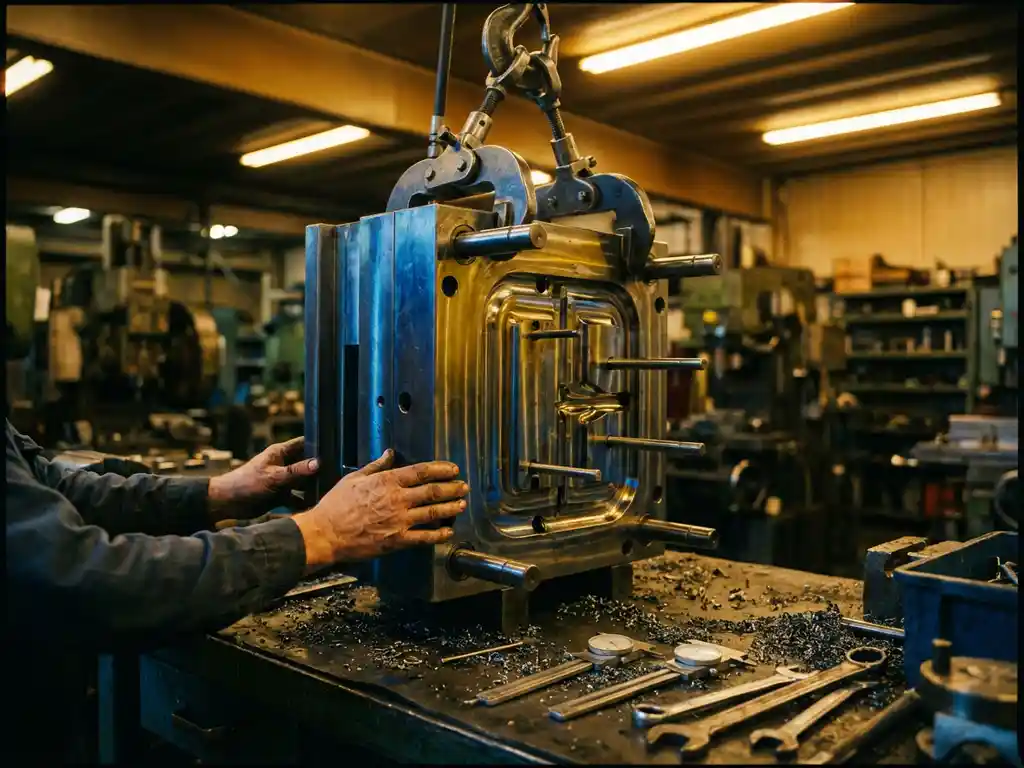
Understanding the true cost of mold changeovers goes far beyond the obvious expenses of labor and materials. For injection molding manufacturers, these hidden costs can significantly impact profitability and operational efficiency. Reducing production downtime becomes critical when you realize that a typical changeover might cost thousands of dollars in lost productivity, even before considering quality issues and resource allocation.
Accurately calculating changeover costs helps manufacturers make informed decisions about equipment investments, process improvements, and production scheduling. This comprehensive understanding supports better injection molding troubleshooting strategies and reveals opportunities for substantial cost savings through optimized changeover processes.
What costs are included in a mold changeover?
Mold changeover costs include direct labor wages, machine downtime, material waste, quality control expenses, and indirect costs such as overhead allocation and opportunity losses. These expenses typically range from several hundred to several thousand dollars per changeover, depending on complexity and duration.
Direct costs make up the most visible portion of changeover expenses. Labor costs include wages for operators, technicians, and supervisors involved in the changeover process. Material costs encompass purging compounds, startup scrap, and any components damaged during the changeover. Equipment costs include crane rental, specialized tooling, and maintenance items consumed during the process.
Indirect costs often exceed direct expenses but are less obvious. Machine downtime represents lost production capacity that cannot be recovered. Energy costs continue during idle periods while heating systems maintain temperature. Quality control expenses increase as operators verify new setups and adjust parameters. Administrative overhead includes production planning, scheduling coordination, and documentation requirements.
How do you calculate downtime costs during mold changes?
Downtime costs are calculated by multiplying the changeover duration by the machine’s hourly production value, which equals the hourly profit margin multiplied by typical production volume. For example, a machine generating $500 in profit per hour during a 4-hour changeover incurs $2,000 in downtime costs.
Start by determining your machine’s hourly production value. Calculate the typical profit margin per part, then multiply it by the average hourly production volume. Include both material costs and labor allocation in your profit calculations. This baseline represents the opportunity cost of stopped production.
Factor in additional downtime impacts beyond lost production. Consider customer service implications if changeovers delay order fulfillment. Account for overtime costs if extended changeovers push production into premium labor periods. Include energy waste from maintaining machine temperatures during extended idle periods. These secondary costs often add 20-30% to the basic downtime calculation.
What’s the difference between direct and indirect changeover costs?
Direct changeover costs are immediately visible expenses such as labor wages, materials consumed, and equipment usage during the changeover process. Indirect costs are hidden expenses, including lost production capacity, quality impacts, scheduling disruptions, and overhead allocation that occur as consequences of the changeover.
Direct costs provide straightforward calculation methods. Labor costs are calculated by multiplying hourly wages by changeover duration for all personnel involved. Material costs include purging compounds, startup scrap, and any consumables used during the process. Equipment costs cover crane rental, specialized tooling wear, and maintenance supplies consumed during changeover activities.
Indirect costs require more sophisticated analysis but often represent the largest expense category. Lost production capacity cannot be recovered, making each hour of downtime an opportunity cost equal to the machine’s profit-generating potential. Quality issues from new setups increase scrap rates and inspection requirements. Schedule disruptions affect downstream operations and may require expediting costs or customer service interventions.
How long should a typical mold changeover take?
A typical mold changeover should take 30 minutes to 2 hours for standard applications, depending on mold complexity, machine size, and available equipment. Manual changeovers often require 4-8 hours, while automated quick mold change systems can reduce this to under 30 minutes for routine changes.
Several factors influence optimal changeover duration. Mold weight and complexity determine handling requirements and setup procedures. Machine size affects accessibility and the number of connection points requiring attention. Available equipment such as cranes, quick-change systems, and automated couplers dramatically impacts efficiency. Operator skill level and standardized procedures also significantly influence timing.
Industry benchmarks provide useful comparison points. Simple molds under 1,000 pounds typically change in 30-60 minutes with proper equipment. Complex molds requiring extensive parameter adjustments may need 1-2 hours even with efficient systems. Manual processes without quick-change technology often extend to 4-8 hours, making automation investments highly attractive for frequent changeover operations.
How do you measure the ROI of changeover time reduction?
The ROI of changeover time reduction is measured by comparing annual savings from reduced downtime costs against the investment in improvement equipment or processes. Calculate annual savings by multiplying the time saved per changeover by changeover frequency and hourly downtime costs, then divide by the total investment amount.
Begin ROI calculations by establishing baseline metrics. Document current changeover times, frequency, and associated costs, including labor, downtime, and quality impacts. Calculate total annual changeover costs by multiplying the average cost per changeover by annual changeover frequency. This baseline provides the foundation for measuring improvement benefits.
Quantify improvement benefits across multiple categories. Time savings reduce downtime costs and increase available production capacity. Quality improvements decrease scrap rates and inspection requirements. Labor efficiency gains free personnel for value-added activities. Increased flexibility enables smaller lot sizes and improved customer responsiveness. Sum these benefits annually and compare them against improvement investment costs to determine payback period and ROI percentage.
How EAS Change Systems Helps with Mold Changeover Cost Reduction
We provide comprehensive quick mold change solutions that dramatically reduce both direct and indirect changeover costs through advanced automation and proven methodologies. Our products typically reduce changeover times from hours to minutes while improving safety and consistency.
Our solutions address every aspect of changeover cost reduction:
- Quick-change clamping systems that eliminate manual bolting and reduce changeover time by 70-90%
- Automated coupler systems for utilities, cooling, and ejection connections
- Mold transportation and positioning equipment for safe, efficient handling
- Comprehensive ROI analysis and project management support
- Global installation, training, and ongoing service support
Ready to transform your changeover economics and boost production efficiency? Contact our application engineering team for a customized ROI analysis and discover how our quick mold change solutions can deliver measurable cost savings for your operation.